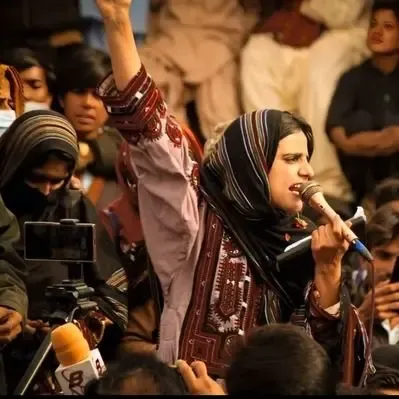
Mahrang Baloch accuses Pakistan's Balochistan judiciary of state-directed verdicts
Synopsis
From inside Huda Jail in Quetta, Mahrang Baloch has named Pakistan's Chief Justice of Balochistan and alleged that judges are delivering state-ordered verdicts, that 20 hearings were boycotted over 'faceless trials,' and that bail applications have been delisted for six months — a sweeping indictment of the province's entire judicial apparatus.
Key Takeaways
Mahrang Baloch , chief organiser of the Baloch Yakjehti Committee (BYC) , issued a statement from Huda Jail, Quetta on 13 September 2026 accusing the Balochistan judiciary of acting on state directives.
She named Chief Justice Kamran Mulakhail and alleged he is personally supervising all BYC cases to ensure state-directed outcomes.
In the case of BYC leader Gulzadi Baloch , the presiding judge allegedly admitted to being 'under pressure' to impose punishment.
The BYC boycotted 20 hearings between 13 June and 10 September protesting 'faceless trials.' Bail applications have allegedly been delisted without hearing for six months by the Chief Justice.
Mahrang has called on the Supreme Court of Pakistan and international human rights bodies to intervene immediately.
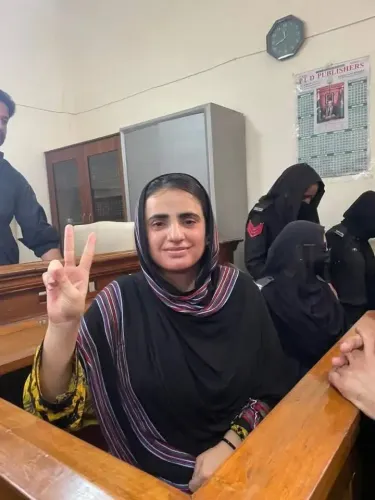
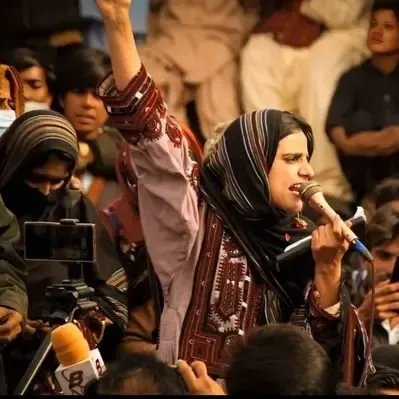
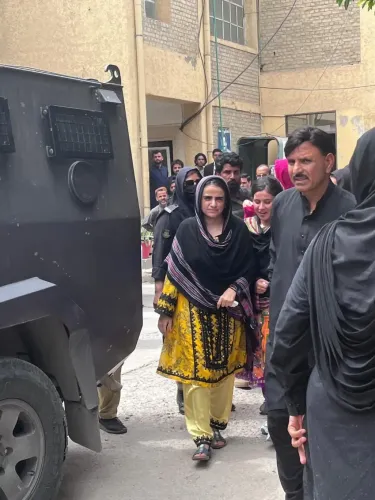
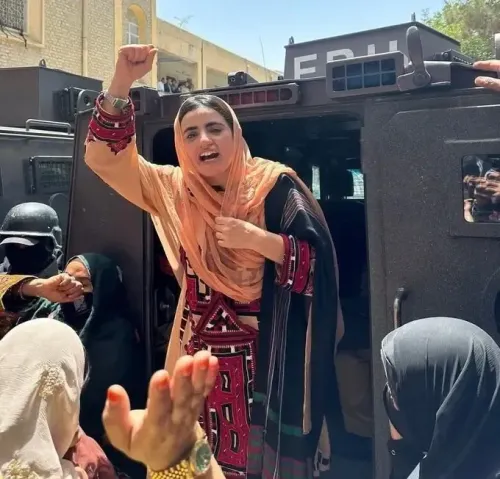
Mahrang Baloch, human rights activist and chief organiser of the Baloch Yakjehti Committee (BYC), has accused the judiciary in Pakistan's Balochistan province of acting as an accomplice to state institutions and systematically undermining the principles of justice. The statement, issued from Huda Jail in Quetta on 13 September 2026 and posted on BYC's official account on X, represents one of the most direct public indictments of the Balochistan judiciary by a sitting detainee.
The Allegations Against the Balochistan Bench
Mahrang directly named Chief Justice of Balochistan Kamran Mulakhail, alleging he is personally supervising all BYC-related cases. She further alleged that under his leadership, Justice Muhammad Ali Mubeen, Justice Qadir Shah Bukhari, and other judges hearing BYC cases across the province have been tasked with delivering verdicts on state directives.
'In such circumstances, the judiciary's impartiality and independence have come to an end,' she stated, according to the post. She added that the court has 'completely lost its influence and the trust of the people.'
The Case of Gulzadi Baloch
Mahrang cited the case of BYC leader Gulzadi Baloch as a concrete example of what she described as judicial misconduct. She alleged that the presiding judge had on multiple occasions admitted to being 'under pressure' and receiving instructions to impose punishment — claims that, if substantiated, would constitute a grave breach of judicial independence.
She noted that on 7 September, court proceedings in Gulzadi Baloch's case continued despite a strike and the absence of the defence counsel, with cross-examination of a witness carried out without legal representation present. This, Mahrang argued, violates the fundamental right to a fair trial.
Denial of Right to Defence
According to Mahrang, government-appointed lawyers were assigned to BYC members without their consent and were reportedly provided with logistical privileges including travel to Islamabad, while the accused were allegedly denied their own choice of legal representation. 'Is this the justice of the Islamic Republic of Pakistan, where courts are playing the role of pronouncing decisions predetermined by state institutions instead of independent judgments?' she questioned.
She also stated that the BYC had boycotted 20 hearings between 13 June and 10 September in protest against what it described as 'faceless trials.'
Bail Delays and Petition Stalling
Mahrang further alleged that Chief Justice Mulakhail has repeatedly delisted bail applications over the past six months without hearing them. A petition filed before the Balochistan High Court seeking protection of their right to defence has also been continuously delayed, she claimed. 'Punishing a person through the judicial process itself and continuously delaying matters of bail is contrary to the basic principles of justice,' she said.
Call for International and Domestic Intervention
The activist appealed to the Supreme Court of Pakistan and international human rights institutions to take immediate notice of the alleged judicial bias, the denial of right to defence, and the prolonged delays in justice in BYC cases. She urged transparent and impartial investigations into the matter. This comes amid a wider pattern of documented concerns about enforced disappearances, extrajudicial detentions, and press freedom in Balochistan, which international rights bodies have flagged repeatedly over the past decade.
Point of View
The pattern she describes — bail delays, boycotted hearings, state-appointed counsel — mirrors documented concerns that international human rights organisations have raised about Balochistan for years. The deeper structural issue is that Pakistan's judiciary has repeatedly struggled to assert independence from the military establishment, particularly on security-related cases. If the Supreme Court of Pakistan fails to respond to this public appeal from a jailed activist, it will reinforce precisely the narrative Mahrang is advancing: that the rule of law in Balochistan is performance, not practice.
NationPress
13 Sept 2026
Frequently Asked Questions
Who is Mahrang Baloch and why is she in jail?
Mahrang Baloch is a prominent Pakistani human rights activist and the chief organiser of the Baloch Yakjehti Committee (BYC), a group that advocates for the rights of Baloch people in Pakistan. She is currently detained in Huda Jail in Quetta, Balochistan, where she issued this statement on 13 September 2026.
What exactly has Mahrang Baloch alleged against the Balochistan judiciary?
She has alleged that Chief Justice Kamran Mulakhail is personally supervising BYC cases and that judges, including Justice Muhammad Ali Mubeen and Justice Qadir Shah Bukhari, have been instructed to deliver verdicts according to state directives. She also claims the presiding judge in BYC leader Gulzadi Baloch's case admitted to being under pressure to impose punishment.
What are 'faceless trials' and why did the BYC boycott hearings?
The BYC used the term 'faceless trials' to describe proceedings it considers neither transparent nor impartial. In protest, the committee boycotted 20 consecutive hearings between 13 June and 10 September 2026, arguing that continuing to participate would lend legitimacy to a process it deems unjust.
What happened in Gulzadi Baloch's case on 7 September?
According to Mahrang Baloch's statement, court proceedings in Gulzadi Baloch's case continued on 7 September despite a court strike and the absence of the defence counsel, with cross-examination of a witness conducted without legal representation present — a move she argued violates the fundamental right to a fair trial.
What action has Mahrang Baloch called for?
She has appealed to the Supreme Court of Pakistan and international human rights institutions to immediately take notice of the alleged judicial bias, denial of right to defence, and prolonged delays in BYC cases, and to ensure transparent and impartial investigations into the matter.