Dhaka earthquake risk: Gas leaks and fires could compound mass casualties
Synopsis
A major earthquake in Dhaka would not stop at collapsing buildings — ruptured gas mains and electrical short circuits could ignite city-wide fires that overwhelm firefighting capacity, experts warn. With overhead cables, underground gas networks, and broken water lines converging in one of South Asia's most densely populated capitals, the secondary disaster could prove deadlier than the tremor itself.
Key Takeaways
A major earthquake in Dhaka could trigger large-scale fires through ruptured gas pipelines and electrical short circuits , compounding structural collapse casualties.
Mohammad Abu Sadeque of the Bangladesh Earthquake Society identified Dhaka , Sylhet , and Chattogram as cities at highest fire risk due to extensive underground gas networks.
Broken water supply systems during earthquakes could severely hamper firefighting operations, worsening outcomes.
Automatic electrical shut-off devices and securely anchored oxygen cylinders in hospitals are among the key mitigation steps recommended.
A 60-member Special Rescue Team is on standby at Purbachal following the recent Narsingdi earthquake .
Of 62,000 volunteers being trained nationally, 55,000 have completed training; authorities warn a high-magnitude quake could still overwhelm current capacity.
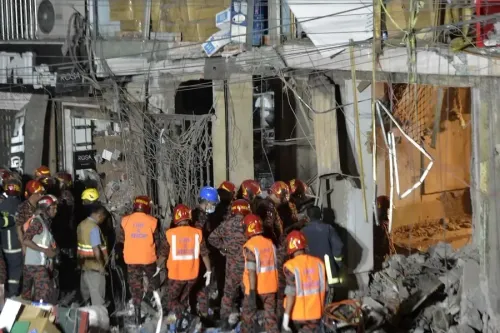
A major earthquake striking Dhaka, Bangladesh's densely packed capital, could unleash a cascade of secondary disasters — including large-scale fires ignited by ruptured gas pipelines and electrical short circuits — dramatically multiplying the death toll beyond structural collapse alone, according to a report by leading Bangladeshi newspaper The Daily Star.
Specialists cited in the report warn that fatalities in earthquake-hit urban areas rise sharply when fires break out in the aftermath, particularly where emergency response infrastructure is inadequate and populations are tightly concentrated.
How Utility Systems Become Hazards
Essential services — electricity, gas, and water — can rapidly transform into sources of catastrophic danger during a powerful tremor. Damaged electrical lines spark short circuits, ruptured gas mains ignite fires, and broken water supply networks cripple firefighting efforts precisely when they are needed most.
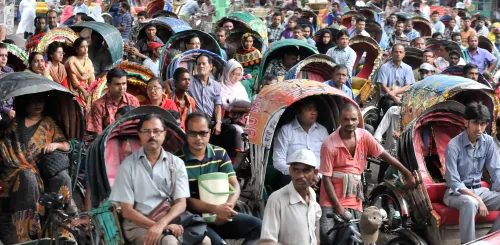
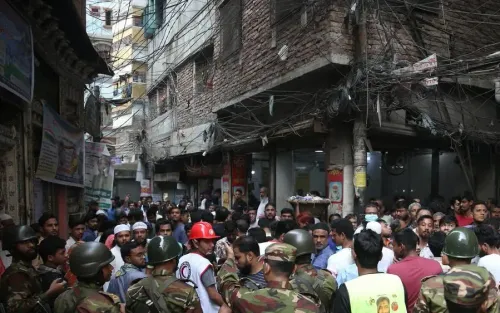
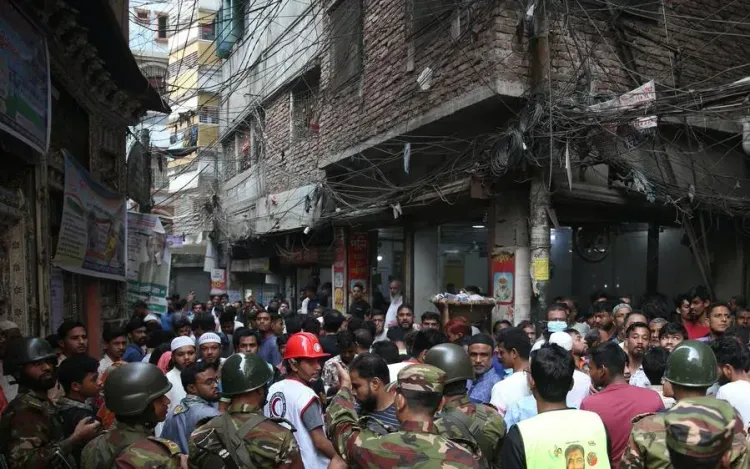
Dhaka is considered especially exposed because overhead electricity cables crisscross much of the city, while gas and water pipelines run beneath heavily congested roads and residential neighbourhoods. In a major seismic event, these interconnected systems could trigger a chain reaction of secondary disasters.
Expert Warning: Fire Is Among the Deadliest Secondary Effects
Mohammad Abu Sadeque, former Vice President of the Bangladesh Earthquake Society and Executive Director of the Centre for Housing and Building Research, told The Daily Star that fire is one of the most dangerous secondary effects of earthquakes in vulnerable cities.
According to Sadeque, post-earthquake fires most commonly originate from electrical short circuits. If a major tremor strikes during cooking hours, gas stoves become an additional ignition risk. During night-time hours, electrical faults remain the primary cause — and such fires can spread rapidly once underground gas pipelines rupture, allowing leaking gas to accelerate the flames.
Sadeque also cautioned that seismic events severely disrupt water supply systems: as pipelines fracture and water drains away, residents face acute shortages, making firefighting operations far more difficult while leaving households without stored water in immediate hardship.
He identified Dhaka, Sylhet, and Chattogram as cities at particularly elevated risk, given their extensive underground gas pipeline networks.
Mitigation Measures Recommended
Sadeque urged that fires caused by electrical short circuits can be significantly reduced by installing automatic shut-off devices at the main electrical connection of every building, enabling the power supply to be cut instantly during an emergency. He also stressed that hospitals must rely on early-warning alarm systems to give surgeons time to pause procedures and protect patients, and that oxygen cylinders must be securely anchored to prevent them from toppling during strong tremors.
State of Emergency Preparedness
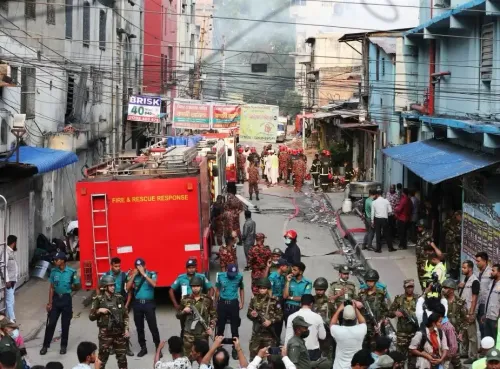
Following the recent Narsingdi earthquake, Fire Service and Civil Defence Director General Brigadier General Muhammad Jahed Kamal told The Daily Star that a 60-member Special Rescue Team has been placed on standby at Purbachal to respond to emergencies. 'If any fire station becomes unable to operate due to an earthquake, this reserve team will be deployed,' he said.
Kamal added that the department is training 62,000 volunteers nationwide as part of earthquake preparedness efforts. Of these, 55,000 have already completed training, with refresher courses currently underway. He nonetheless cautioned that an earthquake of extremely high magnitude could still overwhelm the department's existing emergency response capacity, underscoring the urgency of broader structural reforms in urban disaster readiness.
Point of View
Dense underground gas networks, and chronically underfunded emergency services makes it a textbook high-risk case. What is missing from the public conversation is accountability: who mandates automatic shut-off devices, who audits hospital earthquake protocols, and who enforces pipeline integrity standards in rapidly urbanising neighbourhoods? Training 62,000 volunteers is a meaningful step, but volunteer capacity cannot substitute for structural reform in utility infrastructure — the real determinant of whether a major quake becomes a manageable crisis or an urban catastrophe.
NationPress
5 Jul 2026
Frequently Asked Questions
Why could a Dhaka earthquake cause large-scale fires?
A major earthquake in Dhaka could rupture underground gas pipelines and damage electrical lines, igniting fires that spread rapidly through densely built neighbourhoods. Broken water supply systems would simultaneously hamper firefighting, according to experts cited by The Daily Star.
Which cities in Bangladesh face the highest earthquake fire risk?
Experts have identified Dhaka, Sylhet, and Chattogram as the cities most at risk of large-scale post-earthquake fires, due to their extensive underground gas pipeline networks and dense urban layouts.
What precautions can reduce fire risk after an earthquake?
Mohammad Abu Sadeque recommends installing automatic electrical shut-off devices at the main connection of every building so power can be cut instantly during a tremor. Hospitals should use early-warning alarm systems, and oxygen cylinders must be anchored securely to prevent toppling.
What is Bangladesh's current earthquake emergency response capacity?
Following the Narsingdi earthquake, a 60-member Special Rescue Team has been placed on standby at Purbachal. Authorities are training 62,000 volunteers nationwide; 55,000 have completed training. However, the Fire Service Director General has warned that a very high-magnitude earthquake could still exceed the department's current capacity.
What makes Dhaka especially vulnerable to earthquake damage?
Dhaka's vulnerability stems from its dense urban landscape, where overhead electricity cables crisscross the city and gas and water pipelines run beneath heavily congested roads and residential areas. In a major seismic event, these interconnected systems could trigger a chain of secondary disasters, including widespread fire.