Mohan Bhagwat at Madison Square Garden: Material wealth cannot bring lasting happiness
Synopsis
RSS chief Mohan Bhagwat took his philosophical message to the heart of New York, telling a Madison Square Garden audience that no amount of material wealth — not even all the doughnuts in the city — can deliver permanent satisfaction. Drawing on the Upanishadic concept of the Atman, he argued that lasting happiness and the purpose of human life lie in recognising the spiritual thread connecting all people.
Key Takeaways
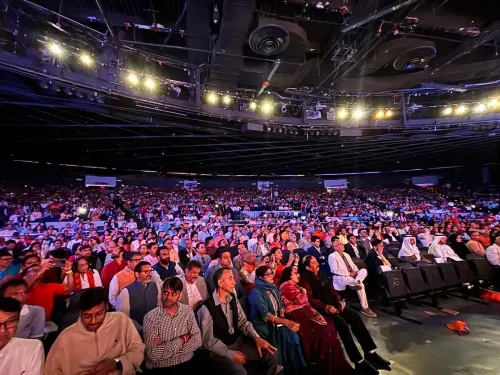
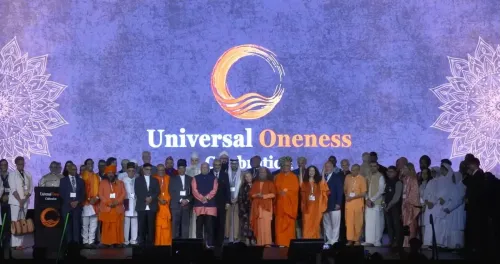
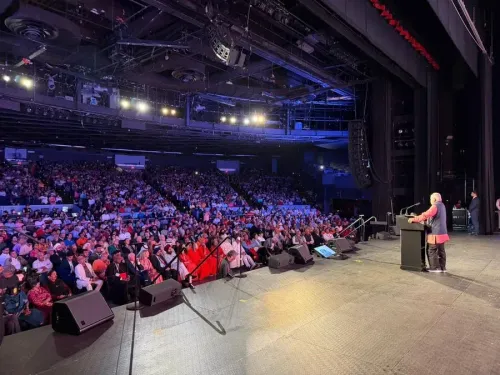
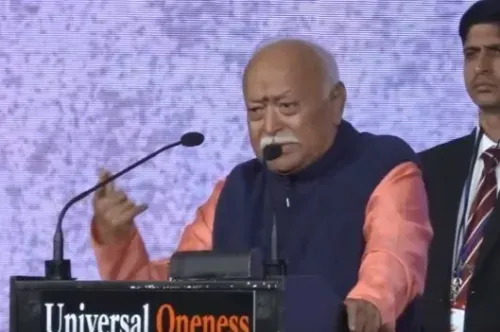
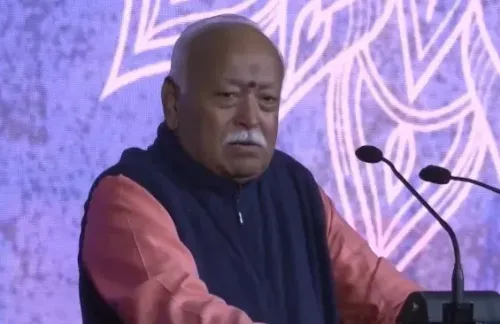
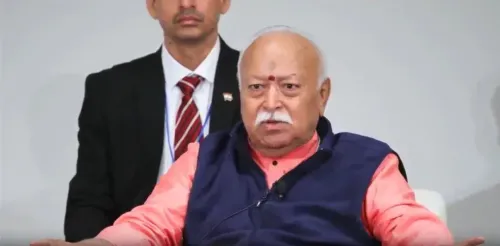
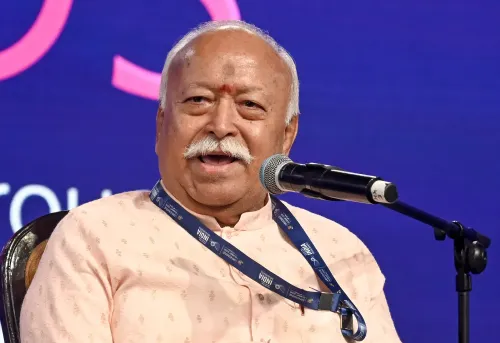
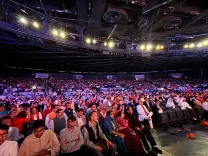
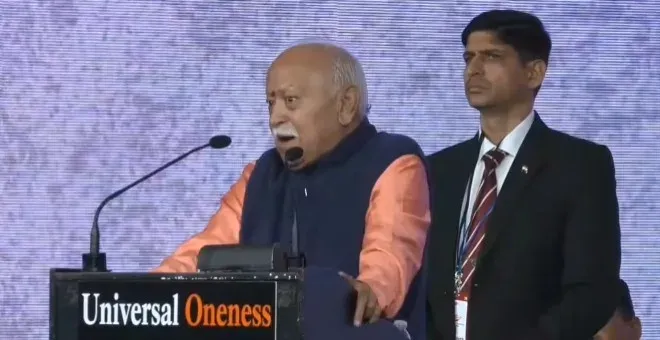
Mohan Bhagwat addressed the Universal Oneness Celebration at Madison Square Garden , New York , on 30 August .
He argued that material happiness is 'transitory' and cannot provide permanent satisfaction, even in abundance.
Bhagwat cited the parable of Indra and Virochan — both possessing everything yet remaining unfulfilled — to illustrate the limits of material wealth.
He described the Atman (inner self) as the unifying thread connecting all human beings across different bodies, traditions, and forms of worship.
Bhagwat has led the RSS as Sarsanghchalak since 2009 ; the organisation completed its centenary in 2025 .
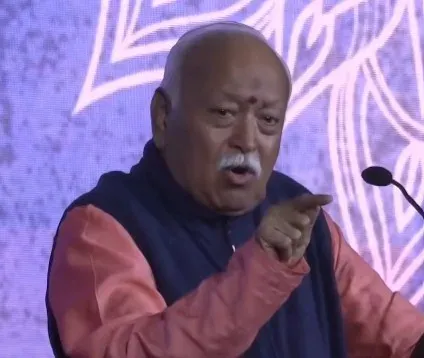
Rashtriya Swayamsevak Sangh (RSS) chief Mohan Bhagwat told an audience at Madison Square Garden in New York on 30 August that material abundance, however plentiful, cannot deliver permanent satisfaction — and that enduring happiness lies in recognising the deeper spiritual connection shared by all human beings.
The Central Argument
Addressing the Universal Oneness Celebration, Bhagwat said the desire for happiness is universal, but material comforts offer only a fleeting sense of fulfilment before generating fresh wants. He drew on a deliberately light-hearted local reference to make the point accessible to his New York audience.
'We have all material happiness, but this cannot satisfy us permanently,' he said. Using doughnuts as his example, Bhagwat — who noted he is diabetic — observed that even a favourite food loses its appeal once consumed in excess, only for the craving to return the following day. 'Tomorrow morning I am ready to eat 50 more. So the material happiness is transitory, cannot satisfy, and if abundance of material happiness is there, it may fail also,' he said.
The Parable of Indra and Virochan
Bhagwat anchored his philosophical argument in a story from Indian tradition involving Indra, king of the devas, and Virochan, king of the asuras. Despite possessing everything they desired, both remained dissatisfied. 'They had everything. Whatever they wished was ready for their service. But they hadn't one thing, that is satisfaction,' he said.
The two rulers turned to their respective teachers seeking a happiness that, as Bhagwat paraphrased their question, 'once we partook of it, never fades.' Their gurus directed them toward the understanding of the Atman — the inner self — as the source of permanent fulfilment.
The Atman as the Thread That Connects
Bhagwat described the Atman not merely as an individual soul but as the unifying principle that transcends differences of body, clothing, and forms of worship across traditions. 'In spite of our different bodies, different attires, different worships, everything being different, like the beads in a necklace woven through single thread, this Atman is in everybody and it connects us all,' he said.
He acknowledged that different traditions frame the persistence of the self differently — some placing it until a day of judgement, others through cycles of rebirth — but argued that across traditions there is a shared recognition that something within a person endures beyond the physical. 'But something is there inside that lives, that is permanent, that doesn't get destroyed in the tide of time,' he said.
Purpose of Human Life
Bhagwat concluded that recognising this inner connection should redirect human effort away from consumption and toward the welfare of others. 'But in them also I live. And they also live inside me. We belong to each other,' he said, adding: 'And work for their benefit. For the welfare of the world. That is the purpose of human life.'
The concepts Bhagwat invoked — the Atman and the distinction between temporary sensory pleasure and enduring self-knowledge — are central to several Indian philosophical traditions, including the Upanishads. Bhagwat has led the RSS as its sixth Sarsanghchalak since 2009. The organisation, founded in Nagpur in 1925, marked its centenary in 2025.
Point of View
Framing Hindu philosophical concepts such as the Atman not as sectarian doctrine but as universal human wisdom. Whether that framing lands as inclusive or as soft cultural assertion will depend heavily on the audience. What is notable is that the RSS chief chose New York, not Nagpur, to make this argument at scale.
NationPress
30 Aug 2026
Frequently Asked Questions
What did Mohan Bhagwat say at Madison Square Garden?
Bhagwat said that material abundance cannot provide permanent satisfaction and that lasting happiness comes from recognising the Atman — the inner self — as the spiritual thread connecting all human beings. He spoke at the Universal Oneness Celebration in New York on 30 August.
What is the Universal Oneness Celebration?
It is an event at which Bhagwat addressed an audience at Madison Square Garden in New York on 30 August, focusing on themes of shared humanity and spiritual connection across traditions.
What parable did Bhagwat use to explain his point?
He cited the story of Indra, king of the devas, and Virochan, king of the asuras, both of whom possessed everything they desired but remained dissatisfied. Their teachers directed them to seek understanding of the Atman as the path to enduring happiness.
What is the Atman, as described by Bhagwat?
Bhagwat described the Atman as the inner self — a unifying principle present in every person that connects all human beings despite differences in body, attire, and forms of worship. He compared it to the single thread running through beads in a necklace.
Who is Mohan Bhagwat and what is his role in the RSS?
Mohan Bhagwat is the sixth Sarsanghchalak (chief) of the Rashtriya Swayamsevak Sangh (RSS), a position he has held since 2009. The RSS was founded in Nagpur in 1925 and completed its centenary in 2025.