South Korea's three megaprojects target future, not polls: President Lee

Synopsis
South Korean President Lee Jae Myung is staking his credibility on a 4,755 trillion won industrial overhaul — semiconductors, physical AI, and data centres — and he is doing it in the teeth of opposition claims it is all about politics. His X post rebuttal and a presidential-level review meeting next Monday signal this is a fight he intends to win publicly, not just administratively.
Key Takeaways
President Lee Jae Myung rejected opposition claims that the megaprojects are politically motivated, calling them a long-term national transformation plan.
The three megaprojects cover semiconductors , physical AI , and AI data centres , with a total investment target of 4,755 trillion won (approx.
Samsung will build two memory chip fabs in Gwangju ; SK Hynix will construct two fabs in the Jeolla provinces — combined commitment worth 800 trillion won .
Lee argued on X that a pre-election launch would have been the real political play, not the current timing.
A joint public-private strategic review meeting is scheduled at the presidential office next Monday , to be chaired by Lee personally.
South Korean President Lee Jae Myung on Saturday, 5 July 2025, pushed back against opposition claims that his government's sweeping regional investment drive is a political stunt, insisting the three 'megaprojects' are built around long-term national transformation — not approval ratings. The rebuttal came days after Seoul unveiled one of the most ambitious industrial blueprints in the country's recent history.
What the Megaprojects Entail
Announced earlier this week, the three megaprojects initiative centres on semiconductors, physical artificial intelligence (AI), and AI data centres, calling for a combined investment of 4,755 trillion won (approximately US$3.11 trillion). The scale of the programme positions it as a generational bet on South Korea's technological competitiveness.
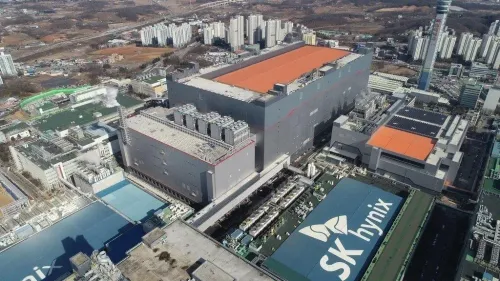
As part of the scheme, Samsung announced plans to build two memory chip fabrication plants in the southwestern city of Gwangju. Meanwhile, SK Hynix said it will construct two fabs in the surrounding Jeolla provinces, with the combined Samsung-SK Hynix semiconductor commitment reportedly valued at 800 trillion won.
What President Lee Said
Addressing the opposition directly in a post on X, Lee argued that the timing of the announcement itself refutes the political motive charge. 'If the projects had been intended to manage approval ratings, they would have been launched ahead of the June 3 local elections,' he wrote, adding that a national transformation plan of this kind was something he had long envisioned even before taking office.
Lee further stated that what matters more than approval ratings are 'tangible results that improve people's lives,' and pledged to make 'all-out efforts to give hope, dreams and vitality to young people.'
Opposition Pushback
The main opposition People Power Party (PPP) has alleged that political considerations are driving the initiative, framing the regional investment focus as an attempt to shore up support rather than address structural economic priorities. The government has rejected those characterisations outright.
Next Steps: Strategic Review Meeting
President Lee is set to preside over a high-level joint public-private meeting at the presidential office next Monday to review progress on the mega semiconductor production cluster in the southwestern region. According to presidential spokesperson Kang Yoo-jung, the session will mark the first formal strategic review since the investment plans were made public.
Lee has pledged to personally oversee the projects, underscoring the urgency of accelerating implementation. How swiftly the government can move from announcement to ground-level execution will likely determine whether the megaprojects deliver on their transformative promise.
Point of View
755 trillion won across semiconductors and AI — is eye-catching, but the real question is sequencing and accountability. South Korea has a strong track record in chip manufacturing, yet the physical AI and data centre verticals are far less proven as state-directed investment targets. Lee's insistence on personally chairing review meetings is a double-edged signal: it projects urgency, but it also concentrates political risk. If execution stumbles, the opposition's 'approval ratings' narrative will resurface with greater force. The megaprojects' credibility will ultimately rest not on the announcement, but on the first quarterly progress report.
NationPress
4 Jul 2026
Frequently Asked Questions
What are South Korea's three megaprojects announced in 2025?
The three megaprojects are a government-led national transformation initiative focused on semiconductors, physical artificial intelligence, and AI data centres, with a combined investment target of 4,755 trillion won (approximately US$3.11 trillion). The plan envisions large-scale public-private investment across South Korea's southwestern and other regions.
Why is President Lee Jae Myung defending the megaprojects?
Lee is responding to criticism from the main opposition People Power Party, which alleged the projects are politically motivated to boost his approval ratings. He argued on X that a politically timed launch would have preceded the June 3 local elections, not followed them.
What roles do Samsung and SK Hynix play in the megaprojects?
Samsung has announced plans to build two memory chip fabrication plants in Gwangju, while SK Hynix will construct two fabs in the Jeolla provinces. Their combined semiconductor investment is reportedly valued at 800 trillion won.
When is the first strategic review of the megaprojects?
President Lee is set to chair a joint public-private meeting at the presidential office next Monday, which will serve as the first formal strategic review since the investment plans were unveiled.
Who is affected by the megaprojects initiative?
The initiative primarily targets South Korea's southwestern regions — Gwangju and the Jeolla provinces — which stand to gain from semiconductor and AI infrastructure investment. More broadly, the scheme is aimed at young people and future-oriented industries across the country.