Melania Trump, Peng Liyuan tour Smithsonian's Asian Art Museum in Washington
Synopsis
Melania Trump and Peng Liyuan chose the Smithsonian's National Museum of Asian Art for a joint cultural visit — walking through the Whistler-designed Peacock Room and viewing an 18th-century imperial Chinese vase before a youth choir capped the day with song. The optics of two first ladies navigating shared artistic heritage carry unmistakable diplomatic weight.
Key Takeaways
Melania Trump and Peng Liyuan visited the Smithsonian National Museum of Asian Art in Washington on 25 September 2026 .
They toured the Peacock Room , designed by American artist James McNeill Whistler in 1876–77 , which draws on Chinese and Japanese aesthetic influences.
They also viewed an 18th-century Qianlong-era Chinese porcelain vase from the Freer Gallery of Art 's collection, produced in Jingdezhen .
Curators Jan Stuart and Chase Robinson served as guides during the visit.
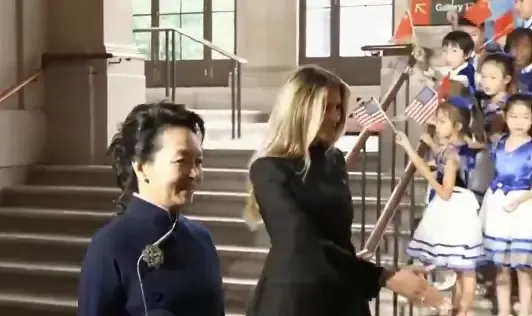
A youth choir from Hope Chinese School performed 'Jasmine Flower' and 'Songs and Smiles' to close the programme.
US First Lady Melania Trump and Peng Liyuan, spouse of Chinese President Xi Jinping, visited the Smithsonian National Museum of Asian Art in Washington on 25 September 2026, viewing American and Chinese works before meeting students from the Washington area. The cultural visit, confirmed by the White House, centred on art, heritage, and youth engagement.
A Tour of Two Landmark Works
Museum leaders welcomed both women on arrival and guided them through the collections. Jan Stuart, the museum's Melvin R. Seiden Curator of Chinese Art, and Chase Robinson, director of the Arthur M. Sackler Gallery and Freer Gallery of Art, served as guides throughout the visit.
The programme featured two works of particular significance. The first was the Peacock Room, one of the museum's best-known interiors, designed by American artist James McNeill Whistler in 1876–77. Whistler decorated the room in blue, green and gold, layering it with patterns and peacock imagery to create a unified space where painting, architecture and decorative art converge. The design drew heavily on Chinese porcelain and Japanese aesthetics — a striking example of Asian influence on a 19th-century American artist.
American collector Charles Lang Freer purchased the room in 1904 and had it relocated from London to the United States. It has been a centrepiece of the Washington museum since 1923.
The Qianlong Vase and Its Imperial Origins
The second highlight was an 18th-century Chinese porcelain vase from the reign of the Qianlong emperor of the Qing dynasty, produced in Jingdezhen — historically the pre-eminent centre of Chinese porcelain making. The vase features floral decoration rendered in famille rose enamels, gold, and iron red over a pale glaze, and forms part of the Freer Gallery of Art's permanent collection.
Together, the Peacock Room and the Qianlong vase illustrate two complementary directions of artistic exchange: Chinese craftsmanship displayed in Washington, and Asian design absorbed and reimagined by an American artist working a century earlier.
Students Cap the Visit With Song
The programme concluded with a performance by a youth choir from Hope Chinese School. The students sang 'Jasmine Flower' and 'Songs and Smiles' for both Melania Trump and Peng Liyuan. The White House described the performance as a fitting close to a visit that brought together art, cultural heritage and young people.
Significance of the Cultural Exchange
The joint visit by the US First Lady and China's First Lady carries clear diplomatic undertones, coming at a moment when US-China relations remain a focal point of global attention. Cultural diplomacy of this kind — centred on shared artistic heritage rather than political negotiation — has historically served as a confidence-building measure between the two countries. The Smithsonian's collection, which holds both American works shaped by Asian influences and Asian artefacts of imperial provenance, offered a fitting backdrop for the occasion.
Point of View
But joint visits by first ladies can signal the temperature of a bilateral relationship more candidly than any communiqué. The choice of the Smithsonian — a museum that holds both Asian artefacts and American works shaped by Asian influence — was not incidental; it frames the US-China relationship as one of mutual artistic debt rather than pure rivalry. Whether this visit translates into broader diplomatic momentum remains to be seen, but its careful choreography suggests both sides wanted to project a degree of warmth that official channels currently struggle to convey.
NationPress
25 Sept 2026
Frequently Asked Questions
Where did Melania Trump and Peng Liyuan visit together?
They visited the Smithsonian National Museum of Asian Art in Washington on 25 September 2026, viewing the Peacock Room and an 18th-century Chinese porcelain vase before attending a student choir performance.
What is the Peacock Room?
The Peacock Room is an interior designed by American artist James McNeill Whistler between 1876 and 1877, decorated in blue, green and gold with peacock patterns and imagery. It draws on Chinese porcelain and Japanese design traditions and has been a centrepiece of the Smithsonian's Washington museum since 1923.
What is the significance of the Qianlong vase?
The vase dates from the reign of the Qianlong emperor of China's Qing dynasty in the 18th century, produced in Jingdezhen, the historic centre of Chinese porcelain making. It features famille rose enamel floral decoration and is part of the Freer Gallery of Art's permanent collection.
Who guided the two first ladies through the museum?
Jan Stuart, the museum's Melvin R. Seiden Curator of Chinese Art, and Chase Robinson, director of the Arthur M. Sackler Gallery and Freer Gallery of Art, served as guides throughout the visit.
How did the visit end?
The visit concluded with a performance by a youth choir from Hope Chinese School, who sang 'Jasmine Flower' and 'Songs and Smiles' for Melania Trump and Peng Liyuan. The White House described it as a fitting close to a visit centred on art, cultural heritage and young people.