CM Pema Khandu Visits VDVK Noodle Unit at Jang, Tawang
Synopsis
Arunachal Pradesh CM Pema Khandu visited the Van Dhan Vikas Kendra Noodle Processing Unit at Jang, Tawang on June 21, 2026, praising women SHGs for turning traditional tribal knowledge into marketable products under the ArSRLM and Atmanirbhar Bharat frameworks.
Key Takeaways
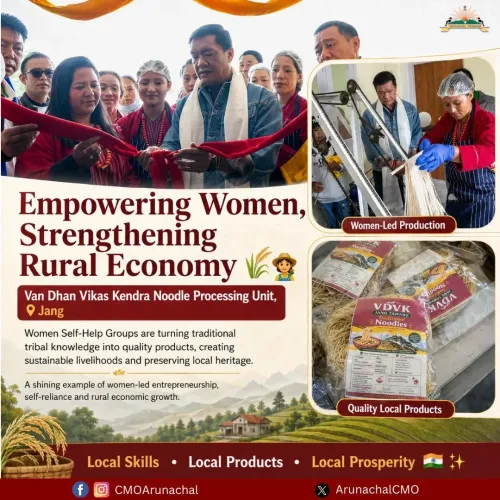
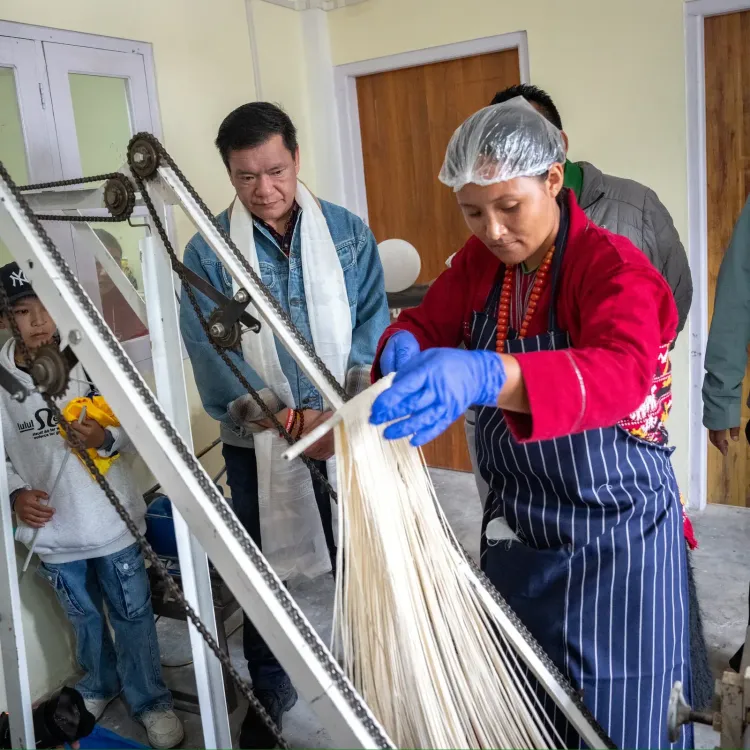
CM Pema Khandu visited the VDVK Noodle Processing Unit at Jang, Tawang on June 21, 2026 , observing the production process firsthand.
The unit is operated by Women Self-Help Groups under ArSRLM , converting traditional tribal food knowledge into a commercial product.
The Van Dhan Vikas Yojana , launched in 2018 by the Ministry of Tribal Affairs and TRIFED , provides the institutional framework for such value-addition centres.
The initiative aligns with the Atmanirbhar Bharat Abhiyan 's 'Vocal for Local' mandate, promoting indigenous tribal products in mainstream markets.
The 2025-26 tribal affairs budget includes provisions for additional VDVK units, with state-level marketing linkage reviews anticipated.
The Jang unit is positioned as a potential blueprint for replication across other high-altitude tribal blocks in Arunachal Pradesh .
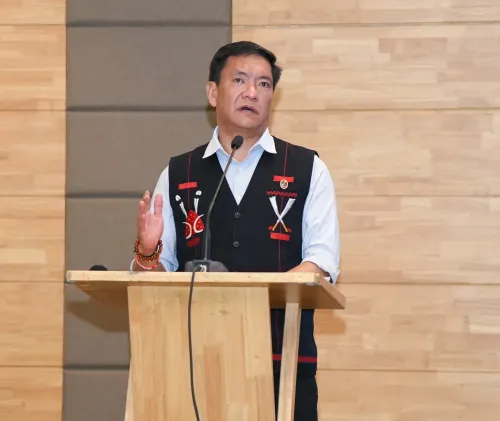
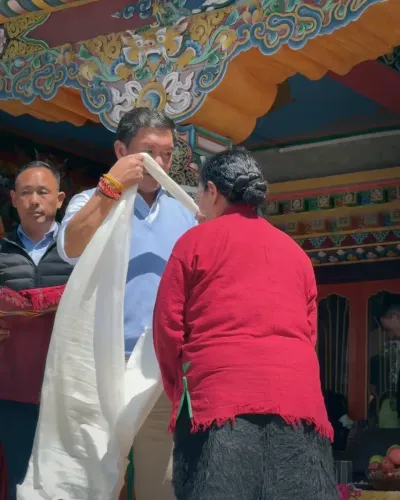
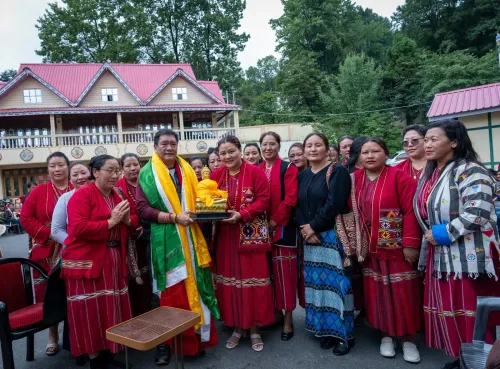
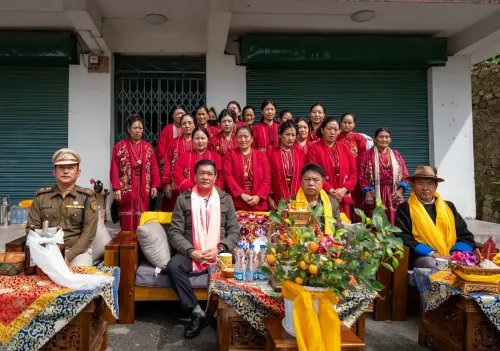
Arunachal Pradesh Chief Minister Pema Khandu on Sunday, June 21, 2026, visited the Van Dhan Vikas Kendra (VDVK) Noodle Processing Unit at Jang in Tawang district, meeting the women behind the initiative and observing the noodle-making process firsthand. The unit, run by local Women Self-Help Groups (SHGs) under the Arunachal State Rural Livelihoods Mission (ArSRLM), converts traditional tribal food knowledge into a marketable product under the broader Atmanirbhar Bharat framework.
Context
The Jang unit is one of several Van Dhan Vikas Kendras established in Arunachal Pradesh to provide tribal communities with infrastructure for value addition and local enterprise. CM Khandu described the initiative as 'exactly the kind of enterprise we need more of,' underlining the state government's push to scale such models across tribal blocks. He added that 'these are not just noodles; they are the authentic taste of Tawang, made by our people, for everyone.'
The Women SHGs involved draw on generations of traditional knowledge to produce noodles that carry a distinct regional identity, positioning them as both a livelihood tool and a cultural product. The Chief Minister's visit signals continued political backing for the unit and its expansion ambitions.
Policy Backdrop
The Van Dhan Vikas Yojana was launched by the Ministry of Tribal Affairs in 2018 in partnership with TRIFED to set up value-addition and marketing centres for minor forest produce in tribal districts across India. The scheme has since been extended to cover processed food products, herbal items, and craft goods, with Northeast India emerging as a key focus zone.
In Arunachal Pradesh, the National Rural Livelihoods Mission (NRLM) — implemented through ArSRLM — has been active since 2012, building women's SHG networks in tribal blocks. The Atmanirbhar Bharat Abhiyan, announced in May 2020, added a 'Vocal for Local' dimension that explicitly encouraged the branding and marketing of such tribal products at national and international levels.
Similar VDVK units processing millets, medicinal herbs, and forest produce have been rolled out across central and Northeast Indian tribal belts since 2018, creating a replicable template that the Jang noodle unit now exemplifies in a high-altitude border district.
Stakeholders and Impact
The primary beneficiaries are the women members of the SHGs in and around Jang, who gain structured income, skill development, and access to formal market linkages through the VDVK platform. For the broader Tawang district — a strategically sensitive border zone — such enterprises also carry economic resilience significance by anchoring livelihoods locally.
Tribal communities in the region stand to benefit from the preservation and commercialisation of food heritage that might otherwise remain confined to household use. Consumers across India gain access to an authentic, region-specific product aligned with the growing demand for indigenous and ethnic food brands.
What's Next
The 2025-26 tribal affairs budget includes allocations for additional VDVK units, and state officials are expected to review ArSRLM marketing linkages to ensure products from units like the one in Jang reach wider retail and e-commerce channels. CM Khandu's visit is likely to accelerate administrative attention to pending approvals and supply-chain support for the unit.
If the Jang model demonstrates sustained output and profitability, it could serve as a blueprint for replication in other high-altitude tribal blocks of Arunachal Pradesh, reinforcing the state's identity as a source of distinctive, women-produced tribal goods in the national marketplace.
Point of View
Not peripheral welfare gestures. The choice of a border district like Tawang adds a strategic layer: demonstrating economic vitality in a sensitive frontier zone serves both development and national security optics. The visit also reinforces the BJP's broader political narrative of Atmanirbhar Bharat delivering tangible ground-level outcomes in the Northeast. Sustained impact will depend on whether ArSRLM can secure durable market linkages beyond the initial political momentum.
NationPress
20 Sept 2026
Frequently Asked Questions
What is the Van Dhan Vikas Kendra noodle unit at Jang?
The Van Dhan Vikas Kendra Noodle Processing Unit at Jang is a tribal enterprise in Tawang district, Arunachal Pradesh, run by Women Self-Help Groups under ArSRLM, producing noodles based on traditional tribal food knowledge under the central government's Van Dhan Vikas Yojana.
Why did CM Pema Khandu visit the Jang VDVK unit?
CM Pema Khandu visited the unit on June 21, 2026, to meet the women SHG members, observe the noodle-making process, and express support for scaling such tribal enterprises across Arunachal Pradesh.
What is ArSRLM and what role does it play?
ArSRLM, the Arunachal State Rural Livelihoods Mission, is the state-level body implementing the National Rural Livelihoods Mission. It forms and supports women's self-help groups in tribal blocks, including those running the Jang noodle unit.
What is the Van Dhan Vikas Yojana?
The Van Dhan Vikas Yojana is a scheme launched in 2018 by the Ministry of Tribal Affairs in partnership with TRIFED to set up value-addition and marketing centres for tribal communities, helping convert forest produce and traditional products into branded goods.
How does the Jang noodle unit connect to Atmanirbhar Bharat?
The unit aligns with the Atmanirbhar Bharat Abhiyan's 'Vocal for Local' pillar, which encourages production, branding, and marketing of indigenous tribal products within India and beyond, reducing dependence on external supply chains.