CM Pema Khandu visits Van Dhan Noodle Unit in Jang
Synopsis
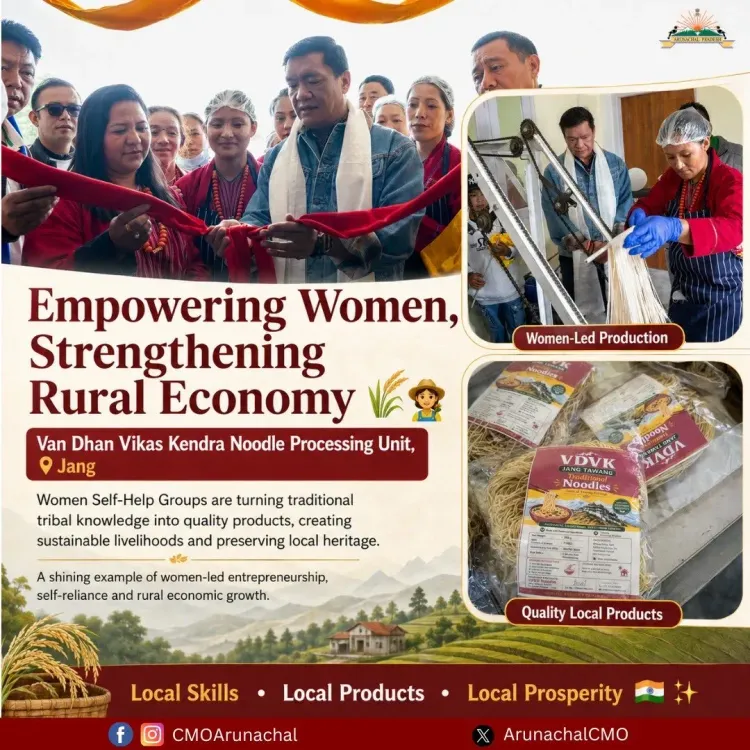
Chief Minister Pema Khandu visited the Van Dhan Vikas Kendra Noodle Processing Unit at Jang in Tawang district on 22 June 2026, highlighting women-led Self-Help Groups that are converting traditional tribal knowledge into value-added food products and strengthening rural livelihoods in one of Arunachal Pradesh's most remote regions.
Key Takeaways
CM Pema Khandu visited the Van Dhan Vikas Kendra Noodle Processing Unit at Jang, Tawang district on 22 June 2026 .
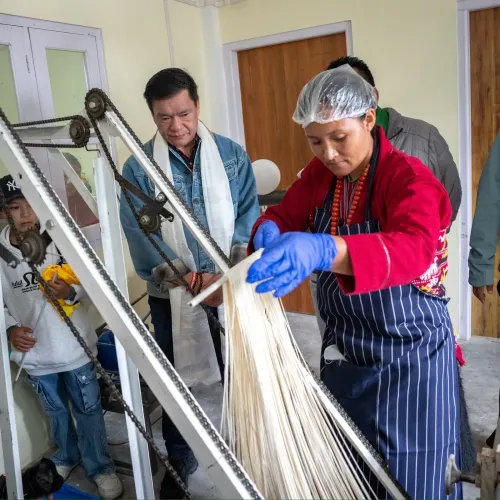
The unit is operated by women-led Self-Help Groups (SHGs) , converting local produce into packaged noodles with market value.
The Van Dhan Vikas Yojana , launched in April 2018 , targets 3,000 kendras across tribal districts and is implemented by TRIFED .
The initiative aligns with Atmanirbhar Bharat goals by reducing tribal communities' dependence on raw produce sales.
Arunachal Pradesh has integrated the central scheme with state efforts to commercialise traditional food knowledge from the Northeast.
The visit signals potential expansion of Van Dhan units across Tawang and other tribal districts in the state.
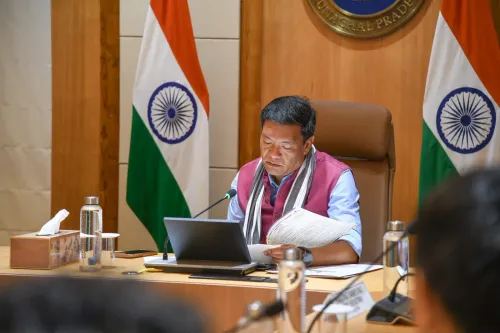
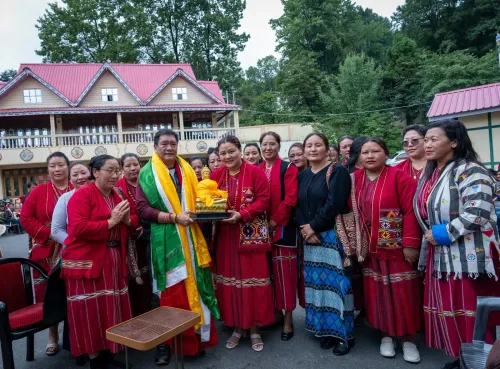
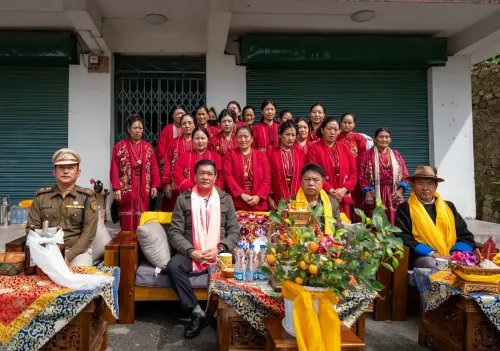
The Chief Minister's Office of Arunachal Pradesh announced on Monday, 22 June 2026 that Chief Minister Pema Khandu visited the Van Dhan Vikas Kendra Noodle Processing Unit at Jang in Tawang district, spotlighting the contribution of women-led Self-Help Groups (SHGs) in building local enterprise and preserving tribal knowledge through value-added food products.
Context
Jang is a town in Tawang district, one of Arunachal Pradesh's most remote and culturally distinct regions, where tribal communities have long depended on agriculture and forest-based livelihoods. The Van Dhan Vikas Kendra (VDVK) model places processing infrastructure directly in such communities, enabling them to move beyond the sale of raw produce. The noodle processing unit at Jang is a product of that model, turning locally available ingredients — including millets and forest herbs — into packaged food items with market value.
CM Khandu's visit drew attention to the role of women at the centre of this enterprise, with SHGs operating the unit and managing production. The CMO noted that the initiative promotes 'local enterprise, preserving traditional knowledge and strengthening rural livelihoods through value-added products.'
Policy Backdrop
The Van Dhan Vikas Yojana was launched in April 2018 by the Ministry of Tribal Affairs with a target of setting up 3,000 Van Dhan Vikas Kendras across tribal districts nationwide. The scheme is implemented by TRIFED — the Tribal Cooperative Marketing Development Federation of India — which provides training, branding, and marketing support to tribal producer groups.
Arunachal Pradesh has integrated this central framework with state-level efforts to leverage traditional knowledge for commercially viable products. The noodle processing unit at Jang exemplifies this convergence, channelling the Atmanirbhar Bharat push for tribal self-reliance into a tangible rural enterprise. Women-led SHGs have been a primary vehicle for this, supported under the National Rural Livelihoods Mission (NRLM) and allied state programmes that promote micro-enterprise and financial inclusion.
Stakeholders and Impact
The primary beneficiaries of the Jang unit are tribal women enrolled in local Self-Help Groups, who gain income, skill development, and a formal stake in the local food economy. By processing raw forest and farm produce into packaged noodles, participating women move up the value chain — reducing dependence on middlemen and improving household earnings.
The broader community in Tawang district stands to benefit from the preservation of traditional food knowledge that might otherwise erode. Buyers of the finished product — whether local consumers or urban markets — receive a product rooted in the Northeast's distinct agricultural heritage. TRIFED's marketing infrastructure is critical here, connecting remote producers to wider distribution networks.
What's Next
The government's focus is expected to turn to scaling the Van Dhan model across more blocks in Tawang and other tribal districts of Arunachal Pradesh. State-level monitoring of income gains for participating SHG members will be a key indicator of whether the unit at Jang can serve as a replicable template.
With CM Khandu personally inspecting the facility, the visit signals political commitment to sustaining and expanding the programme — and may accelerate administrative approvals for additional processing units in the state's remoter tribal belts.
Point of View
Khandu reinforces a political narrative that connects tribal welfare with economic agency rather than welfare dependency. The Northeast has become a test bed for the Atmanirbhar Bharat model in tribal contexts, and a functioning food-processing unit in remote Tawang offers a visible proof point. Whether the state follows through with scale — more units, better market linkages, published income data — will determine if this visit translates into lasting policy momentum.
NationPress
20 Sept 2026
Frequently Asked Questions
What is the Van Dhan Vikas Kendra at Jang in Arunachal Pradesh?
The Van Dhan Vikas Kendra at Jang is a tribal enterprise centre in Tawang district that houses a noodle processing unit operated by women-led Self-Help Groups, enabling tribal communities to add value to local produce and earn higher incomes.
What is the Van Dhan Vikas Yojana and who runs it?
The Van Dhan Vikas Yojana is a central government scheme launched in April 2018 by the Ministry of Tribal Affairs to set up 3,000 processing and training centres across tribal districts. It is implemented by TRIFED, the Tribal Cooperative Marketing Development Federation of India.
Why did CM Pema Khandu visit Jang in June 2026?
CM Pema Khandu visited the Van Dhan Vikas Kendra Noodle Processing Unit at Jang on 22 June 2026 to highlight the role of women-led Self-Help Groups in promoting local enterprise, preserving traditional knowledge, and strengthening rural livelihoods through value-added products.
How do Self-Help Groups benefit from Van Dhan Vikas Kendras?
Women enrolled in Self-Help Groups gain access to processing infrastructure, skill training, and TRIFED's marketing networks, allowing them to convert raw forest and farm produce into packaged goods — improving household incomes and reducing dependence on middlemen.
Will more Van Dhan units be set up in Tawang district?
The government is expected to consider expanding Van Dhan units across Tawang and other tribal districts of Arunachal Pradesh, with CM Khandu's visit signalling political commitment to scaling the model beyond the existing Jang unit.