Why is German Chancellor Merz Urging Europe to Assert Its Interests?
Synopsis
In a powerful New Year's address, German Chancellor Friedrich Merz calls for Europe to reclaim its interests amid a shifting global landscape. With geopolitical instability and evolving U.S. relations, he emphasizes the importance of independence and strength for future prosperity. Discover why 2026 could be a game-changing year for Germany and Europe.
Key Takeaways
Europe needs to assert its interests amid global volatility.
Shifting U.S. relations call for greater European independence.
Germany aims to enhance its defense and deterrence capabilities .
The upcoming government will focus on cutting red tape for economic competitiveness.
2026 could be a decisive year for Germany and Europe.
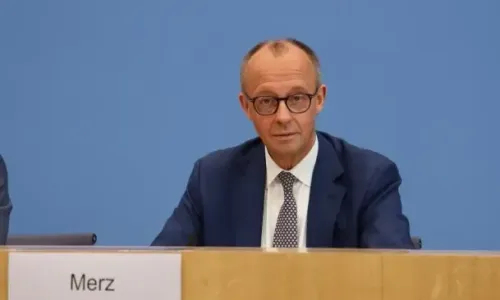
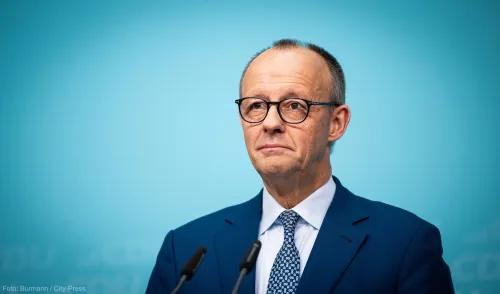
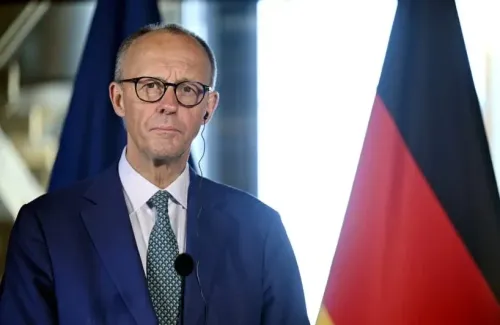
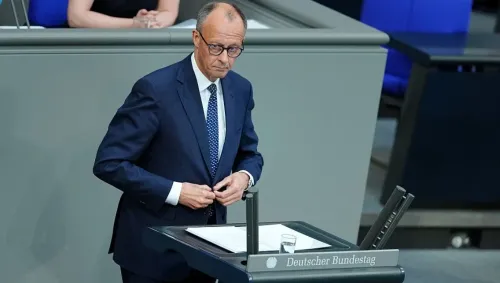
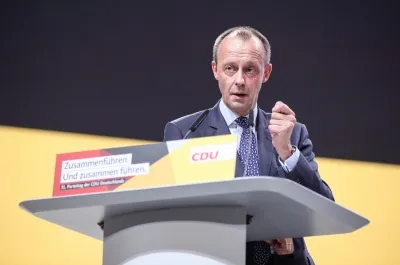
Berlin, Dec 31 (NationPress) In his New Year's message on Wednesday, German Chancellor Friedrich Merz emphasized the necessity for Europe to firmly assert its own interests in a world that is becoming increasingly unpredictable.
During his speech, Merz described the present global landscape as an "epochal shift," characterized by geopolitical transformations, a resurgence of protectionism, and evolving transatlantic relations, according to the Xinhua News Agency.
He remarked, "Our alliance with the United States, which has historically been a reliable protector of our security, is undergoing changes." Merz stated that this situation compels Europeans to defend and promote their interests more vigorously.
On the topic of security, he indicated that Germany must enhance its defense and deterrence capabilities to secure lasting peace.
From an economic perspective, he assured that his government, which will be formed following the federal elections in February 2025, will prioritize enhancing Germany's competitiveness by minimizing bureaucratic hurdles and encouraging technological advancements.
Merz noted, "We are not victims of external circumstances; we are not at the mercy of great powers." He highlighted that 2026 could be a pivotal year for both Germany and Europe.
He expressed optimism, stating, "It can be a year where Germany and Europe reconnect with decades of peace, freedom, and prosperity with renewed strength."
Earlier this month, Merz criticized certain elements of the newly released US national security strategy as "unacceptable" from a European viewpoint, emphasizing the need for Germany and Europe to cultivate greater independence from the United States regarding security policies.
Speaking at a press conference in Rhineland-Palatinate, Merz remarked that he was "not surprised" by the document and recognized some aspects as understandable, especially since U.S. Vice President JD Vance had accused Europe of deviating from the "fundamental values" shared with the U.S. during the Munich Security Conference in February.
However, he disagreed with parts of the U.S. strategy, saying, "I see no necessity for the Americans now wanting to save democracy in Europe." He insisted that if there was a need for salvation, it would be managed independently.
Merz pointed out that the "America First" principle is particularly apparent in the strategy. While he accepted the "America First" notion, he stressed that "America alone" cannot serve U.S. interests; partnerships are essential.
Various U.S. and European news sources have noted that the 30-page U.S. National Security Strategy dedicates only about two and a half pages to Europe. The Financial Times reported that the document "highlights the ideological divide that has emerged between Washington and its traditional allies."
Point of View
I believe Chancellor Merz's remarks underscore a significant shift in Europe's approach to its geopolitical stance. His call for greater independence from the United States highlights the evolving dynamics of international relations. It's crucial for European nations to assess their positions and foster resilience in the face of global uncertainties.
NationPress
20 Sept 2026
Frequently Asked Questions
What did Chancellor Merz emphasize in his New Year's address?
Chancellor Merz highlighted the need for Europe to assert its interests in a changing global landscape marked by geopolitical upheavals.
Why is 2026 considered a pivotal year?
Merz believes that 2026 could be a transformative year for Germany and Europe, potentially reconnecting them with decades of peace and prosperity.
What did Merz say about U.S. national security strategy?
He referred to parts of the newly published U.S. national security strategy as 'unacceptable' from a European perspective, advocating for greater independence.