PM Modi at East Asia Summit: World needs peace, stability, predictability
Synopsis
At the 21st East Asia Summit in Manila, PM Modi issued a pointed call for global peace, stability, and predictability — and backed it with a concrete Seafarers' Safety Initiative. His address stitched together maritime security, AI governance, and counter-terrorism into a single strategic message, reinforcing India's bid to be the Indo-Pacific's most credible multilateral voice.
Key Takeaways
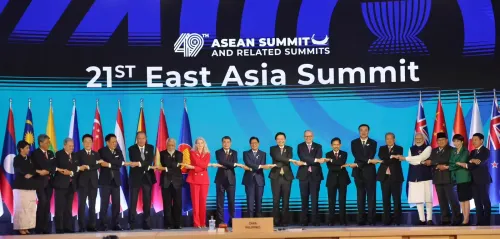
PM Narendra Modi addressed the 21st East Asia Summit in Manila on 17 November .
Modi declared the world needs peace, stability, and predictability after relentless post-pandemic crises affecting food, fuel, and fertiliser.
India announced a Seafarers' Safety Initiative to strengthen joint training and emergency response on international waterways.
Modi reaffirmed ASEAN centrality as the heart of India's Act East Policy and pledged support for peace in Ukraine and West Asia .
Modi cited the AI Impact Summit in New Delhi to press for human-centric AI and digital watermarking to fight deepfakes and misinformation.
He congratulated Philippines President Ferdinand Romualdez Marcos Jr. for hosting the summit.
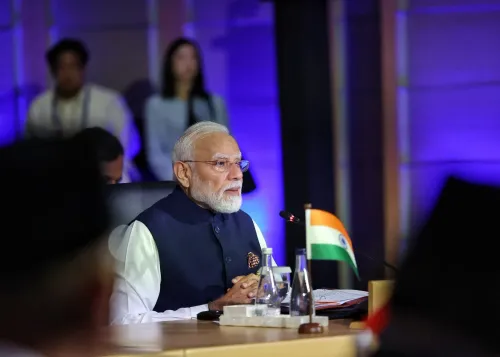
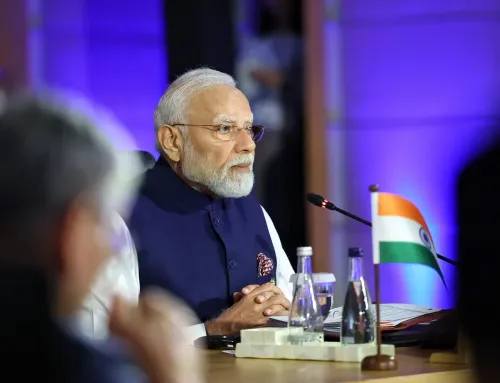
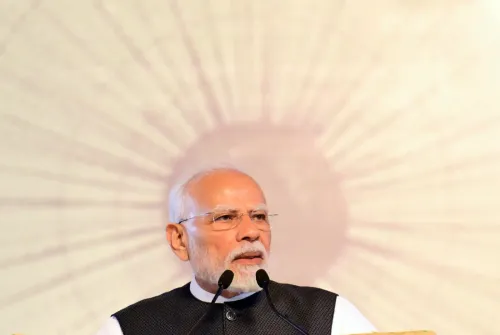
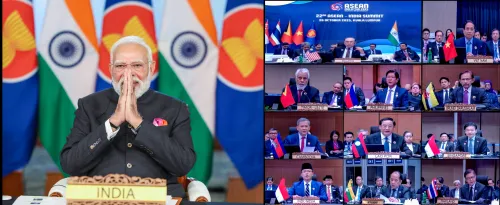
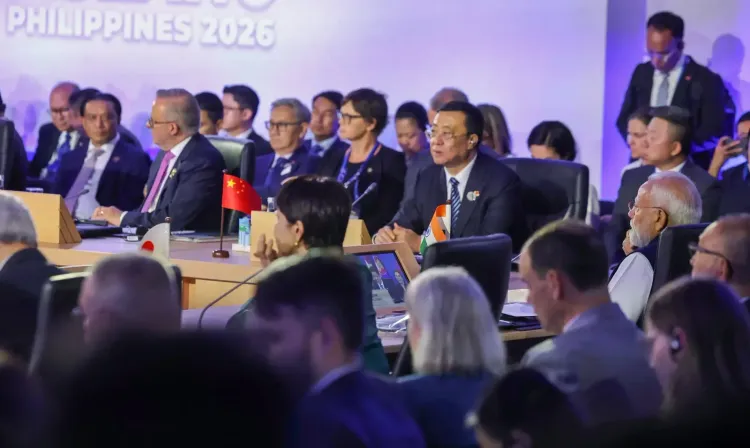
Prime Minister Narendra Modi on Tuesday, 17 November addressed the 21st East Asia Summit (EAS) in Manila, declaring that the global community needs peace, stability, and predictability above all else as it grapples with cascading crises since the Covid-19 pandemic. His address covered maritime security, artificial intelligence governance, cyber fraud, and India's unwavering commitment to a rules-based Indo-Pacific.
Key Statements from Manila
Speaking at the summit, Modi noted that the world has lurched from one crisis to another since the pandemic, with ongoing conflicts compounding pressure on food, fuel, and fertiliser supplies. He also flagged the targeting of ships and seafarers on international waterways as a growing concern, alongside the twin threats of terrorism and cross-border cyber crimes.
'Since the Covid pandemic, the world has been facing one crisis after another. Conflicts are increasing pressure on food, fuel, and fertiliser. Ships and seafarers are also being targeted on international waterways. Along with the serious threat of terrorism, new cross-border crimes like cyber fraud and online scams are also on the rise. What the world needs most today is peace, stability, and predictability,' Modi said in his address.
India's Act East Policy and the Indo-Pacific
Modi reaffirmed that ASEAN unity and centrality remain the bedrock of India's Act East Policy, and that New Delhi is committed to a free, open, inclusive, and rules-based Indo-Pacific. Extending that commitment beyond the region, he said India would continue to support every effort for peace — whether in Ukraine or West Asia. He also congratulated Philippines President Ferdinand Romualdez Marcos Jr. for organising the summit, calling the EAS a vital platform for multilateral dialogue over the years.
Seafarers' Safety Initiative Launched
In a concrete announcement, Modi said India is launching a Seafarers' Safety Initiative aimed at enhancing cooperation in joint training and emergency response across the region. 'Our seas are the lifeline of our shared prosperity. Ensuring their security and freedom of navigation is our responsibility,' he said, framing the initiative as a contribution to collective maritime governance.
Digital Trust and AI Governance
Modi stressed that trust and security in the digital domain are as critical as physical security. He recalled how India, at the AI Impact Summit in New Delhi, championed human-centric, inclusive, and safe Artificial Intelligence development. He specifically highlighted the need for technologies such as digital watermarking to combat deepfakes and the spread of misinformation — a concern increasingly shared by governments across the EAS region.
Significance of the Address
This comes amid heightened global anxieties over two active conflict zones — Russia-Ukraine and the Middle East — and growing unease about the security of critical sea lanes, particularly in the Red Sea and the South China Sea. India's framing of the EAS as a platform for 'dialogue, mutual respect, and cooperation' signals New Delhi's intent to position itself as a stabilising voice in a fractious geopolitical environment. The Seafarers' Safety Initiative, in particular, is a pointed contribution at a moment when maritime disruptions have pushed global freight costs sharply higher. Modi's emphasis on AI governance also aligns with India's broader diplomatic push to shape emerging technology norms in multilateral forums.
Point of View
West Asia, maritime security, and AI governance in a single address, India is signalling that it wants a seat at every table where global order is being renegotiated — not just the ones that suit its immediate neighbourhood. The Seafarers' Safety Initiative is tactically well-timed: maritime disruption in the Red Sea has already cost global supply chains billions, and offering a training-and-response framework gives India operational credibility to match its rhetorical centrality. The AI governance pitch, linking back to the New Delhi summit, also shows consistency — India is building a multilateral trail on emerging-tech norms. The question is whether these initiatives translate into durable frameworks or remain aspirational declarations in a summit communiqué.
NationPress
17 Nov 2026
Frequently Asked Questions
What did PM Modi say at the 21st East Asia Summit in Manila?
PM Modi called for peace, stability, and predictability at the 21st East Asia Summit in Manila on 17 November, warning that the world has faced cascading crises since the Covid-19 pandemic. He also announced a Seafarers' Safety Initiative and highlighted India's commitment to a rules-based Indo-Pacific.
What is India's Seafarers' Safety Initiative?
The Seafarers' Safety Initiative is a new India-led programme announced at the East Asia Summit to enhance regional cooperation in joint training and emergency response for maritime security. It addresses the growing threat to ships and seafarers on international waterways.
How did Modi link India's Act East Policy to the East Asia Summit?
Modi stated that ASEAN unity and centrality are at the heart of India's Act East Policy and that New Delhi is committed to a free, open, inclusive, and rules-based Indo-Pacific. He said India would support peace efforts in Ukraine and West Asia as part of that commitment.
What did PM Modi say about AI and digital governance at the EAS?
Modi recalled India's position at the AI Impact Summit in New Delhi, where it advocated for human-centric, inclusive, and safe AI development. He specifically called for digital watermarking technologies to combat deepfakes and misinformation.
Why is the East Asia Summit significant for India?
The East Asia Summit is a key multilateral platform where India engages with ASEAN nations and major powers on security, trade, and technology governance. For India, it is a central forum for advancing its Act East Policy and shaping the rules-based order in the Indo-Pacific.