PM Modi at 21st East Asia Summit reaffirms India's Indo-Pacific vision
Synopsis
At the 21st East Asia Summit in Manila, PM Modi didn't just restate India's Indo-Pacific rhetoric — he backed it with concrete deliverables: free e-visas for ASEAN tourists, a maritime cooperation plan, a space hackathon, and critical minerals cooperation. Combined with the 2026 ASEAN-India Year of Maritime Cooperation, this marks India's most action-oriented ASEAN engagement in years.
Key Takeaways
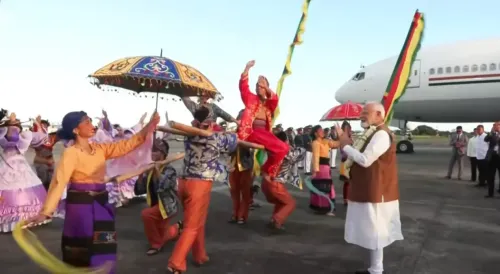
PM Narendra Modi attended the 21st East Asia Summit in Manila, Philippines on 17 November 2026 .
Modi reaffirmed India's vision of a peaceful, stable, and prosperous Indo-Pacific , stressing ASEAN's centrality to regional architecture.
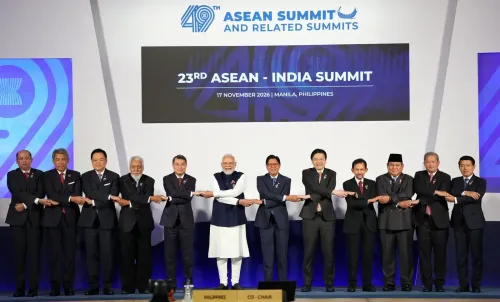
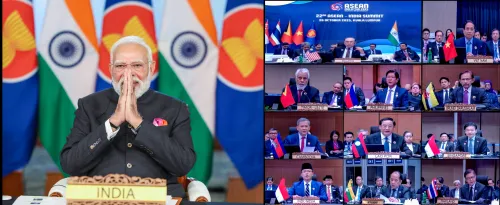
At the 23rd ASEAN-India Summit , leaders reviewed the ASEAN-India Comprehensive Strategic Partnership and welcomed 2026 as the ASEAN-India Year of Maritime Cooperation .
New initiatives announced include a long-term ASEAN-India Maritime Cooperation Plan , ASEAN-India Space Hackathon , cooperation on critical minerals , more scholarships at Nalanda University , and free e-visas for ASEAN tourists.
Modi led the foundation-stone laying for the redevelopment of Gurudwara Khalsa Diwan in Manila, originally established in 1901 and the oldest Gurudwara in the Philippines.
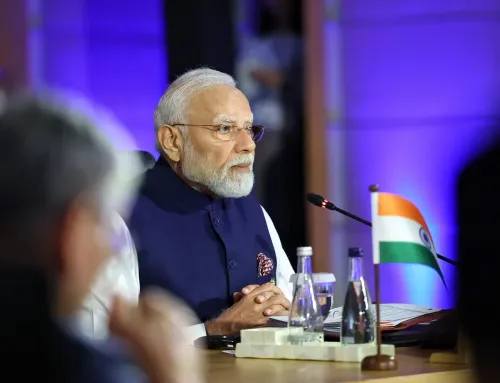
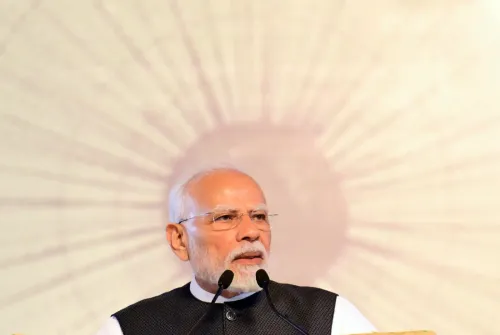
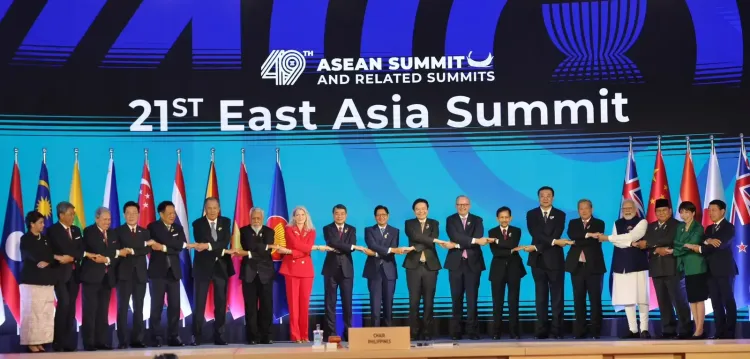
Prime Minister Narendra Modi participated in the 21st East Asia Summit (EAS) in Manila, Philippines, on Tuesday, 17 November 2026, reaffirming India's commitment to a peaceful, stable, and prosperous Indo-Pacific. Modi underscored ASEAN's centrality to the regional architecture and called for stronger multilateral cooperation grounded in dialogue and diplomacy.
India's Stand at the East Asia Summit
At the summit, Prime Minister Modi emphasised the importance of dialogue and diplomacy in resolving key regional and international challenges, according to the Ministry of External Affairs (MEA). The MEA stated that Modi 'reaffirmed India's vision of a peaceful, stable and prosperous Indo-Pacific, underscoring ASEAN's centrality to the regional architecture.' The EAS is widely regarded as the Indo-Pacific's premier forum for strategic dialogue, bringing together 19 member nations — the 11 ASEAN countries plus Australia, China, India, Japan, New Zealand, South Korea, Russia, and the United States.
ASEAN-India Summit Outcomes
Earlier in the day, Modi addressed the 23rd ASEAN-India Summit, where he reaffirmed India's steadfast support for ASEAN unity. Leaders reviewed progress under the ASEAN-India Comprehensive Strategic Partnership and discussed deepening cooperation across multiple domains. The year 2026 has been designated the ASEAN-India Year of Maritime Cooperation, a move appreciated by all participating leaders.
The Prime Minister announced a slate of new initiatives to strengthen the partnership, including a long-term ASEAN-India Maritime Cooperation Plan, an ASEAN-India Space Hackathon, cooperation on critical minerals, expanded scholarships for ASEAN students at Nalanda University, and free e-visas for ASEAN tourists visiting India. This comes amid a broader Indian push to cement its strategic and economic footprint across Southeast Asia as a counterweight to growing Chinese influence in the region.
Gurudwara Foundation Stone in Manila
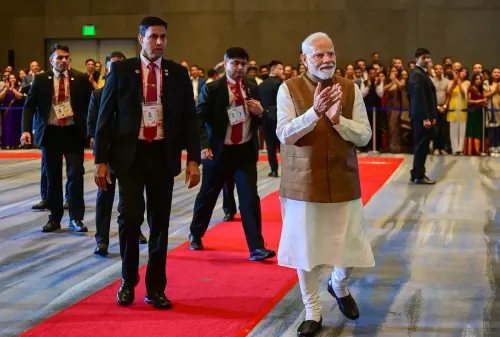
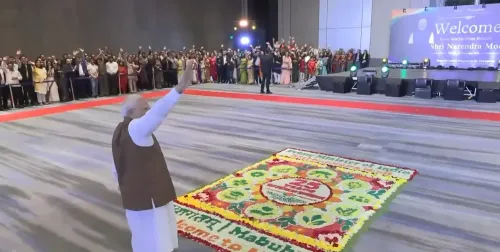
In a culturally significant moment, Prime Minister Modi led the foundation-stone laying ceremony for the redevelopment of Manila's Gurudwara Khalsa Diwan — the oldest Gurudwara in the Philippines. According to the MEA, the Gurudwara was originally established in 1901, formally organised in 1903, and registered as Khalsa Diwan in 1924. The MEA described it as a 'vital bridge' between the Indian-Sikh community and Philippine society. Senator Francis Joseph Escudero and Manila City Mayor Francisco Isko Moreno were present at the ceremony. Modi also interacted with members of the Indian diaspora and the Sikh community during the event.
Significance and What Comes Next
The twin summit appearances mark one of India's most substantive multilateral engagements in Southeast Asia this year. Notably, the EAS marked its 20th anniversary in 2025, giving the 21st edition added symbolic weight as the forum looks to strengthen its institutional role in Indo-Pacific governance. The free e-visa announcement and maritime cooperation plan are expected to be operationalised in the coming months, with detailed frameworks likely to emerge through ASEAN-India working groups. India's diplomatic outreach in Manila signals a continued 'Act East' momentum that now increasingly intersects with its Indo-Pacific and Quad commitments.
Point of View
For instance, need institutional follow-through that past iterations often lacked. The Gurudwara redevelopment was a politically astute soft-power move, reinforcing diaspora ties in a country where India's cultural footprint is underutilised. The real measure of this summit will be whether the 2026 maritime cooperation framework produces binding commitments or becomes another aspirational document in a long line of ASEAN-India declarations.
NationPress
17 Nov 2026
Frequently Asked Questions
What did PM Modi announce at the 21st East Asia Summit in Manila?
PM Modi reaffirmed India's vision of a peaceful, stable, and prosperous Indo-Pacific and called for stronger regional cooperation at the 21st East Asia Summit in Manila on 17 November 2026. He also announced several new ASEAN-India initiatives, including free e-visas for ASEAN tourists and a long-term maritime cooperation plan.
What is the ASEAN-India Year of Maritime Cooperation?
The year 2026 has been designated the ASEAN-India Year of Maritime Cooperation, recognising the centrality of maritime ties in the bilateral relationship. Leaders at the 23rd ASEAN-India Summit appreciated the initiatives undertaken to mark this designation.
What new initiatives did India announce for ASEAN cooperation?
India announced a long-term ASEAN-India Maritime Cooperation Plan, an ASEAN-India Space Hackathon, cooperation on critical minerals, expanded scholarships for ASEAN students at Nalanda University, and free e-visas for ASEAN tourists. All announcements were made at the 23rd ASEAN-India Summit in Manila.
What is the significance of the Gurudwara Khalsa Diwan in Manila?
The Gurudwara Khalsa Diwan is the oldest Gurudwara in the Philippines, originally established in 1901 and formally organised in 1903. PM Modi led its foundation-stone laying ceremony for redevelopment, which the MEA described as a 'vital bridge' between the Indian-Sikh community and Philippine society.
Which countries are members of the East Asia Summit?
The East Asia Summit has 19 members: the 11 ASEAN nations (Brunei, Cambodia, Indonesia, Laos, Malaysia, Myanmar, the Philippines, Singapore, Thailand, Timor-Leste, and Vietnam), plus Australia, China, India, Japan, New Zealand, South Korea, Russia, and the United States.