Modi's three-nation Indo-Pacific tour counters China's growing military assertiveness
Synopsis
China's submarine-launched ballistic missile test on 6 July — the second such launch in international waters in under a year — landed on the same day Modi touched down in Jakarta. The timing was coincidental, but the geopolitical signal was not: India's three-nation Indo-Pacific tour is now unfolding against a backdrop of Chinese military assertiveness and a US partner growing less predictable by the month.
Key Takeaways
China test-launched a long-range ballistic missile from a nuclear-powered submarine on 6 July — the same day PM Modi arrived in Jakarta for his Indo-Pacific tour.
It was the second such Chinese missile test in international waters in recent years, following a September 2024 launch.
Both Australia and New Zealand denounced the missile test; the United States called it a matter of 'great concern.' Modi's tour covered Indonesia , Australia , and New Zealand , reinforcing the Free and Open Indo-Pacific (FOIP) vision and Quad regional convergence.
President Trump extended informal security assurances to Modi at the G7 Summit in Evian-les-Bains, France , which were positively received in New Delhi.
Analysts warn that sustaining India's multi-front Indo-Pacific strategy will require significant resources and political focus.
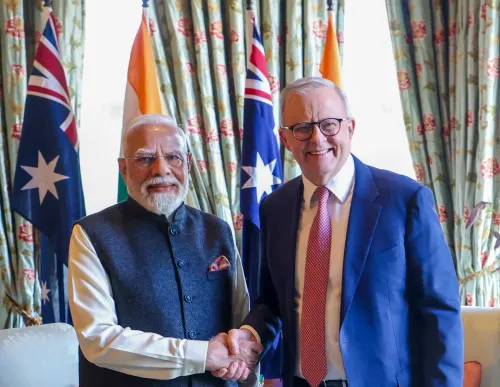
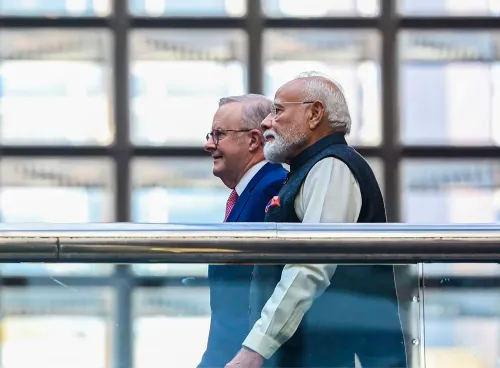
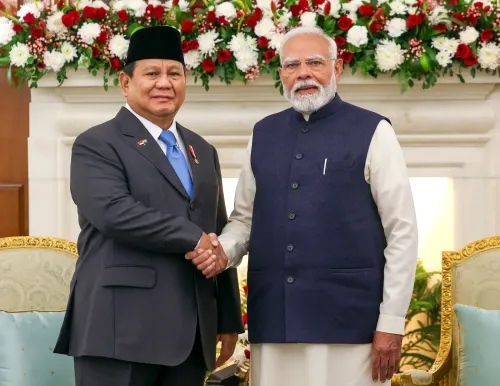
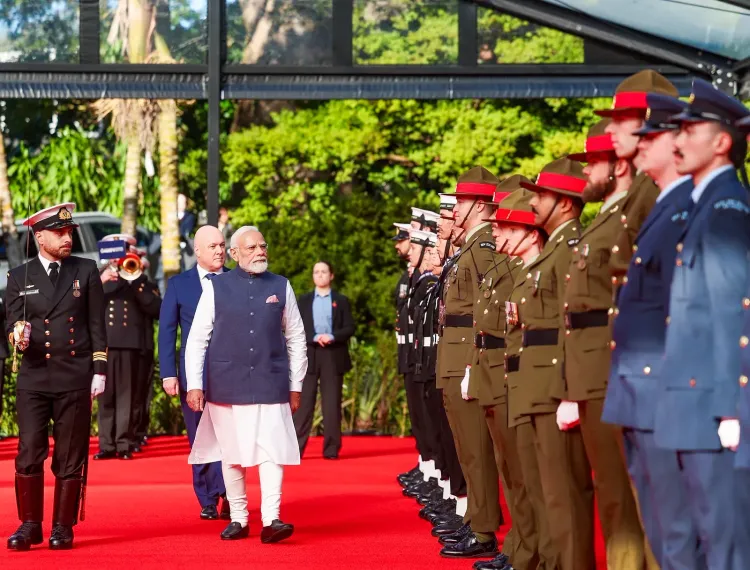
Prime Minister Narendra Modi's three-nation tour of Indonesia, Australia, and New Zealand has drawn fresh strategic significance after China test-launched a long-range ballistic missile on 6 July — the very day Modi landed in Jakarta for the first leg of his trip. Both Canberra and Wellington publicly denounced the missile test, according to an analysis published in online magazine The Diplomat.
The China Missile Test That Set the Stage
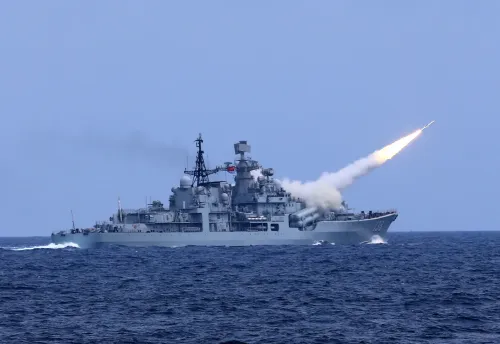
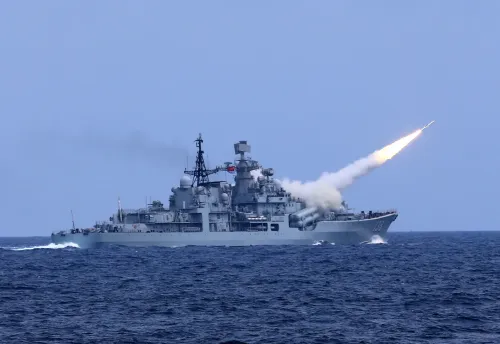
On 6 July, China's navy test-fired a long-range ballistic missile fitted with a dummy warhead from a nuclear-powered submarine into international waters. According to The Diplomat report, this was the second such test in international waters in recent years, following an earlier launch in September 2024. Beijing reportedly sent advance notices to a limited number of countries before the test.
The report characterised the launch as a demonstration of China's 'increasing reach and capability' as part of its nuclear deterrence strategy, as well as a signal of its willingness to assert military presence across the region. Washington condemned the test as a matter of 'great concern' and reaffirmed its defence commitments to allies and partners.
Modi's Tour and the Free and Open Indo-Pacific Vision
Indian analysts cited in the report expressed optimism that 'Modi's new arc of trust will hold the Indo-Pacific together in these disruptive times.' The three-nation itinerary was framed around the vision of a Free and Open Indo-Pacific (FOIP) — the core theme the Quad grouping has sought to build regional convergence around.
Notably, the tour comes at a moment when Washington's own enthusiasm for the Quad and the Indo-Pacific framework is reportedly wavering. The Diplomat analysis flagged that the United States has shown ambiguity around the 'Indo-Pacific' nomenclature in its own strategy documents, and that President Donald Trump's concept of a G2 — a transactional arrangement with China to co-manage global affairs — does not necessarily counterbalance Beijing's assertive regional posture.
New Delhi's Careful Strategic Balancing Act
Despite frustrations with Washington's inconsistent approach — including the renaming of its Indo-Pacific Command — New Delhi has been deliberate in ensuring that its outreach to Tokyo, Canberra, Wellington, and Jakarta is not read as a pivot away from the United States, the report noted.
Informal security assurances extended by President Trump to Prime Minister Modi during their bilateral meeting on the sidelines of last month's G7 Summit in Evian-les-Bains, France, were reportedly received positively in New Delhi. The report suggested this bilateral channel continues to serve as a stabilising thread even as multilateral frameworks face pressure.
India's Strategic Bandwidth and What Comes Next
The report cautioned that sustaining a robust, multi-faceted Indo-Pacific strategy would demand significant resources and sustained political focus — potentially stretching New Delhi's capacities. However, it argued that India's proactive engagement through Modi's trips, rather than waiting for a regional crisis to force its hand, may represent the strategy's 'greatest strength.'
An India capable of navigating multiple simultaneous partnerships, the analysis concluded, could ultimately stand on a stronger platform than one dependent on Washington's shifting priorities. As China's military posture in the region grows bolder, the strategic weight of Modi's Indo-Pacific outreach is likely to intensify in the months ahead.
Point of View
The Indo-Pacific's architecture risks losing its anchor. India is filling that space through bilateral trust-building, but The Diplomat's caveat deserves attention: New Delhi's strategic bandwidth is finite, and sustaining simultaneous partnerships with Jakarta, Canberra, Wellington, and Tokyo while managing a restless border with China is a resource-intensive proposition. The missile test on 6 July was a reminder that Beijing sets the pace in this region — and that India's partners are watching to see whether New Delhi can keep up.
NationPress
10 Oct 2026
Frequently Asked Questions
What was the significance of China's missile test on 6 July 2025?
China's navy test-launched a long-range ballistic missile with a dummy warhead from a nuclear-powered submarine on 6 July, firing it into international waters. It was the second such test in international waters in recent years, following a similar launch in September 2024, and was condemned by both Australia and New Zealand as well as the United States.
Which countries did PM Modi visit on his three-nation Indo-Pacific tour?
Prime Minister Modi visited Indonesia, Australia, and New Zealand on the tour, beginning with his arrival in Jakarta on 6 July. The trip was aimed at deepening strategic ties and reinforcing the vision of a Free and Open Indo-Pacific.
What is the Free and Open Indo-Pacific (FOIP) framework?
The Free and Open Indo-Pacific is a strategic vision championed by Quad member nations — India, the United States, Australia, and Japan — to promote a rules-based regional order, freedom of navigation, and resistance to coercive power projection. It forms the thematic backbone of India's Indo-Pacific diplomatic outreach.
How has the US approach to the Indo-Pacific affected India's strategy?
According to the analysis, Washington has shown ambiguity about the Indo-Pacific label in its own strategy and is less enthusiastic about the Quad than before. India has responded by independently deepening bilateral ties with key Indo-Pacific partners without signalling a break from the US alliance structure.
What did Trump tell Modi at the G7 Summit in Evian-les-Bains?
President Trump reportedly extended informal security assurances to Prime Minister Modi during their bilateral meeting on the sidelines of the G7 Summit in Evian-les-Bains, France, last month. These assurances were positively received in New Delhi, according to the report.