China fires missile from nuclear sub, Pacific test alarms Japan, Taiwan, Australia
Synopsis
A Chinese nuclear-powered submarine test-fired a missile toward the Pacific on 6 July — the second such publicly confirmed launch in roughly a year. Japan, Taiwan, Australia, and New Zealand all condemned it, with New Zealand explicitly calling it part of a 'recurring pattern.' The test crystallises growing Indo-Pacific anxiety over Beijing's nuclear build-up and its willingness to demonstrate it.
Key Takeaways
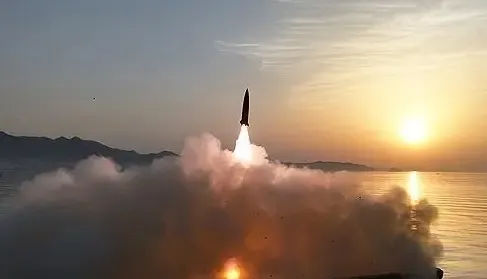
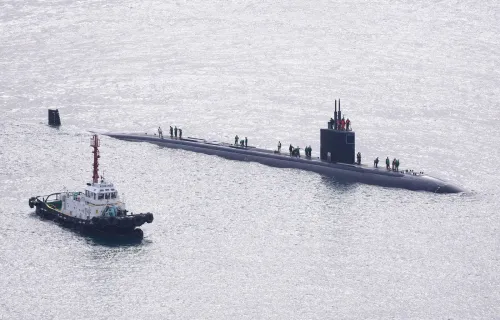
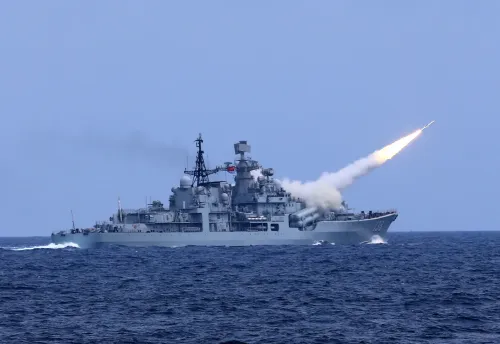
The Chinese military confirmed a nuclear-powered submarine successfully test-fired a missile toward the Pacific Ocean on 6 July .
Japan was notified by Beijing at around 11:30 am ; the projectile did not cross Japan's territory or its EEZ .
Chief Cabinet Secretary Minoru Kihara criticised China's lack of transparency and rapid expansion of nuclear missile capabilities, including ICBMs .
Taiwan's Presidential Office accused Beijing of attempting to 'intimidate the international community.' Australian FM Penny Wong called the launch 'destabilising'; New Zealand FM Winston Peters described it as part of a 'recurring pattern' following China's 2024 ICBM test into the South Pacific.
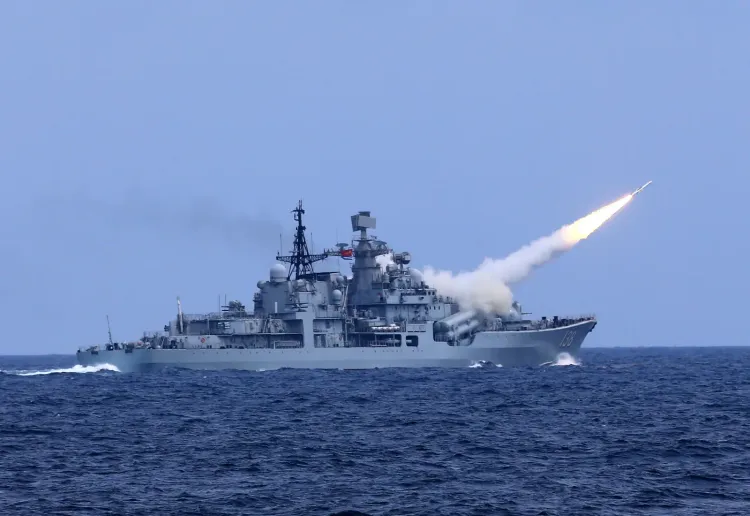
The Chinese military on Monday, 6 July announced that a nuclear-powered submarine had successfully test-fired a missile toward the Pacific Ocean, triggering swift condemnation from Japan, Taiwan, Australia, and New Zealand. The launch, which Japanese media reported first, marks one of Beijing's most visible demonstrations of submarine-launched ballistic capability in recent years.
What China Launched and Where
The People's Liberation Army (PLA) confirmed the test, describing it as a successful submarine-launched missile firing directed toward the Pacific. According to Japanese Chief Cabinet Secretary Minoru Kihara, the projectile did not fly over Japan's territory or its Exclusive Economic Zone (EEZ), and Tokyo was notified by Beijing at around 11:30 am before the launch. No Japanese vessels or aircraft were reported damaged.
Japan's Stern Response
Despite the advance notice, Kihara issued a sharp rebuke, criticising China for 'continuously increasing its defence spending at a high rate without sufficient transparency and expanding its nuclear missile capabilities, including intercontinental ballistic missiles, rapidly and extensively.' Japan formally demanded that China 'rethink' the missile firing and conveyed 'serious concern' over intensifying military activities, the Japanese government said. Tokyo vowed to remain vigilant.
Taiwan and the Indo-Pacific React
Taiwan's Presidential Office condemned the launch outright, accusing Beijing of having 'sought to intimidate the international community' through the test. Presidential Office spokeswoman Karen Kuo urged China to 'exercise restraint, abide by the rules-based international order and immediately cease its irresponsible unilateral actions.'
Australian Foreign Minister Penny Wong called the launch 'destabilising to the region,' while New Zealand Foreign Minister Winston Peters said his country is 'deeply concerned' by the launch of nuclear-capable weapons. Peters added that the test appeared to follow a 'recurring pattern by China,' pointing to Beijing's 2024 test-firing of an Intercontinental Ballistic Missile (ICBM) into the South Pacific as a precedent.
Broader Strategic Context
This launch comes amid sustained concern across the Indo-Pacific about China's rapid nuclear build-up. Beijing has sharply increased its defence budget over successive years while providing limited transparency on its nuclear doctrine or arsenal size — a pattern that analysts say complicates deterrence calculations for regional powers. Notably, this is at least the second publicly confirmed Chinese ballistic missile test into the Pacific in roughly a year, reinforcing the pattern Peters cited. The test is likely to intensify calls within Japan and Australia for deeper security cooperation under frameworks such as QUAD and AUKUS.
What Happens Next
Diplomatic fallout is expected to continue in coming days, with several nations likely to raise the matter in multilateral forums. Japan's demand that China reconsider such launches has historically gone unacknowledged by Beijing, suggesting the immediate trajectory will be defined more by regional defence posturing than by dialogue.
Point of View
And it reflects a broader Indo-Pacific shift from hedging to explicit pushback. The test will accelerate AUKUS and QUAD defence timelines more than any diplomatic statement could.
NationPress
5 Oct 2026
Frequently Asked Questions
What did China test-fire from a nuclear submarine?
China's military confirmed that a nuclear-powered submarine successfully test-fired a missile directed toward the Pacific Ocean on 6 July. The exact missile type was not officially specified, though regional governments described it as a nuclear-capable ballistic weapon.
Why are Japan and other nations concerned about the launch?
Japan, Taiwan, Australia, and New Zealand expressed concern because the test demonstrates China's expanding submarine-launched nuclear strike capability with limited transparency. Critics argue such tests are destabilising, particularly given China's rapid defence spending growth and the precedent set by its 2024 ICBM test into the South Pacific.
Did the missile fly over Japan?
No. According to Chief Cabinet Secretary Minoru Kihara, the missile did not fly over Japan's territory or its Exclusive Economic Zone. Beijing also notified Tokyo in advance at around 11:30 am on the day of the launch.
What has Taiwan said about the missile test?
Taiwan's Presidential Office condemned the launch, saying Beijing sought to 'intimidate the international community.' Spokeswoman Karen Kuo called on China to exercise restraint and abide by the rules-based international order.
How does this test fit into China's broader military pattern?
New Zealand Foreign Minister Winston Peters described the launch as part of a 'recurring pattern by China,' citing Beijing's 2024 test-firing of an ICBM into the South Pacific. Analysts see the tests as part of China's deliberate effort to signal its expanding nuclear deterrence posture to regional and global audiences.