China missile test in South Pacific Nuclear Free Zone raises regional alarm
Synopsis
China fired a dummy-warhead ballistic missile into the South Pacific Nuclear Free Zone on the same day Australia and Fiji signed an anti-China defence pact — a juxtaposition analysts say was no accident. With the missile possibly being a JL-3 capable of hitting the US mainland, and regional governments from Tokyo to Wellington condemning the move, Beijing has sent the clearest signal yet that it views the Pacific as a theatre for strategic assertion, not just routine training.
Key Takeaways
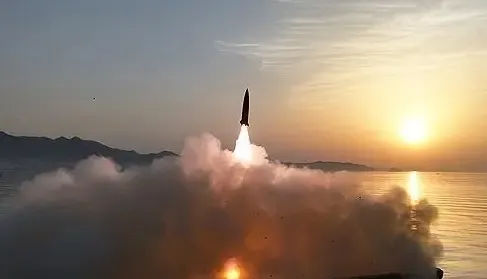
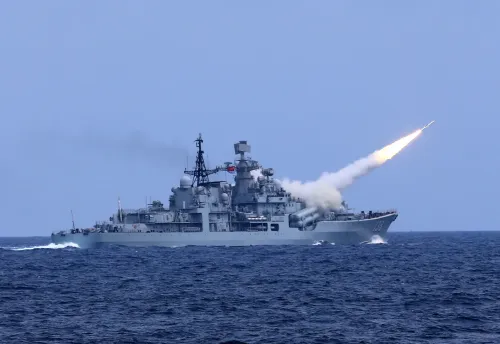
China test-fired a long-range ballistic missile with a dummy warhead from a nuclear-powered submarine into the Pacific Ocean on 12 July .
The missile landed within the South Pacific Nuclear Free Zone , established under the 1986 Treaty of Rarotonga , which China ratified protocols for in 1987 .
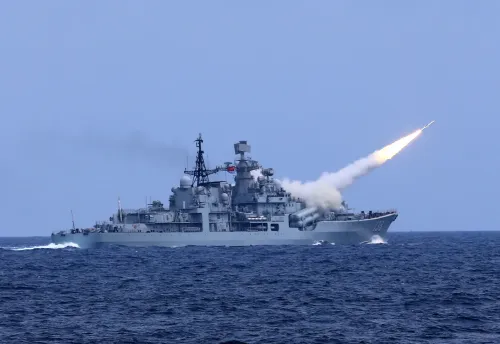
The launch coincided with Australia and Fiji signing a defence pact, and with China-Russia joint naval exercises off Qingdao .
Analysts suggest the missile may be a JL-3 , reportedly capable of reaching the continental United States .
Australia , New Zealand , Japan , and Taiwan all condemned the launch; New Zealand FM Winston Peters called it a 'recurring pattern' following China's 2024 ICBM test in the same region.
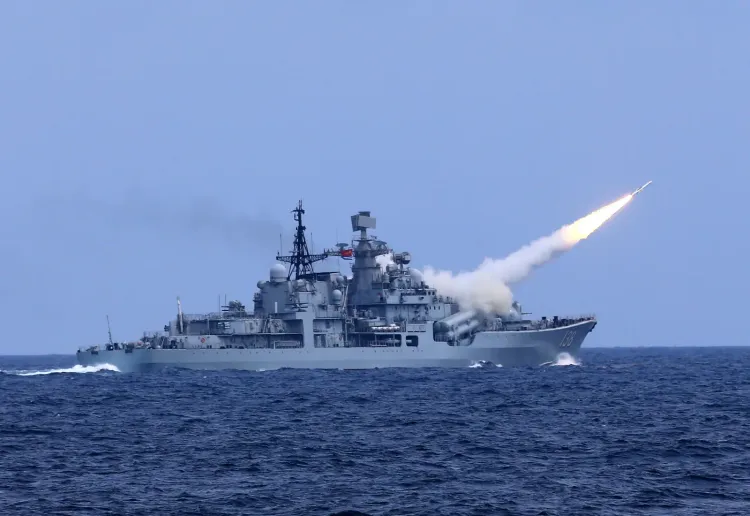
China test-fired a long-range ballistic missile carrying a dummy warhead from a nuclear-powered submarine into the Pacific Ocean on 12 July, drawing sharp criticism from Australia, New Zealand, Japan, and others. The launch, which Beijing described as routine annual training conducted in compliance with international law, has raised significant geopolitical concerns — particularly because the missile landed within the South Pacific Nuclear Free Zone, an area protected under the 1986 Treaty of Rarotonga.
Why the Timing and Location Matter
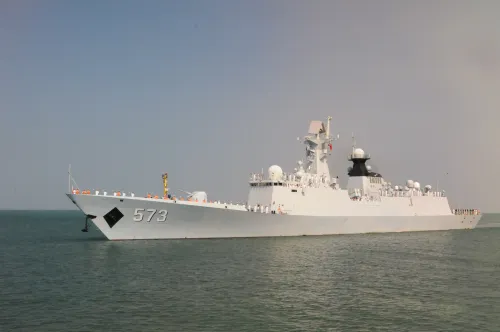
The test was conducted on the same day Australia and Fiji signed a defence pact widely seen as aimed at countering China's growing influence in the Pacific. According to analysts, the coincidence was unlikely to be accidental. The launch also occurred while China and Russia were conducting joint naval exercises off Qingdao, underscoring what observers describe as a coordinated demonstration of military strength and strategic alignment between Beijing and Moscow.
Analysts cited in the report suggest the missile may have been a JL-3, a submarine-launched ballistic missile reportedly capable of reaching the continental United States — a detail that amplifies concerns about China's advancing nuclear deterrent capabilities.
The Nuclear-Free Zone Question
China ratified protocols under the Treaty of Rarotonga in 1987, pledging not to test nuclear weapons within the South Pacific Nuclear Free Zone. While the warhead in this test was a dummy, analysts and regional governments argue the launch is symbolically troubling and potentially inconsistent with the spirit of those commitments.
'Firstly, this constitutes a violation of norms. The missile landed within the South Pacific Nuclear Free Zone, established by the 1986 Treaty of Rarotonga. China ratified protocols in 1987 pledging not to test nuclear weapons there, making this launch symbolically troubling even if the warhead was a dummy. Secondly, it is a destabilising signal,' wrote Khedroob Thondup, nephew of Tibetan spiritual leader the Dalai Lama, in a report published in the European Times.
Thondup further characterised the launch as 'not just a technical exercise — it is a geopolitical statement,' adding that by firing into a nuclear-free zone on the very day its rivals signed a defence pact, Beijing 'has reminded the Pacific that its ambitions extend far beyond routine drills.'
Regional Governments Respond
Japan urged China to reconsider its actions, expressing 'serious concern' over the launch. Australian Foreign Minister Penny Wong called the test 'destabilising to the region.' New Zealand Foreign Minister Winston Peters said his country is 'deeply concerned by the launch of nuclear-capable weapons,' and described it as part of a 'recurring pattern by China,' pointing to Beijing's 2024 test-firing of an Intercontinental Ballistic Missile (ICBM) into the same region.
Taiwan's Presidential Office spokesperson Karen Kuo linked the launch to a broader pattern of escalation, noting it followed increased Chinese military activity along the island chains and the enforcement of China's new 'ethnic unity' legislation — which she described as enabling 'transnational repression.' The Presidential Office 'strongly condemns this series of unilateral actions' and urged Beijing to 'exercise restraint, follow the rules-based international order, and immediately stop its irresponsible unilateral actions.'
What Happens Next
The test adds fresh pressure on Pacific island nations to define their strategic alignments at a time when both China and Western powers are competing for regional influence. Whether the response from Australia, New Zealand, Japan, and others escalates into formal diplomatic or defence measures — or is absorbed as another data point in an increasingly tense Indo-Pacific — will shape the region's security architecture in the months ahead.
Point of View
Not a scheduling quirk. What is notable is the pattern: this follows a 2024 ICBM test into the same zone, suggesting China is systematically stress-testing the boundaries of the Treaty of Rarotonga without technically violating its letter. The international response — strongly worded statements from Canberra, Wellington, and Tokyo — has so far remained rhetorical. Until that changes, Beijing has little reason to alter its calculus.
NationPress
11 Oct 2026
Frequently Asked Questions
What did China test-fire into the South Pacific?
China test-fired a long-range ballistic missile carrying a dummy warhead from a nuclear-powered submarine into the Pacific Ocean on 12 July. The missile landed within the South Pacific Nuclear Free Zone, a region protected under the 1986 Treaty of Rarotonga.
Why is the missile test considered a violation of norms?
China ratified protocols under the Treaty of Rarotonga in 1987, pledging not to test nuclear weapons within the South Pacific Nuclear Free Zone. While the warhead used was a dummy, analysts argue the launch is symbolically troubling and inconsistent with the spirit of those commitments.
Which countries condemned China's missile test?
Australia, New Zealand, Japan, and Taiwan all condemned the launch. Australian Foreign Minister Penny Wong called it 'destabilising,' New Zealand FM Winston Peters said the country is 'deeply concerned,' and Taiwan's Presidential Office 'strongly condemns' the action.
What missile did China reportedly use in the test?
Analysts cited in reports suggest the missile may have been a JL-3, a submarine-launched ballistic missile reportedly capable of reaching the continental United States. The test highlights China's advancing submarine-launched nuclear deterrent capabilities.
Why is the timing of the test significant?
The test was conducted on the same day Australia and Fiji signed a defence pact widely seen as aimed at countering China's influence in the Pacific, and while China and Russia were holding joint naval exercises off Qingdao. Observers say the combination of timing and location makes the launch a deliberate geopolitical signal rather than routine training.