Japan must counter China's 'new militarism' narrative, restructure Beijing strategy: Report
Synopsis
China launched a calculated 'new militarism' information campaign against Japan starting December last year, and a Japan News report now warns Tokyo must treat this as a long-game cognitive war — not just a diplomatic spat. With Defence Minister Koizumi firing back at the Asia Security Summit and Beijing showing no signs of relenting, Japan's ability to win the narrative battle among Indo-Pacific partners may prove as consequential as its military build-up.
Key Takeaways
Japan News report warns Japan must counter China's 'new militarism' narrative and restructure its Beijing strategy for a prolonged contest.
China first deployed the 'new militarism' label at a Chinese Foreign Ministry press conference on 26 December , in response to Japan's fiscal year 2026 defence budget.
The narrative intensified after Prime Minister Sanae Takaichi's Diet remarks in November on a potential Taiwan contingency.
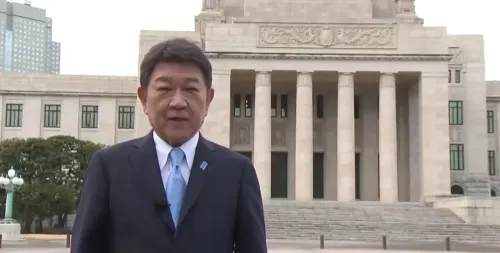
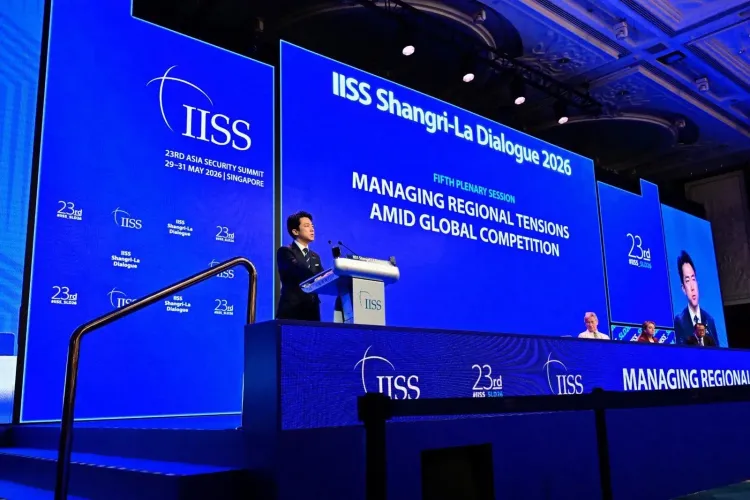
Defence Minister Shinjiro Koizumi publicly rebutted the label at the Asia Security Summit , noting Japan holds no nuclear weapons or strategic bombers.
The report urges Tokyo to build allied support and deliver timely counterarguments to prevent 'Chinese propaganda' from shaping global opinion by default.
Japan must sustain active counterarguments against China's 'new militarism' characterisation of Tokyo and overhaul its strategic posture toward Beijing in preparation for a prolonged geopolitical contest, according to a report by Japan News published on 14 June. The report warns that China is weaponising the 'new militarism' label as a tool of cognitive warfare to isolate Japan in international public opinion.
Origins of the 'New Militarism' Narrative
According to the report, China formally introduced the 'new militarism' framing at a regular press conference of the Chinese Foreign Ministry on 26 December last year. The move came in direct response to Japan's defence budget for fiscal year 2026. A Chinese Foreign Ministry spokesperson declared at the time: 'China will work with all peace-loving countries to push back any dangerous move designed to resurrect militarism or cultivate neo-militarism, and jointly defend the outcomes of WWII victory.'
The report notes that China's use of the term escalated sharply after Prime Minister Sanae Takaichi's remarks in the Diet last November on a potential Taiwan contingency, which drew a strong reaction from Beijing. China is now simultaneously intensifying diplomatic pressure on Japan while deploying the narrative to shape international opinion against Tokyo, the report said.
China's Messaging at the Asia Security Summit
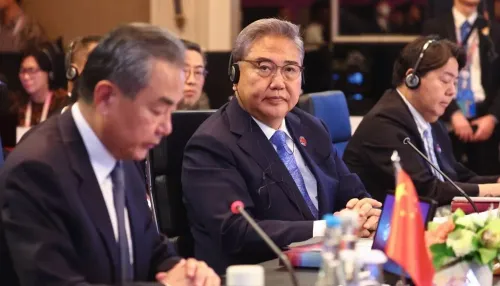
At last month's Asia Security Summit, the head of the Chinese delegation escalated the rhetoric further. 'I deeply doubt whether a country that has not thoroughly eradicated the toxic legacy of militarism is qualified to talk extensively about defence cooperation on international occasions, and whether it can win the trust of the international community, especially the Asian countries it once invaded,' the Chinese delegate said.
The report identified this statement as the direct trigger for Japanese Defence Minister Shinjiro Koizumi's rebuttal at the same summit, marking one of Tokyo's sharpest public responses to the narrative to date.
Japan's Rebuttal: Koizumi Pushes Back
Defence Minister Koizumi directly challenged the label at the summit: 'Some of you may have heard the term ‘new militarism’, but nothing further from the truth… Think about it. There is a country that has a huge arsenal of nuclear weapons and strategic bombers. Japan has neither of such weapons. And yet Japan is labelled ‘new militarism’. Isn’t it strange?'
Koizumi also appealed for direct engagement over propaganda: 'Differences in perception and friction do arise between nations. What is needed at such times is not the repetition of unfounded claims in the other side’s absence. What is needed is direct and candid dialogue. And in fact, Japan’s door to dialogue is always open.'
Invoking the risk of repeated falsehoods hardening into accepted truth, Koizumi warned: 'There’s a saying, “If you tell a lie a hundred times, it becomes the truth.” We must refute what needs to be refuted.'
What the Report Recommends
The Japan News report argues that Tokyo must move beyond reactive rebuttals and build a structured, proactive communication strategy. It recommends that Japan increase the number of allied nations that understand its security position, preventing the international community from accepting Chinese propaganda uncritically.
The report also observed an asymmetry in the current dynamic: while China continues to catalogue Japan's alleged 'faults', Japan has largely confined itself to refuting claims and emphasising its openness to dialogue — a posture the report suggests may need to be supplemented with more assertive outreach.
What Comes Next
The report signals that China is likely to persist with the 'new militarism' label and amplify narratives such as 'Japan is openly challenging the post-war international order.' As Japan's defence spending rises and its security partnerships deepen, analysts expect Beijing's information campaign to intensify ahead of any further developments on the Taiwan question. Tokyo's ability to build a broader coalition of understanding among Indo-Pacific and European partners will be a key test of its diplomatic reach in the months ahead.
Point of View
Regardless of evidence. Japan's rebuttal strategy, largely reactive and confined to denials, has so far ceded the initiative. The more consequential question is whether Tokyo can convert its security partnerships into active narrative allies, because the countries that matter most — Southeast Asian nations with their own historical grievances against Japan — are precisely the audience Beijing is targeting. Koizumi's summit remarks were pointed, but a speech is not a strategy. Japan needs a sustained, multilingual, institution-backed communications architecture if it intends to compete in the cognitive domain where this contest is actually being fought.
NationPress
15 Sept 2026
Frequently Asked Questions
What is China's 'new militarism' narrative about Japan?
China's 'new militarism' narrative is a characterisation Beijing has applied to Japan's recent defence build-up, claiming Tokyo is challenging the post-war international order. China formally introduced the term at a Foreign Ministry press conference on 26 December, in response to Japan's fiscal year 2026 defence budget, and has since used it at multilateral forums including the Asia Security Summit.
Why is Japan concerned about China's 'new militarism' label?
Japan is concerned because the label is being used as a tool of cognitive warfare to isolate Tokyo in international public opinion, particularly among Asian nations that have historical grievances with Japan. A Japan News report warns that if left unchallenged, the narrative risks being accepted at face value by the international community.
How has Japan responded to the 'new militarism' accusations?
Japanese Defence Minister Shinjiro Koizumi directly rebutted the label at the Asia Security Summit, pointing out that Japan possesses neither nuclear weapons nor strategic bombers — unlike the country levelling the accusation. Koizumi also called for direct dialogue, stating Japan's door to talks remains open.
What does the Japan News report recommend Tokyo do?
The report recommends that Japan offer timely counterarguments, increase the number of allied nations that understand its security position, and restructure its overall strategy toward Beijing in preparation for a prolonged geopolitical contest. It warns against allowing Chinese propaganda to go unchallenged in international forums.
When did China begin using the 'new militarism' term against Japan?
China began using the term at the end of last year, starting with a regular Foreign Ministry press conference on 26 December. Its use escalated following Prime Minister Sanae Takaichi's remarks in the Diet in November on a potential Taiwan contingency, which drew a sharp reaction from Beijing.