CM Himanta Vows to Pursue Drug Network Masterminds Abroad

Synopsis
Assam Chief Minister Himanta Biswa Sarma has warned that drug network masterminds sheltering abroad will be pursued by the Modi government through international channels, while Assam Police simultaneously cracks down on local handlers of the same syndicate.
Key Takeaways
Assam CM Himanta Biswa Sarma stated on 12 July 2026 that drug network masterminds have fled to foreign jurisdictions.
He invoked the Modi Government's resolve to pursue the accused internationally, signalling use of diplomatic and extradition channels.
Assam Police is conducting simultaneous operations against local handlers of the drug network within the state.
The move reflects a dual-track strategy: overseas pursuit of kingpins and domestic crackdown on ground-level operatives.
Assam and other northeastern states face chronic drug trafficking pressure linked to the Golden Triangle corridor.
The Narcotics Control Bureau (NCB) and central government resources are expected to support the cross-border pursuit.
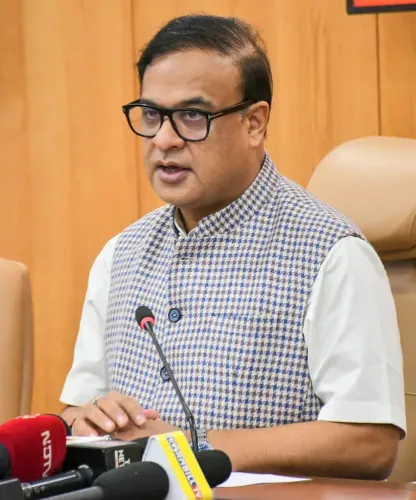
Assam Chief Minister Himanta Biswa Sarma on Sunday, 12 July 2026, declared that the masterminds behind a drug network operating in Assam have fled to foreign jurisdictions, and that the central government under Prime Minister Narendra Modi will pursue them regardless of where they are. The statement came alongside confirmation that Assam Police is simultaneously intensifying action against local handlers of the syndicate.
Context
CM Sarma posted on X on 12 July 2026, stating: 'The masterminds of the drug network are seeking shelter in foreign jurisdictions. But this is the Modi Government and we will pursue them wherever they are. While Assam Police is coming hard on their local handlers.' The post accompanied a video, suggesting the statement was part of a broader public communication on the state's ongoing anti-drug drive.
The declaration signals a two-track strategy: diplomatic and law-enforcement pressure on overseas accused, and ground-level crackdowns by the state police on those operating within Assam.
Policy Backdrop
Drug trafficking has been a persistent challenge across India's northeastern states, with Assam particularly exposed to supply chains linked to the Golden Triangle — the cross-border narcotics corridor spanning parts of Myanmar, Thailand, and Laos. The Narcotic Drugs and Psychotropic Substances (NDPS) Act, 1985 provides the primary legislative framework under which both state police and central agencies operate against traffickers.
The Narcotics Control Bureau (NCB), functioning under the central government, coordinates with state forces to target networks that span multiple jurisdictions. India has also used extradition treaties and diplomatic channels in past cases to seek the return of accused persons who have fled abroad.
Stakeholders and Impact
The most immediate impact is on drug syndicates that have reportedly positioned key figures outside India to evade arrest. CM Sarma's statement puts those individuals on notice that geographic distance will not insulate them from prosecution.
For communities across Assam and the broader northeast, persistent drug flows have fuelled addiction, crime, and economic disruption. Intensified action against both the supply chain's foreign masterminds and its domestic foot soldiers is aimed at dismantling the network at multiple levels simultaneously.
The framing of the pursuit as a function of 'the Modi Government' underscores that the effort draws on the central government's diplomatic and intelligence resources — not just state-level policing capacity.
What's Next
Observers will watch for any formal extradition requests filed through India's Ministry of External Affairs, or announcements of joint operations with foreign law-enforcement agencies targeting the named masterminds. On the domestic front, Assam Police is expected to continue and potentially escalate arrests of local handlers in the coming weeks.
The trajectory of this drive will test the practical reach of India's international law-enforcement cooperation mechanisms and could set a precedent for how northeastern states coordinate with the centre on transnational organised crime.
Point of View
' he ties Assam's anti-drug drive to the BJP's national law-and-order narrative ahead of what remains a politically sensitive security landscape in the northeast. The two-track approach — international pursuit of masterminds alongside domestic arrests of handlers — mirrors the strategy used in high-profile terror financing cases and signals that Assam intends to treat organised drug trafficking with comparable seriousness. Whether extradition requests materialise will be the real test of this posture.
NationPress
12 Jul 2026
Frequently Asked Questions
Who are the drug network masterminds CM Himanta Sarma is referring to?
CM Sarma did not name specific individuals in his post. He stated that the masterminds of a drug network operating in Assam have taken shelter in foreign jurisdictions and will be pursued by the Modi government through available international channels.
What action is Assam Police taking against the drug network?
According to CM Sarma's statement on 12 July 2026, Assam Police is intensifying operations against the local handlers of the drug syndicate within the state, even as the central government targets the overseas masterminds.
Can India pursue drug criminals who have fled abroad?
Yes. India uses extradition treaties, Mutual Legal Assistance Treaties (MLATs), and diplomatic channels to seek the return or prosecution of accused persons in foreign jurisdictions. The Narcotics Control Bureau coordinates such efforts at the central level.
Why is Assam particularly vulnerable to drug trafficking?
Assam and other northeastern states share proximity to the Golden Triangle — a major cross-border narcotics corridor spanning parts of Myanmar, Thailand, and Laos — making the region a transit and distribution zone for illicit drugs entering India.
What law governs drug trafficking cases in India?
The Narcotic Drugs and Psychotropic Substances (NDPS) Act, 1985, is the primary legislation under which drug trafficking offences are prosecuted in India, providing for stringent penalties and enabling coordination between state police and central agencies.