Elon Musk becomes world's first trillionaire as SpaceX IPO hits $2.1 trillion
Synopsis
SpaceX's Wall Street debut wasn't just the biggest IPO in history — it minted the world's first trillionaire. With a $2.1 trillion market cap on day one, $11.4 billion in Starlink revenue, and a $28.5 trillion AI-linked addressable market in its sights, SpaceX has crossed from rocket company to civilisational infrastructure — and the policy questions around that concentration of power are only beginning.
Key Takeaways
Elon Musk became the world's first trillionaire after SpaceX shares surged on their debut trading day on 13 June .
SpaceX shares closed at $160.95 , up more than 19 per cent from the IPO price of $135 .
The offering raised $75 billion , giving SpaceX an opening valuation of $1.77 trillion that climbed to $2.1 trillion by close.
Starlink generated $11.4 billion in revenue and turned a profit; the US government contributed roughly $4 billion as SpaceX 's largest single customer in 2025 .
SpaceX estimates its total addressable market at $28.5 trillion , with most of the opportunity tied to artificial intelligence infrastructure.
Policy experts have raised concerns about SpaceX 's growing leverage over US government space and national security programmes.
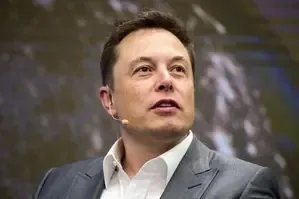
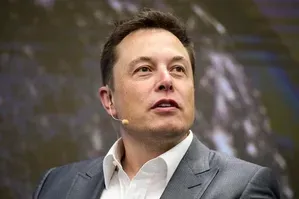
Elon Musk became the world's first trillionaire on 13 June after SpaceX completed the largest initial public offering in history, with the rocket and satellite company's market capitalisation surging to approximately $2.1 trillion on its debut trading day. The milestone cements Musk's position as the wealthiest individual in recorded history.
Record-Breaking Market Debut
SpaceX shares closed at $160.95, a gain of more than 19 per cent over the IPO price of $135, marking one of the strongest first-day performances for a major listing in recent years. The offering itself raised $75 billion in share sales, according to reports, giving the company an opening valuation of $1.77 trillion — a figure that climbed to $2.1 trillion by the close of trading. That places SpaceX among the most valuable publicly traded companies in the United States.
Musk's Stake and the Trillionaire Threshold
Musk reportedly owns nearly half of SpaceX, and the surge in share value pushed his net worth past the $1 trillion mark — a threshold no individual had previously crossed. The listing caps a two-decade journey for a company that, in its earliest years, came perilously close to collapse.
From Near-Failure to Global Dominance
Founded in 2002, SpaceX was initially a high-risk venture centred on building reusable rockets. The company weathered multiple launch failures and prolonged financial uncertainty before securing NASA contracts that transformed its fortunes. Musk himself acknowledged the precariousness of those early years, saying: 'I told people this: 'It's probably going to fail. But we should give it a try.''
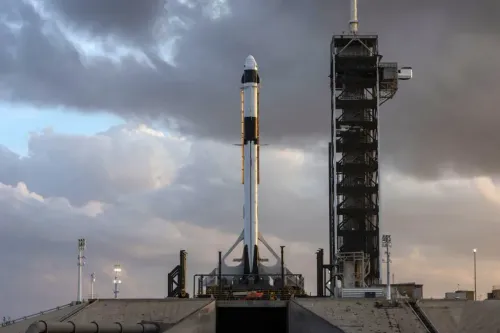
Today, SpaceX dominates the global commercial launch market and operates Starlink, the world's largest satellite internet network. It also plays a central role in NASA missions and US national security space programmes. The US government is reportedly the company's single largest customer, generating roughly $4 billion in revenue in 2025. Starlink alone produced $11.4 billion in revenue and turned a profit, helping offset losses elsewhere in the business.
AI and Orbital Ambitions
According to filings cited in reports, SpaceX has outlined plans to expand into artificial intelligence infrastructure — including satellite networks and orbital computing systems designed to underpin future AI applications. The company estimates its total addressable market at $28.5 trillion, with the overwhelming majority of that opportunity linked to artificial intelligence. Future plans reportedly include large satellite constellations capable of supporting space-based data centres, alongside the Starshield network serving government and national security customers.
Strategic Concerns and Government Dependence
The IPO has also intensified scrutiny over the concentration of economic and strategic power around Musk and his companies. Clayton Swope of the Centre for Strategic and International Studies was quoted as saying: 'U.S. space power is built on the back of SpaceX. Period. Full stop.' He added: 'It means SpaceX has incredible leverage over the government right now.' Analysts and policy experts have flagged the risks of a single private entity sitting at the intersection of space exploration, communications, artificial intelligence, and national security. The debate over that concentration of influence is expected to intensify as SpaceX's ambitions expand further.
Point of View
Its largest satellite internet network, and a growing slice of national security infrastructure — while its founder's personal net worth now exceeds the GDP of most countries. The 'leverage' that analysts like Clayton Swope describe is not hypothetical; it is already embedded in US defence and NASA contracting. The deeper question the IPO raises is not whether SpaceX deserves its valuation, but whether democratic governments have adequately thought through the accountability frameworks needed when a single private actor becomes this load-bearing.
NationPress
19 Sept 2026
Frequently Asked Questions
How did Elon Musk become the world's first trillionaire?
Musk crossed the $1 trillion net worth threshold after SpaceX shares surged more than 19 per cent on their debut trading day, lifting the value of his nearly 50 per cent stake in the company. The milestone was a direct result of SpaceX completing the largest IPO in history, which pushed the company's market capitalisation to approximately $2.1 trillion.
What was SpaceX's IPO price and how much did it raise?
SpaceX set its IPO price at $135 per share and raised $75 billion in the offering, giving the company an initial valuation of $1.77 trillion. By the close of its first trading day, shares had climbed to $160.95 and the market cap had risen to approximately $2.1 trillion.
How much revenue does SpaceX generate and from whom?
SpaceX's Starlink satellite internet service produced $11.4 billion in revenue and turned a profit. The US government is SpaceX's single largest customer, reportedly generating around $4 billion in revenue for the company in 2025 through NASA and national security contracts.
What are SpaceX's future expansion plans?
According to filings, SpaceX plans to expand into artificial intelligence infrastructure, including orbital computing systems and large satellite constellations capable of supporting space-based data centres. The company estimates its total addressable market at $28.5 trillion, with the majority linked to AI opportunities. Its Starshield network is also expected to serve government and national security customers.
Why are analysts concerned about SpaceX's growing influence?
Experts have raised concerns about the concentration of strategic and economic power in a single private company. Clayton Swope of the Centre for Strategic and International Studies noted that 'U.S. space power is built on the back of SpaceX,' giving it 'incredible leverage over the government right now.' Critics argue that SpaceX's simultaneous dominance of commercial launches, satellite internet, and national security programmes poses accountability risks.