SpaceX IPO debuts at $160.95, market cap hits record $2.2 trillion on day one
Synopsis
SpaceX's Wall Street debut rewrote the record books — a $2.2 trillion valuation, $75 billion raised, and $350 billion in orders that left one-third of applicants empty-handed. But beneath the spectacle sits a $4.28 billion Q1 loss and a valuation that even some analysts say has outrun reality. Whether SpaceX is the next great AI-and-space convergence play or an overpriced debut is now the defining question for US markets.
Key Takeaways
SpaceX shares closed at $160.95 on 13 June 2026 , up 19 per cent above the IPO price of $135 .
The listing valued SpaceX at approximately $2.2 trillion , making it the sixth-largest public company in the world by market cap.
The IPO raised roughly $75 billion ; total orders reportedly exceeded $350 billion , with retail demand alone surpassing $100 billion .
SpaceX reported a net loss of $4.28 billion in Q1 2026 , raising valuation concerns among some analysts.
Elon Musk reportedly became the world's first trillionaire following the listing, prompting calls for a wealth tax from Democratic lawmakers Elizabeth Warren and Ro Khanna .
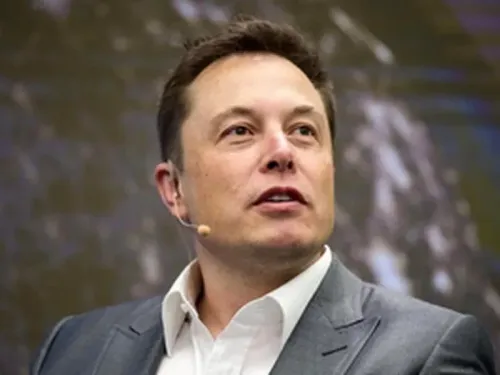
SpaceX, the rocket and space exploration company run by Elon Musk, made a landmark stock market debut in the United States on 13 June 2026, with shares closing at $160.95 — up 19 per cent above its IPO offering price of $135. The listing valued SpaceX at approximately $2.2 trillion, making it the sixth-highest valued public company in the world and, according to reports, turning Musk into the world's first trillionaire.
A Record-Breaking Market Debut
Shares surged as high as 31 per cent above the offering price during intraday trading before settling at the closing gain of 19 per cent. The IPO raised roughly $75 billion, placing it among the largest public offerings in financial history. Demand was extraordinary: orders reportedly topped $350 billion, with retail investor interest alone accounting for over $100 billion. Despite the overwhelming demand, approximately one-third of applicants did not receive any stock allocation, according to reports.
AI Narrative Fuels Investor Appetite
SpaceX's acquisition of Musk's artificial intelligence venture xAI earlier in 2026 positioned the IPO as more than a space-sector bet. Analysts noted that the listing was widely read as a proxy test for market enthusiasm around AI-driven business models, arriving at a time when US equity markets have leaned heavily on AI optimism for broader growth. The xAI integration helped SpaceX pitch itself as a convergence play — rockets, satellites, and artificial intelligence under one publicly traded roof.
Valuation Concerns and the Q1 Loss
Not all observers were convinced the euphoria was warranted. Some analysts cautioned that SpaceX's lofty valuation may be running ahead of its financial fundamentals. The company reported a net loss of $4.28 billion in the first quarter of 2026, a figure that critics argue sits uneasily alongside a $2.2 trillion market capitalisation. For context, among US IPOs raising at least $1 billion, design software maker Figma holds the record for the largest day-one gain — a 250 per cent surge in its 2025 debut — but has since given back those gains and trades approximately 45 per cent below its IPO price, according to available data.
Political Reaction to Musk's Trillionaire Status
Musk's ascent to trillionaire status drew an immediate political response in Washington. Democratic lawmakers, including Massachusetts Senator Elizabeth Warren and California Representative Ro Khanna, called for a wealth tax on the richest Americans in the wake of the milestone. The calls reflect a broader, ongoing debate in the United States over wealth concentration at the apex of the technology and space industries.
What Comes Next
SpaceX's post-IPO trajectory will be closely watched by institutional investors who remain divided between the company's long-term strategic ambitions — spanning satellite internet via Starlink, deep-space missions, and AI — and its near-term profitability gap. How the stock performs in the weeks following its debut, particularly relative to its Q1 loss disclosure, will serve as a litmus test for whether the AI-and-space narrative can sustain current valuations.
Point of View
And Wall Street has made that bet loudly. The xAI acquisition reframes SpaceX not as a capital-intensive aerospace firm but as an AI infrastructure play, which is the only lens that makes the multiple defensible. The Figma comparison is instructive: day-one euphoria is not a business model, and the 45 per cent post-IPO decline there is a live warning. The real test for SpaceX is whether Starlink's recurring revenue and xAI's monetisation can grow fast enough to justify a valuation that already prices in a decade of flawless execution.
NationPress
16 Sept 2026
Frequently Asked Questions
What was SpaceX's share price and market cap on its IPO debut day?
SpaceX shares closed at $160.95 on 13 June 2026, up 19 per cent above the offering price of $135. The closing price gave the company a market capitalisation of approximately $2.2 trillion.
How much did the SpaceX IPO raise and how strong was demand?
The SpaceX IPO raised roughly $75 billion, one of the largest in financial history. Total orders reportedly exceeded $350 billion, with retail investor demand alone accounting for over $100 billion; about one-third of applicants did not receive any stock allocation.
Why did SpaceX's IPO attract such strong AI-related interest?
SpaceX's acquisition of Elon Musk's AI venture xAI earlier in 2026 positioned the listing as an AI-driven business model play, not just a space sector offering. Analysts noted that US markets have been broadly buoyed by AI optimism this year, and SpaceX's xAI integration made it a direct beneficiary of that sentiment.
What are the concerns about SpaceX's valuation?
SpaceX reported a net loss of $4.28 billion in the first quarter of 2026, which some analysts argue is difficult to reconcile with a $2.2 trillion market capitalisation. The precedent of Figma — which surged 250 per cent on its 2025 debut but now trades about 45 per cent below its IPO price — has been cited as a cautionary parallel.
How did politicians react to Elon Musk becoming the world's first trillionaire?
Democratic lawmakers including Massachusetts Senator Elizabeth Warren and California Representative Ro Khanna called for a wealth tax on the richest Americans following Musk's reported ascent to trillionaire status after the SpaceX listing.