NATO jets shoot down foreign drone over Latvia amid Russian EW threat
Synopsis
NATO jets have shot down a foreign drone over Latvia, with Riga blaming Russian electromagnetic warfare for the incursion — the latest in a string of drone violations hitting alliance airspace from the Baltics to the Black Sea. As Romania logs its third interception and prepares a diplomatic protest, NATO's eastern members are quietly confronting a new kind of spillover from the Ukraine war.
Key Takeaways
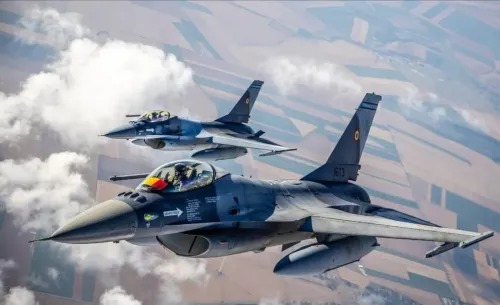
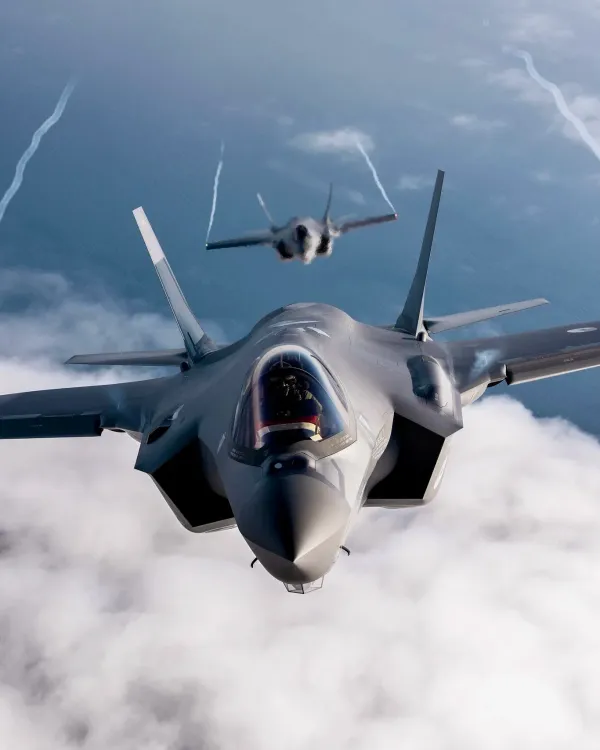
NATO Baltic Air Policing jets intercepted and destroyed a foreign drone over Latvia on 14 August .
The Latvian armed forces attributed the incursion to Russian electromagnetic warfare , which caused the drone to drift into Latvian airspace over Balvi .
Airspace threats were detected across five areas — Preiļi, Rezekne, Balvi, Augsdaugava, and Aluksne — all since resolved.
Romania has shot down at least three unauthorised drones in recent months, including a Shahed-type drone 12 km northeast of Sulina .
Romanian President Nicusor Dan called Russia's actions 'inadmissible and intolerable' and a formal diplomatic protest is pending investigation outcomes.
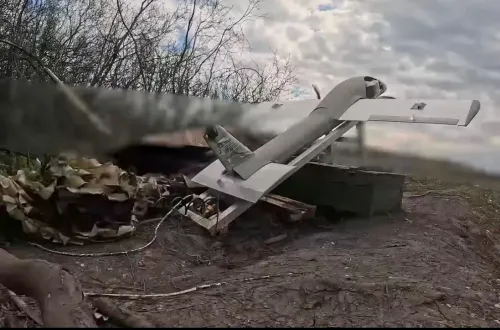
NATO fighter jets assigned to the Baltic Air Policing mission intercepted and shot down a foreign drone that violated Latvian airspace on Friday, 14 August, according to the Latvian armed forces. The military attributed the incursion to Russian electromagnetic warfare, which it said caused the drone to drift into the country's airspace over the Balvi region.
How the Incident Unfolded
The Latvian armed forces confirmed that airspace threats were identified across multiple areas including Preiļi, Rezekne, Balvi, Augsdaugava, and Aluksne. All identified threats have since been resolved. In response, additional air defence units have been deployed along the country's eastern borders, and surveillance of Latvian airspace is ongoing.
The armed forces issued a pointed warning: 'As long as Russia's aggression in Ukraine continues, a recurrence of cases where foreign drones enter or approach Latvian airspace is possible.'
A Pattern Across NATO's Eastern Flank
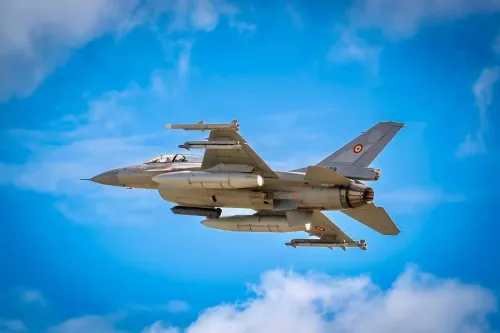
The Latvian interception is not an isolated event — it is part of a growing pattern of drone incursions into NATO member airspace along the alliance's eastern frontier. Last month, Romanian Air Force pilots shot down a third unauthorised drone, this one safely neutralised 12 km northeast of Sulina, within Romania's territorial waters. According to the Romanian Ministry of National Defence, the drone was identified as a Shahed-type — the same model Russia has used extensively in strikes against Ukraine.
A separate Romanian interception on 25 July brought down a drone approximately 10 km west of Sfantu Gheorghe in central Romania. Investigations into both incidents are being conducted by Romania's General Prosecutor's Office, with findings expected to underpin a formal diplomatic protest against Russia.
Romania's Diplomatic Response
Romanian President Nicusor Dan congratulated the pilots involved in the interceptions and described Russia's conduct as 'inadmissible and intolerable.' In a statement, Dan said: 'It is inadmissible and intolerable for the Russian Federation to continue violating Romania's airspace, which is, at the same time, NATO airspace and European Union airspace. Such actions are unacceptable, and we treat them with the utmost seriousness, alongside our allies.'
Romania's formal diplomatic protest against the Russian Federation is expected once ongoing investigations are concluded.
What This Means for NATO
The repeated breaches underscore mounting pressure on NATO's eastern members to harden their airspace defences. Latvia and Romania — both bordering or near the active conflict zone in Ukraine — have found themselves on the front line of a new form of spillover risk: drone navigation errors or deliberate probing enabled by Russian electronic warfare. This is the latest in a series of incidents that have forced the alliance to reckon with how it responds to sub-threshold provocations short of a direct military attack.
Point of View
The effect is identical: NATO member airspace is being routinely violated, and the alliance's response remains reactive. The pattern from Romania to Latvia suggests Russia has found a low-cost way to test NATO's eastern flank without triggering Article 5. Each incident is treated as an isolated event; the cumulative picture points to something more systematic that the alliance has yet to address with a unified doctrine.
NationPress
14 Aug 2026
Frequently Asked Questions
Why did a drone enter Latvian airspace on 14 August?
The Latvian armed forces said the drone entered Latvian airspace due to Russian electromagnetic warfare, which reportedly caused it to lose navigation control. NATO Baltic Air Policing jets intercepted and shot it down over the Balvi region.
What is the NATO Baltic Air Policing mission?
The Baltic Air Policing mission is a collective NATO air defence operation that protects the airspace of Estonia, Latvia, and Lithuania — three alliance members that do not maintain their own combat aircraft. Rotating NATO member air forces conduct the mission from bases in the region.
How many drones has Romania shot down recently?
Romania has shot down at least three unauthorised drones in recent months. The most recent was identified as a Shahed-type drone — the model used by Russia against Ukraine — and was neutralised 12 km northeast of Sulina within Romanian territorial waters.
What is Romania doing diplomatically in response?
Romanian President Nicusor Dan has said Romania will file a formal diplomatic protest against the Russian Federation, to be based on findings from the General Prosecutor's Office investigation into the downed drones.
Is Latvia at risk of further drone incursions?
The Latvian armed forces have said further incidents are possible as long as Russia's military campaign in Ukraine continues. Additional air defence units have been deployed along Latvia's eastern borders as a precautionary measure.