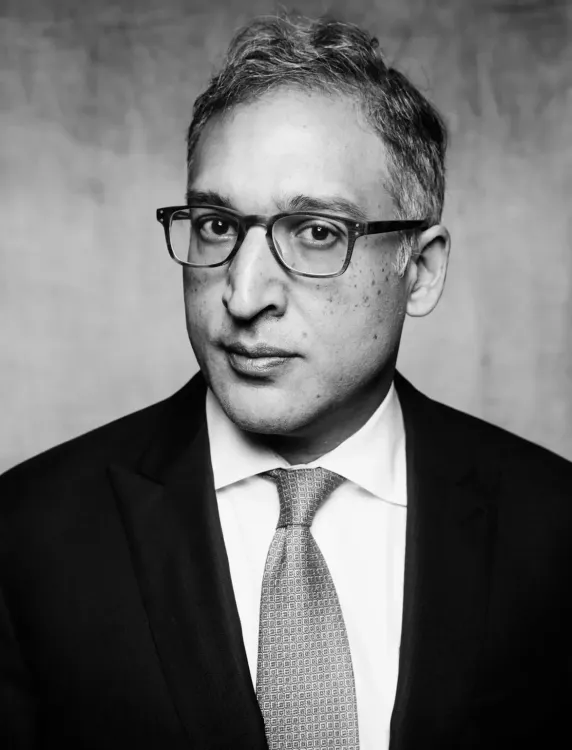
Who is Neal Katyal, the Indian-American lawyer who challenged Trump's tariffs?
Synopsis
Neal Katyal, the son of Indian immigrants, played a pivotal role in a Supreme Court ruling that dismantled Trump's tariffs. His arguments emphasized the Constitution's power over presidential authority. This landmark case reaffirms the role of Congress in tax imposition, showcasing how America's legal system can check even the highest offices.
Key Takeaways
Neal Katyal's victory underscores the importance of constitutional checks on presidential power.
The ruling reinforces that only Congress can impose taxes, including tariffs.
The case highlights the role of the judiciary in maintaining the rule of law.
Katyals's career showcases the influence of minority advocates in the legal field.
This decision sets a precedent limiting executive power in economic matters.
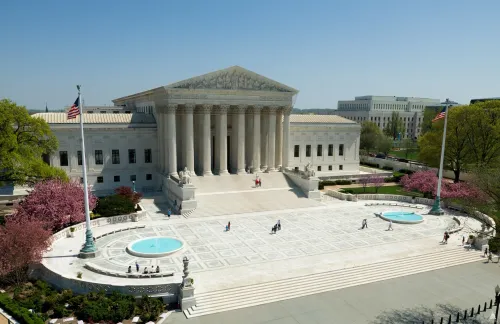
Washington, Feb 21 (NationPress) The child of Indian immigrants, who once held the position of America's premier courtroom advocate, has become synonymous with a pivotal Supreme Court ruling that overturned President Donald Trump's extensive tariffs.
Neal Katyal, a former Acting Solicitor General of the United States, contested Trump's invocation of the 1977 International Emergency Economic Powers Act (IEEPA) to levy what he termed "unjust, unconstitutional taxes" on imports from nearly all trading partners.
Immediately following the ruling, Katyal remarked: "Today, the United States Supreme Court upheld the rule of law and for Americans everywhere. Its message was straightforward: While Presidents wield power, our Constitution wields even greater power. In America, only Congress can levy taxes on its citizens."
The lawsuit was initiated by small businesses, with backing from the Liberty Justice Center. Trump had justified the tariffs as essential for national security and economic strategy, pointing to trade deficits and fentanyl crises as national emergencies.
Katyal characterized the ruling as a constitutional landmark. "The US Supreme Court granted us everything we requested in our legal argument. Everything," he declared.
"This case has consistently revolved around the presidency, not any single president. It has always been about the separation of powers, transcending the political landscape of the moment. I am pleased to witness our Supreme Court, a cornerstone of our governance for 250 years, safeguarding our most essential values," Katyal expressed.
Raised in Chicago by Indian immigrant parents — a physician and an engineer — Katyal has forged a career focused on high-stakes constitutional issues. He holds degrees from Dartmouth College and Yale Law School, and clerked for Justice Stephen Breyer of the US Supreme Court.
Appointed by President Barack Obama as Acting Solicitor General in 2010, Katyal represented the federal government before the Supreme Court and various Courts of Appeals across the nation. He has argued more than 50 cases before the Supreme Court, setting records for minority advocates.
Presently, he is a partner at Milbank LLP and serves as the Paul Saunders Professor at Georgetown University Law Center, specializing in constitutional and complex appellate litigation. His past cases include defending the constitutionality of the Voting Rights Act of 1965, contesting Trump’s 2017 travel ban, and securing unanimous verdicts in significant environmental and national security cases.
Katyal has also acted as Special Prosecutor for the State of Minnesota in the George Floyd murder case and authored the book Impeach: The Case Against Donald Trump.
He has received the US Justice Department’s highest civilian accolade, the Edmund Randolph Award, and has been recognized as Litigator of the Year by The American Lawyer in both 2017 and 2023. Forbes has listed him among the top 200 lawyers in the United States for 2024 and 2025.
The Supreme Court’s ruling on Trump's tariffs is anticipated to restrict a president's capacity to utilize emergency economic powers to impose extensive tariffs without direct congressional consent.
"Consider this: the son of immigrants was able to approach the court on behalf of American small businesses, asserting that this president was acting unlawfully. I effectively presented my case, facing rigorous questions. It was an intense oral argument. Ultimately, they voted, and we triumphed," he shared with MS Now in an interview.
"This highlights something extraordinary about our nation: the existence of a self-correcting system that allows us to assert that even the most powerful man in the world cannot violate the Constitution. To me, that encapsulates the essence of today," Katyal stated.
"Today, the United States Supreme Court defended the rule of law and the rights of all Americans. Its message was clear: While Presidents possess power, our Constitution possesses even greater authority," he told MSNBC in another interview.
"In America, only Congress can levy taxes on its citizens, as stated by the chief justice, who represented six justices. And tariffs are indeed taxes," he affirmed while standing outside the Supreme Court.
Point of View
It's essential to recognize the constitutional implications of Neal Katyal's victory against President Trump's tariffs. This ruling not only reinforces the separation of powers but also serves as a reminder of the role that law plays in protecting democratic values. It highlights the ongoing debate about executive power and congressional authority, issues that are critical for our nation’s governance.
NationPress
30 Sept 2026
Frequently Asked Questions
What is Neal Katyal known for?
Neal Katyal is known for his role as a prominent attorney who successfully challenged President Trump's tariffs in a landmark Supreme Court case, advocating for the rule of law and constitutional rights.
What was the Supreme Court ruling about?
The Supreme Court ruling overturned Trump's tariffs, stating that only Congress has the authority to impose taxes, which includes tariffs, thereby limiting presidential power under the International Emergency Economic Powers Act.
What impact does this ruling have on presidential powers?
The ruling significantly restricts a president's ability to impose sweeping tariffs using emergency economic powers without explicit congressional authorization, reinforcing the system of checks and balances.
Who supported the lawsuit against Trump's tariffs?
The lawsuit was supported by small businesses and backed by the Liberty Justice Center, emphasizing the collective stance against what they viewed as unconstitutional economic measures.
What are some of Katyal’s notable achievements?
Neal Katyal has argued over 50 cases before the Supreme Court, served as Acting Solicitor General, and received numerous accolades, including being named Litigator of the Year by The American Lawyer.