Nepal flood death toll hits 270; 300 Indian pilgrims missing after Bhote Koshi disaster
Synopsis
The Bhote Koshi floods have killed at least 270 people in Nepal, with over 800 still unaccounted for — including roughly 300 Indian pilgrims on the Kailash Mansarovar Yatra route. The disaster, originating in Tibet, has also knocked out multiple hydropower projects and left dozens of foreign workers missing, exposing the acute vulnerability of Nepal's cross-border river infrastructure.
Key Takeaways
270 people have been confirmed dead in the Bhote Koshi floods in Nepal as of 27 August .
The highest toll — 108 bodies — was recovered from Chitwan district ; 62 from Nawalparasi East , 27 from Dhading , 17 from Rasuwa .
More than 800 people remain out of contact, including approximately 500 foreign nationals .
Nepal Foreign Minister Shisir Khanal confirmed at least 300 Indian nationals — mostly Kailash Mansarovar Yatra pilgrims — are reported missing.
76 Andritz Hydro workers at the 216-MW Upper Trishuli-1 project and 51 workers at the 111-MW Rasuwagadhi project are among those untraced.
The Nepal government is coordinating with multiple foreign embassies to locate missing nationals.
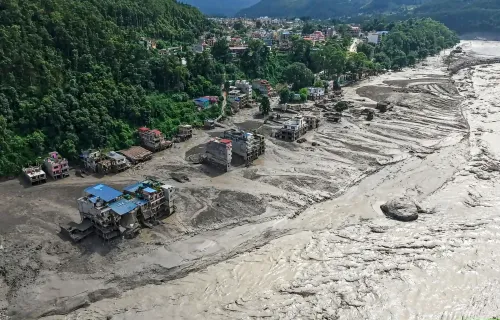
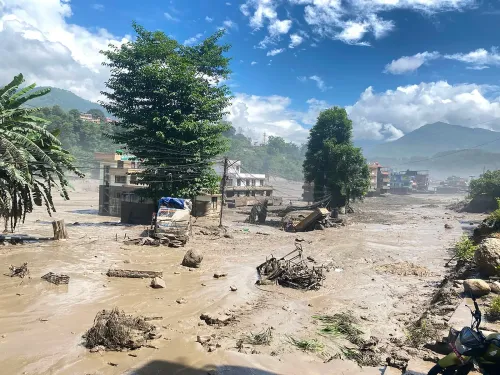
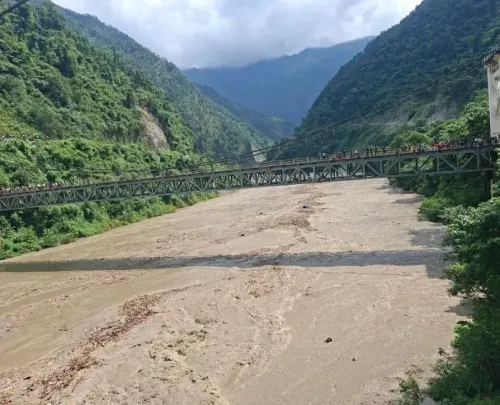
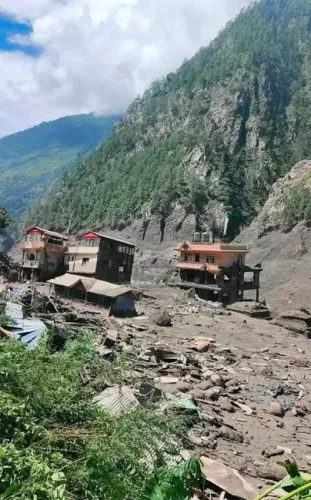
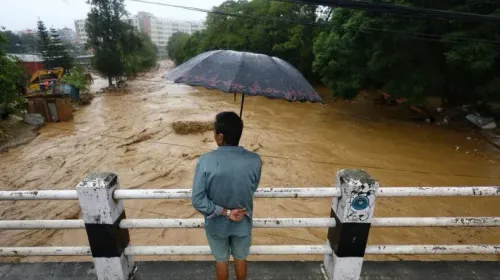
The death toll from the Bhote Koshi River floods in Nepal has climbed to 270, with bodies continuing to be recovered from multiple downstream districts, Nepal Police confirmed on Thursday, 27 August. More than 800 people remain out of contact after the transboundary flash floods — originating in the Tibetan region of China — swept through human settlements, hydropower projects, customs offices, and electricity infrastructure across the Himalayan nation.
District-wise Toll
The highest number of fatalities — 108 bodies — was recovered from Chitwan district in the southern plains. Nawalparasi East accounted for 62 deaths, followed by 27 in Dhading and 17 in Rasuwa, according to police data. Recovery operations are ongoing as teams work through debris in several downstream areas.
Hydropower Projects Bear the Brunt
The floods have left dozens of workers at multiple hydropower projects unaccounted for. 76 employees of Andritz Hydro, working at the under-construction 216-MW Upper Trishuli-1 Hydropower Project, are out of contact — roughly half of them Nepali nationals and the remainder foreign nationals. 11 employees of Nepal Water and Energy Development Company, the project developer, are also missing, including eight South Korean nationals.
At the 111-MW Rasuwagadhi Hydropower Project, 51 workers remain untraced. A further eight employees at the 5-MW Mailung Khola Hydropower Project are out of contact, as are two workers of civil contractor Sinohydro at the 120-MW Rasuwa Bhotekoshi Hydropower Project. The Independent Power Producers' Association, Nepal (IPPAN) confirmed the figures, underscoring the scale of damage to the country's energy sector.
Around 300 Indian Pilgrims Reported Missing
Nepal's Foreign Minister Shisir Khanal confirmed that at least 300 Indian nationals — most of them pilgrims on the Kailash Mansarovar Yatra — have been reported missing. Speaking at the NDTV World Anviksha Summit in Kathmandu, Khanal said the Rasuwa region, a key transit corridor for the yatra route, was among the worst affected.
'Town after town were wiped out within hours,' Khanal said. 'Thousands of families have lost homes and are missing as of now. We are still trying to ascertain the full extent of the disaster.'
Khanal added that around 500 foreign nationals in total are currently out of contact. The Nepal government is in active communication with multiple embassies to establish the safety and whereabouts of missing foreign nationals.
Scale of Destruction and Relief Efforts
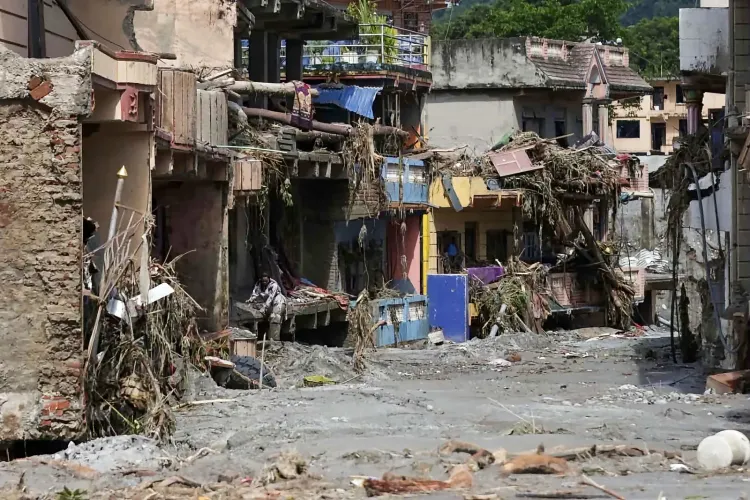
The flood, which struck on Wednesday, razed entire settlements within hours. This is one of the deadliest single flood events in Nepal in recent years, compounded by the transboundary nature of the disaster — the Bhote Koshi originates in Tibet, limiting early-warning options for downstream communities. Rescue and relief teams continue to operate in affected districts as authorities work to establish the full scale of the catastrophe. The Nepal government has said efforts to trace the missing are ongoing.
Point of View
Yet the transboundary dimension is what makes it structurally alarming. The Bhote Koshi originates in Tibet, which means Nepal has virtually no control over upstream conditions or early-warning triggers. The simultaneous disruption to multiple hydropower projects reveals how concentrated and exposed Nepal's energy infrastructure is along these Himalayan river corridors. The plight of 300 Indian pilgrims on the Kailash Mansarovar route will intensify diplomatic pressure on Kathmandu, but the harder question is why transboundary flood protocols between Nepal, China, and India remain so thin despite decades of recurring disasters on these rivers.
NationPress
27 Aug 2026
Frequently Asked Questions
What caused the Bhote Koshi floods in Nepal?
The floods were triggered by a massive surge in the Bhote Koshi River , which originates in the Tibetan region of China and flows into Nepal. The transboundary nature of the river limits Nepal's ability to receive early warnings, making downstream communities especially vulnerable.
How many people have died in the Nepal Bhote Koshi floods?
The confirmed death toll stands at 270 as of 27 August , according to Nepal Police . Bodies are still being recovered from several downstream districts, meaning the final count could rise.
Are Indian nationals among those missing in the Nepal floods?
Yes. Nepal's Foreign Minister Shisir Khanal confirmed that at least 300 Indian nationals , most of them pilgrims on the Kailash Mansarovar Yatra , have been reported missing. The Nepal government is in contact with the Indian Embassy regarding their whereabouts.
Which hydropower projects have been affected by the floods?
Several projects have been hit, with workers unaccounted for at the 216-MW Upper Trishuli-1 , 111-MW Rasuwagadhi , 120-MW Rasuwa Bhotekoshi , and 5-MW Mailung Khola hydropower projects. A total of over 140 workers across these sites remain out of contact, including foreign nationals from South Korea and other countries.
What is the Kailash Mansarovar Yatra and why are pilgrims in the affected area?
The Kailash Mansarovar Yatra is a Hindu pilgrimage to Mount Kailash and Lake Mansarovar in Tibet, undertaken by thousands of Indian devotees each year. The route passes through the Rasuwa region of Nepal — one of the districts worst hit by the Bhote Koshi floods — placing pilgrims directly in the path of the disaster.