Nepal floods: Diaspora leader thanks India, faults China over info delay
Synopsis
A Nepali diaspora leader has publicly thanked India for delivering flood relief within hours — while squarely blaming China for withholding early-warning data that could have saved lives. With hundreds dead, 800+ missing, and 15% of Nepal's hydropower grid wiped out, the disaster is also exposing the fragility of transboundary river information-sharing in the Himalayas.
Key Takeaways
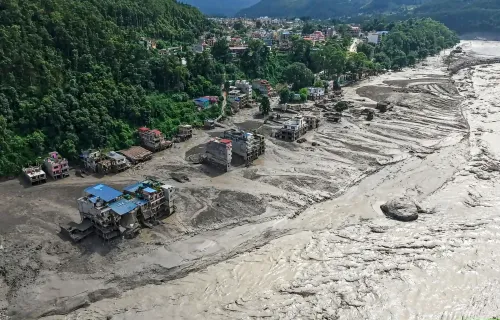
Flash floods originating in Tibet, China swept through Nepal's Bhote Koshi River , killing hundreds and leaving over 800 people missing .
Nepali diaspora leader Ojha Hari praised India's relief response, saying supplies reached affected areas by Thursday morning, 27 August .
Ojha blamed China's failure to share timely flood warnings for preventing downstream evacuations in Nepal.
More than 15 per cent of Nepal's total hydropower capacity was reportedly destroyed; losses estimated in the billions of dollars .
Ojha called on the international community for sustained support, warning recovery would take a long time.
As devastating flash floods triggered by a breach in the Tibetan region of China swept through Nepal's Bhote Koshi River valley, Nepali diaspora leader Ojha Hari on Thursday, 27 August praised India's swift humanitarian response while criticising China for failing to share timely warning information — a lapse he said cost lives.
Scale of Destruction
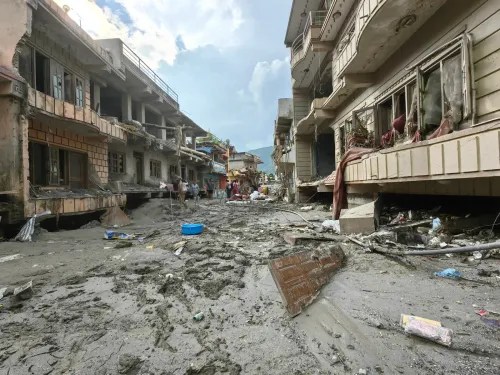
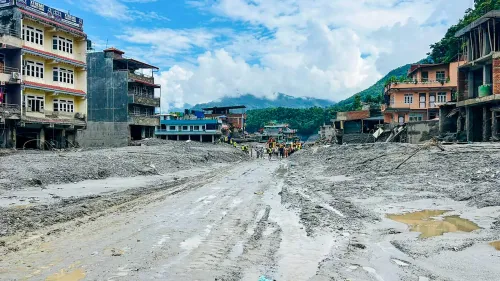
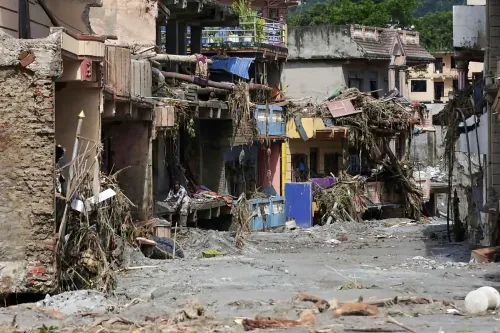
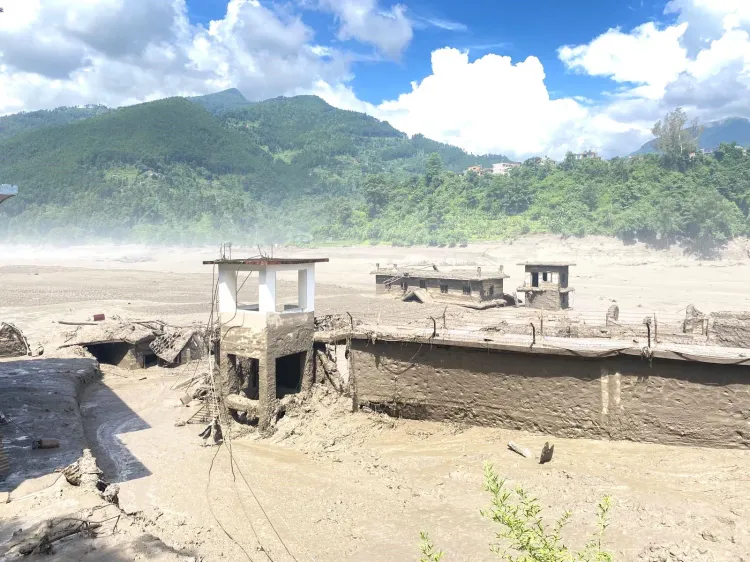
The transboundary flood, originating in Tibet, has left hundreds dead and more than 800 people missing across Nepal. Speaking from Washington, Ojha described the scale of losses as staggering. 'Our hydropower stations, the riverside dams, have all been destroyed. Schools, buildings, hospitals, hydropower stations, offices — everything has been destroyed,' he said. 'If you look at the videos, the entire villages are empty.'
He estimated that more than 15 per cent of Nepal's total hydropower capacity had been knocked out, and that losses could run into billions of dollars. 'Without the support of the international community, I don't think we can recover from these big losses,' Ojha added.
India's Response Praised
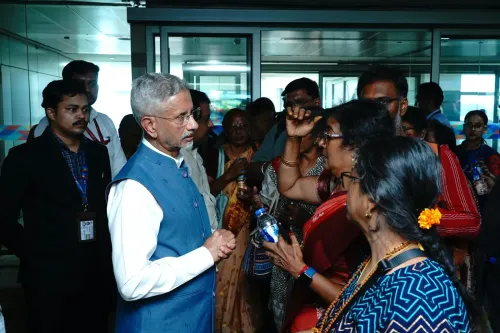
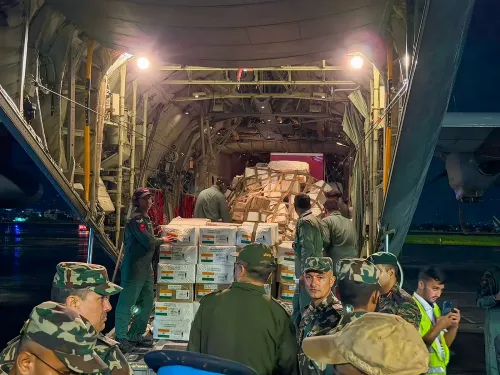
Ojha specifically commended India for the speed of its relief operation, invoking the 'roti-beti ka rishta' — a phrase widely used to describe the deep civilisational and familial bonds between the two neighbouring countries. He said Indian relief supplies had reached the airport the previous day and were already being dispatched to affected areas by Thursday morning.
'It was very quick. It already reached the people by today,' he said. 'Especially I would like to thank the Indian government, who did help us by sending so many supplies.'
China Blamed for Information Failure
Ojha reserved sharp criticism for China, where the floodwaters originated, saying the absence of prompt early-warning information prevented residents in downstream Nepali communities from evacuating in time. 'This situation could have been solved if there was prompt information sharing from where it started, but due to the lack of information sharing, I think there was kind of a little bit failure in information sharing so that many people could not go out, could not evacuate from that location,' he said.
He added that communication with those in affected areas remained severely disrupted, with residents unable to charge phones due to widespread power outages. This comes amid longstanding questions about transboundary river data-sharing agreements between China and downstream nations, including Nepal and India.
International Support Sought
Ojha called on the global community to step up assistance, warning that Nepal's recovery would be prolonged and resource-intensive. He acknowledged that the country faced a long road to rebuilding infrastructure, noting that entire villages had been emptied by the disaster. Sustained international engagement — beyond immediate relief — will be critical to Nepal's reconstruction, he said.
Point of View
But it reflects a wider frustration among downstream nations who have repeatedly sought formal early-warning protocols from Beijing without success. India's rapid relief response, meanwhile, is as much diplomatic signalling as humanitarian action — reinforcing its 'Neighbourhood First' posture at a moment when Chinese infrastructure investment in Nepal has been a persistent source of bilateral friction. The real question is whether this disaster finally forces a multilateral conversation on Himalayan river governance, or whether it, like previous floods, fades without structural change.
NationPress
12 Oct 2026
Frequently Asked Questions
What caused the Nepal flash floods in August 2024?
The floods were triggered by a breach in the Tibetan region of China, sending floodwaters surging down the transboundary Bhote Koshi River into Nepal. The disaster has killed hundreds and left more than 800 people missing.
Why is China being criticised over the Nepal floods?
Nepali diaspora leader Ojha Hari said China failed to share timely early-warning information about the flood's origin in Tibet, preventing downstream communities in Nepal from evacuating. He described this as a failure in information sharing that contributed significantly to the death toll.
How did India respond to the Nepal floods?
India dispatched relief supplies that reportedly reached Nepal's airport within a day and were already being distributed to affected areas by the morning of 27 August. Ojha praised the response as exceptionally swift, describing it as consistent with the deep India-Nepal ties encapsulated in the phrase 'roti-beti ka rishta'.
How severe is the damage to Nepal's infrastructure?
According to Ojha, more than 15 per cent of Nepal's total hydropower capacity has been destroyed, along with schools, hospitals, offices, and entire riverside villages. He estimated total losses could run into billions of dollars, saying recovery without international support would be extremely difficult.