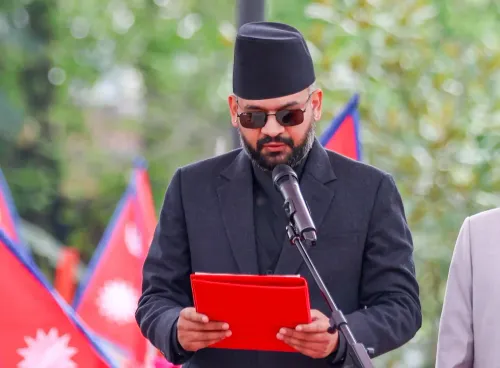
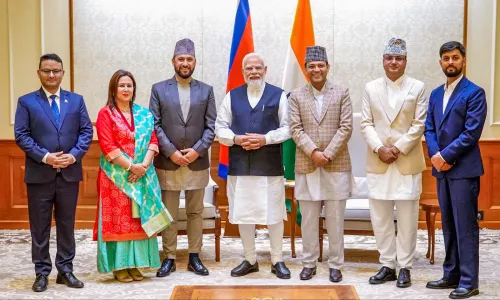
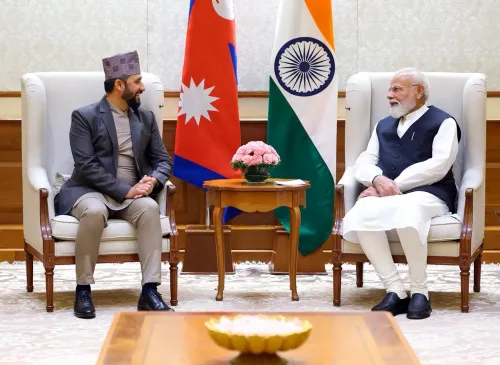
Nepal-India 10-point roadmap set for PM Shah's Nov 22-23 India visit
Synopsis
Nepal and India are preparing to go beyond the standard diplomatic communiqué — a joint 10-point vision document modelled on the successful 10,000 MW energy deal is expected to cover everything from digital connectivity to trade. If PM Balendra Shah's Nov 22-23 New Delhi visit delivers it, the relationship gets its most structured long-term framework in decades.
Key Takeaways
Nepal and India plan to unveil a joint 10-point vision document during PM Balendra Shah's state visit to New Delhi on 22-23 November .
The document is based on the concept of 'Samriddha Nepal, Samunnat Bharat' and is in its final stages of preparation.
The 10 broad areas include energy, connectivity, investment, digital infrastructure, trade, education, health, and people-to-people ties.
The energy sector serves as the model: India committed to importing 10,000 MW from Nepal over 10 years under a January 2024 agreement.
The vision document will be released alongside the standard joint communiqué ; visit dates are not yet officially confirmed.
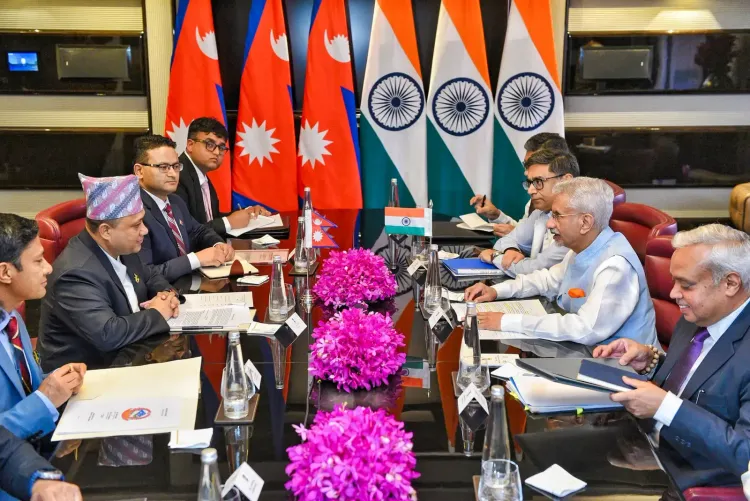
Nepal and India are set to unveil a joint 10-point vision document for bilateral partnership during Nepali Prime Minister Balendra Shah's upcoming state visit to New Delhi on 22-23 November, according to a report by The Kathmandu Post. The document, grounded in the concept of 'Samriddha Nepal, Samunnat Bharat' (Prosperous Nepal, Developed India), is reportedly in its final stages of preparation.
What the Vision Document Covers
According to the report, the 10-point framework spans a broad set of cooperation priorities: economic partnership, connectivity, investment, water resources and energy, digital connectivity, good governance, people-to-people relations, education, health, sports, and trade and transit. The objective, according to a minister in the Shah cabinet quoted by The Kathmandu Post, is to set long-term goals and concrete, measurable targets across these sectors — moving beyond rhetorical commitments to quantified outcomes.
'Foreign ministers of both countries, with inputs from the Prime Ministers' offices, foreign ministries and finance ministries, are jointly preparing the draft, which is now in its final stage,' the minister said.
Energy Sector as the Template
Officials point to the energy sector as the model this framework intends to replicate. In January 2024, Nepal and India signed a long-term power trade agreement under which India committed to importing 10,000 megawatts (MW) of electricity from Nepal over 10 years. That accord built on a Joint Vision Statement on Power Sector Cooperation signed in 2022 during then Nepali Prime Minister Sher Bahadur Deuba's visit to India.
'Like what we did in the energy sector, where India has committed to importing 10,000 megawatts of electricity over 10 years, we are working to set targets in other areas as well,' the minister told The Kathmandu Post.
Nepal has since begun exporting electricity to Bangladesh under a trilateral arrangement using India's power grid — an outcome directly tracing back to the Bangladesh-Bhutan-India-Nepal (BBIN) framework envisaged in the 2022 statement.
Alongside the Traditional Joint Communiqué
The vision document is expected to be released alongside the customary joint communiqué that follows bilateral summits. While Prime Minister Shah's visit dates of 22-23 November are widely cited by Nepali foreign ministry officials, they have not yet been officially announced by either government. The dual-track release — a standard diplomatic statement plus a long-horizon roadmap — signals that both sides want the visit to carry more structural weight than a routine bilateral.
Broader Strategic Context
The initiative comes as Nepal's new government seeks to align its development priorities with opportunities arising from India's economic trajectory. Historically, Nepal-India relations have oscillated between cooperation and friction over issues including the 1950 Treaty of Peace and Friendship, border demarcation, and periodic perception gaps around sovereignty. The current framing — explicitly mutual and growth-oriented — reflects a deliberate effort by both sides to recast the relationship in economic terms.
Notably, this is not the first time the two countries have attempted a structured vision framework; the 2022 power sector statement was itself an attempt at the same architecture in a single sector. The proposed 10-point document would, if finalised, extend that model economy-wide. How effectively the targets are monitored and enforced will determine whether the document becomes a durable reference or a ceremonial one.
All eyes are now on New Delhi and Kathmandu ahead of the 22-23 November summit, with final details of the document expected to be confirmed once the visit is officially announced.
Point of View
But Nepal-India relations have a history of well-drafted statements that struggle at implementation. The 2022 power sector vision took two years to translate into a binding agreement — and even then, only in one sector. The real test of this document will be whether it embeds a credible monitoring mechanism or remains aspirational language. Framing the entire partnership around 'Samriddha Nepal, Samunnat Bharat' also carries a political risk: if economic outcomes disappoint, the slogan becomes a liability rather than a bond. The energy precedent is real and replicable, but it was two decades in the making.
NationPress
19 Nov 2026
Frequently Asked Questions
What is the Nepal-India 10-point vision document?
It is a joint bilateral framework being prepared by the foreign ministries of Nepal and India, grounded in the concept of 'Samriddha Nepal, Samunnat Bharat'. It covers 10 broad cooperation areas including energy, trade, connectivity, digital infrastructure, health, and education, with the aim of setting measurable long-term targets.
When is PM Balendra Shah visiting India?
Nepali Prime Minister Balendra Shah is reportedly scheduled to visit India on 22 and 23 November, according to Nepali foreign ministry officials. However, the dates have not been officially announced by either government as of the time of reporting.
What is the significance of the 10,000 MW electricity deal?
In January 2024, Nepal and India signed a long-term power trade agreement under which India committed to importing 10,000 MW of electricity from Nepal over 10 years. Officials cite this as the template for the new 10-point document — a model of setting specific, quantifiable targets across a sector.
How is this different from a standard joint communiqué?
A joint communiqué is a traditional diplomatic statement recording agreed positions after a summit. The proposed vision document goes further by identifying priority sectors and setting concrete, long-horizon targets — similar to what the 2022 Joint Vision Statement did for the power sector alone, but now applied economy-wide.
What sectors does the 10-point document cover?
According to reports citing a minister in the Shah cabinet, the document covers economic partnership, connectivity, investment, water resources and energy, digital connectivity, good governance, people-to-people relations, education, health, sports, and trade and transit.