Nepal Supreme Court questions Chinese aircraft procurement by NAC
Synopsis
Nepal's Supreme Court has stepped in where oversight bodies have not — issuing a show-cause notice over the procurement of six Chinese aircraft that cost NPR 6.66 billion, left five planes rusting at Kathmandu's airport since 2020, and generated not a rupee in revenue. The case, granted legal priority, could finally force a reckoning that the CIAA has avoided for years.
Key Takeaways
Nepal's Supreme Court issued a show-cause notice on 26 June 2025 over the procurement of six Chinese aircraft by Nepal Airlines Corporation .
The aircraft were acquired between 2014 and 2018 via Chinese grants and concessional loans worth NPR 6.66 billion .
Five aircraft have been parked idle at Tribhuvan International Airport , Kathmandu, since 2020 , accumulating parking charges and depreciation.
A sixth aircraft suffered a runway excursion at Nepalgunj Airport in March 2020 and is now scrap; insurance compensation has been received.
Writ petitioner Bhesh Raj Luintel has demanded a CIAA-led investigation and full disclosure of procurement documents.
The case has been granted legal priority by Justice Bal Krishna Dhakal , accelerating its progress through the courts.
Nepal's Supreme Court on 26 June 2025 issued a show-cause notice to the government, demanding an explanation for the decade-old procurement of six Chinese aircraft by Nepal Airlines Corporation (NAC) — a deal that has saddled the state-owned national flag carrier with a mounting financial burden. The court also granted the case 'legal priority', allowing it to proceed faster than ordinary matters.
The Procurement That Went Wrong
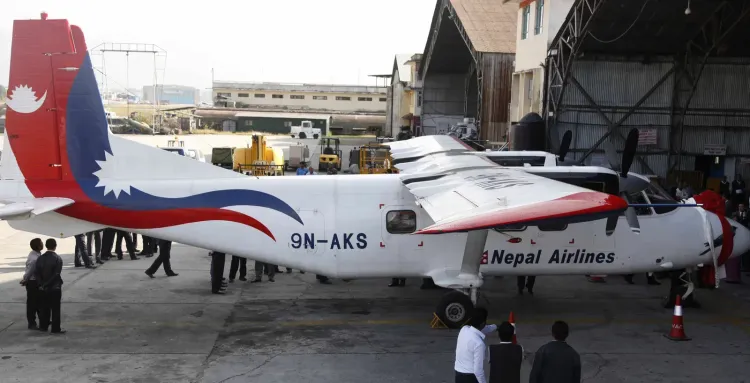
Nepal received the six aircraft between 2014 and 2018 through a combination of Chinese grants and concessional loans totalling NPR 6.66 billion. The fleet comprised four 17-seater Y12E planes and two 56-seater MA60 turboprops, intended to ease an acute shortage of aircraft at NAC relative to its workforce and operational needs.
The procurement was expected to usher in a new chapter for the national flag carrier. Instead, the Chinese aircraft proved unsuitable for operations at many of Nepal's remote airports. NAC simultaneously faced a shortage of trained pilots, instructor pilots, qualified maintenance engineers, and adequate spare parts — making the fleet commercially unviable from the outset.
Five Planes Grounded, One Reduced to Scrap
Five of the six aircraft have remained parked at Tribhuvan International Airport in Kathmandu since 2020, steadily depreciating while generating no revenue. NAC has cited soaring operating costs, high fuel consumption, expensive spare parts, and poor commercial performance as reasons for keeping them grounded.
The sixth aircraft suffered a runway excursion at Nepalgunj Airport in western Nepal in March 2020 and has remained at the site as scrap. Archana Khadka, a Director at NAC, confirmed that insurance compensation has been received for that aircraft. She also acknowledged that NAC is paying parking charges for the five planes at Tribhuvan, though she said she could not immediately specify the amount.
Past efforts to lease out the grounded aircraft drew no bids, leaving NAC with no viable exit. 'A new leadership team that will soon be installed at NAC is expected to look into the matter,' Khadka said.
The Writ Petition and Court Action
Chartered accountant and public-interest activist Bhesh Raj Luintel filed a writ petition at the Supreme Court on 25 June 2025, arguing that the procurement had inflicted losses worth billions of rupees on the state and that no effective investigation had been initiated despite widespread public concern.
On 26 June, a single bench of Supreme Court Justice Bal Krishna Dhakal issued a show-cause order to multiple defendants: the Office of the Prime Minister and Council of Ministers, the Commission for the Investigation of Abuse of Authority (CIAA), the Ministry of Culture, Tourism and Civil Aviation, the Ministry of Finance, and Nepal Airlines Corporation.
Luintel has urged the court to issue a writ of mandamus directing the CIAA to conduct an impartial, independent, and time-bound investigation into all officials, decision-makers, consultants, and financial approval authorities involved in the procurement from inception to the present. He has also requested that corruption cases be filed if the investigation uncovers wrongdoing, and that all relevant documents — including feasibility studies, technical evaluations, and procurement approval notes — be made public.
A Pattern of Costly Chinese-Funded Projects
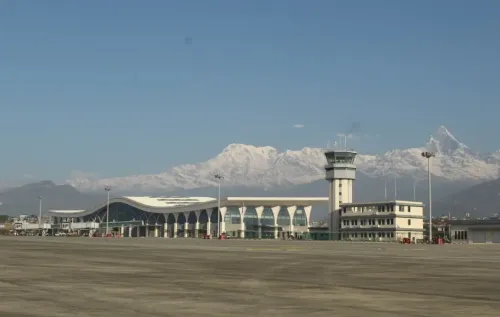
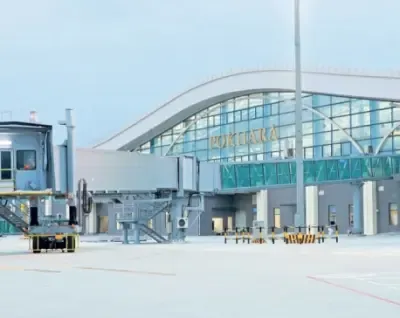
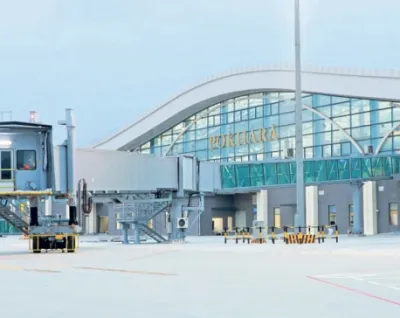
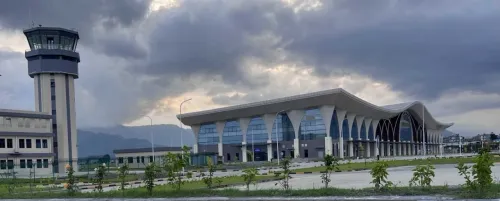
The aircraft deal is increasingly being viewed alongside Pokhara International Airport in western Nepal — also built with Chinese loans — as part of a broader pattern of Chinese-funded infrastructure decisions that have added to Nepal's fiscal strain rather than relieving it. Critics argue that both projects reflect inadequate due diligence at the procurement stage and a failure of oversight institutions to act in time.
Notably, the CIAA, which is mandated to investigate abuse of authority and corruption, has not initiated any action on the aircraft deal despite years of public controversy — a gap that the Supreme Court is now pressing the government to explain.
What Comes Next
The defendants are required to respond to the show-cause notice. With the case granted legal priority, proceedings are expected to move more quickly than standard court timelines. Whether the CIAA will be directed to launch a formal probe — and whether procurement documents will be declassified — will depend on the government's response and the court's subsequent orders.
Point of View
Mandated to investigate abuse of authority, has not acted despite the aircraft deal being a matter of public controversy for years. That silence is itself a governance failure worth scrutinising. The Nepal Airlines Corporation case also illustrates a recurring pattern in Chinese-funded infrastructure — projects assessed more on diplomatic optics than on operational feasibility. With Pokhara International Airport facing similar questions, Nepal is confronting the real cost of concessional loans that came without adequate due-diligence requirements. The court's grant of legal priority is significant, but the test will be whether it can compel document disclosure in a system where procurement records have reportedly been kept confidential from the outset.
NationPress
30 Sept 2026
Frequently Asked Questions
Why has Nepal's Supreme Court issued a notice over the Chinese aircraft procurement?
The Supreme Court issued a show-cause notice on 26 June 2025 after a writ petition argued that the procurement of six Chinese aircraft by Nepal Airlines Corporation had caused losses worth billions of rupees to the state, and that no investigation had been initiated despite years of public controversy. The court directed multiple government bodies, including the CIAA, to explain the lack of action.
What happened to the six Chinese aircraft procured by Nepal Airlines Corporation?
Five of the six aircraft have been grounded at Tribhuvan International Airport in Kathmandu since 2020, generating no revenue while accumulating depreciation and parking charges. The sixth suffered a runway excursion at Nepalgunj Airport in March 2020 and has since remained there as scrap, with insurance compensation received.
How much did Nepal pay for the Chinese aircraft?
The six aircraft — four Y12E turboprops and two MA60 turboprops — were procured between 2014 and 2018 through a combination of Chinese grants and concessional loans totalling NPR 6.66 billion.
Who filed the writ petition and what does it demand?
Chartered accountant and public-interest activist Bhesh Raj Luintel filed the petition on 25 June 2025. It demands a CIAA-led, impartial and time-bound investigation into all officials involved in the procurement, the filing of corruption cases if wrongdoing is found, and the immediate public disclosure of all procurement documents including feasibility studies and financial approvals.
What is the broader context of this controversy?
The aircraft deal is increasingly being compared to the Pokhara International Airport project, also built with Chinese loans, as part of a pattern of Chinese-funded ventures that critics argue were approved without adequate due diligence. Both projects are seen as having added to Nepal's fiscal burden rather than delivering the economic benefits originally projected.