NHPC Phukot Karnali SC order to headline Nepal-India energy talks in Pokhara
Synopsis
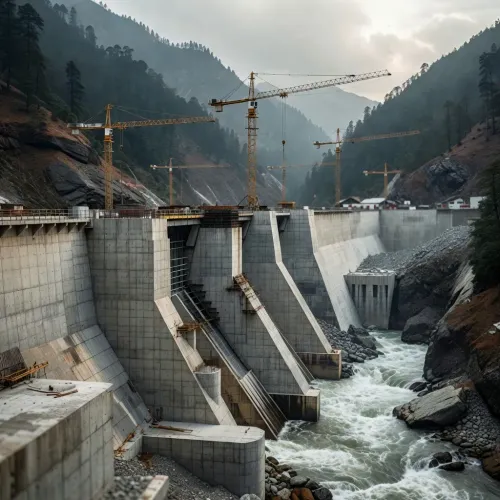
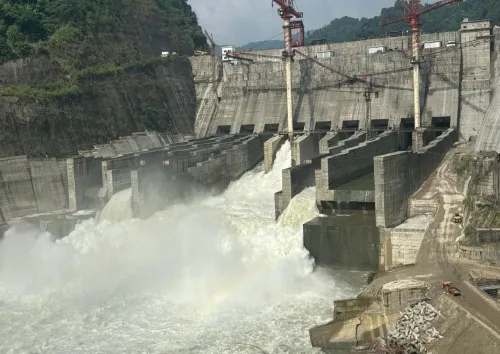
A Nepal Supreme Court ruling that could upend NHPC's 480 MW Phukot Karnali project — by forcing a renegotiation of Nepal's free-electricity share — heads into high-level bilateral energy talks in Pokhara this week. With a 10,000 MW trade target on the table and critical transmission lines still years from completion, the stakes for Nepal-India energy cooperation have rarely been higher.
Key Takeaways
The 13th JWG and JSC meetings between Nepal and India are scheduled in Pokhara on 15-16 July 2025 .
Nepal's Supreme Court on 1 September 2025 ordered renegotiation of Nepal's free-electricity share — currently 21.9% — from the 480 MW Phukot Karnali project developed by NHPC Limited .
NHPC warned the project may become financially unviable if the directive is implemented; its Nepali partner urged the PMO to file a review petition.
Nepal and India signed a long-term power trade deal in January 2024 for India to import up to 10,000 MW from Nepal; Nepal currently exports only about 1,000 MW .
Two new 400 kV cross-border transmission lines — Inaruwa-Purnea and Dododhara-Bareilly — are targeted for completion by 2030 , unlocking an additional 5,000 MW of export capacity.
Green hydrogen cooperation and renewable energy development will also feature on the two-day agenda.
A Nepal Supreme Court directive ordering the government to renegotiate Nepal's free-electricity share from the 480 MW Phukot Karnali Hydropower Project — being developed by India's state-owned NHPC Limited — is set to be a defining issue at high-level bilateral energy talks between the two countries in Pokhara on 15 and 16 July 2025.
The Meetings and Their Mandate
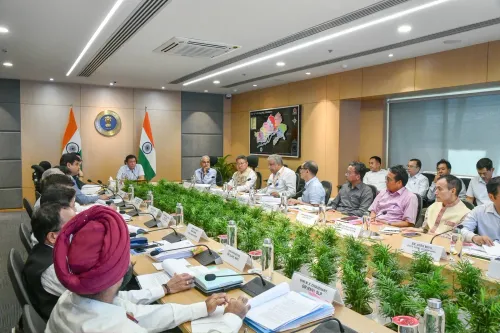
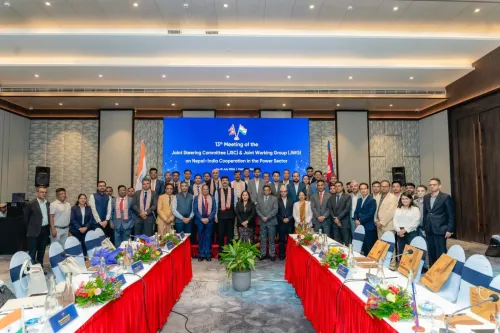
The 13th meeting of the Joint Secretary-level Joint Working Group (JWG) and the Secretary-level Joint Steering Committee (JSC) — the two highest bilateral mechanisms overseeing Nepal-India energy cooperation — are scheduled to convene in the western Nepali city of Pokhara on Tuesday and Wednesday. Sandeep Kumar Deo, Joint Secretary at Nepal's Ministry of Energy, Water Resources and Irrigation, confirmed that the progress of hydropower projects being developed or planned with Indian investment would be a key agenda item. Asked specifically whether the Supreme Court order on the NHPC project would feature, Deo said all major energy-sector projects and issues would be reviewed comprehensively, but declined to elaborate further.
The Supreme Court Order and Its Fallout
On 1 September 2025, Nepal's Supreme Court directed the government to amend the Memorandum of Understanding (MoU) for the Phukot Karnali project, requiring that Nepal's share of free electricity — currently fixed at 21.9 per cent of monthly generation — be increased in proportion to its investment. Following the verdict, NHPC warned that the project could become financially unviable if the directive is implemented. Its Nepali partner, Nepal Vidyut Utpadan Company Limited, urged the Ministry of Energy to recommend that the Prime Minister's Office (PMO) file a review petition before the Supreme Court.
The Nepal government now faces a political bind. Seeking a review could preserve the project's financial viability and provide legal clarity, but risks being portrayed by opposition parties as compromising Nepal's national interest. The MoU itself, signed during the 2023 visit of then Nepali Prime Minister Pushpa Kamal Dahal 'Prachanda' to India, does contain a renegotiation clause if the project becomes commercially unviable — a provision that may now become central to any resolution.
Cross-Border Transmission: The Bigger Infrastructure Picture
Beyond the Phukot Karnali dispute, the two-day meetings are expected to cover the full spectrum of bilateral power infrastructure. Currently, only the Dhalkebar-Muzaffarpur 400 kV transmission line has the capacity to facilitate large-scale electricity trade between the two countries, though around a dozen cross-border links exist. Two additional 400 kV lines — New Butwal-Gorakhpur and Dhalkebar-Sitamarhi — are presently under construction.
In October 2024, the Nepal Electricity Authority (NEA) and Power Grid Corporation of India Limited signed joint venture and shareholders' agreements to build two more 400 kV cross-border lines — Inaruwa-Purnea and Dododhara-Bareilly — both targeted for completion by 2030. Their commissioning is expected to unlock an additional 5,000 MW of electricity export capacity for Nepal.
The 10,000 MW Trade Target and What It Requires
The transmission expansion is central to the long-term power trade agreement signed by Nepal and India in January 2024, under which India agreed in principle to import up to 10,000 MW from Nepal over the next decade. Nepal currently exports roughly 1,000 MW to India during the monsoon season — a fraction of that target. The two sides are also expected to review bilateral electricity trade progress; India began allowing Nepal to sell surplus hydropower through its day-ahead electricity market in 2021, a move that has significantly accelerated trade volumes.
Decisions from the 12th JSC meeting — including Detailed Project Reports for 400 kV lines between Nijgadh/Harnaiya (Nepal) and Motihari (India), and between Kohalpur (Nepal) and Lucknow (India), as well as an upgrade of the Dhalkebar-Muzaffarpur line with High-Temperature Low-Sag (HTLS) conductors — will also be reviewed for implementation progress.
Green Hydrogen and Renewables on the Agenda
Cooperation in renewable energy development and the promotion of green hydrogen are also expected to feature prominently during the two-day deliberations, reflecting the broader strategic direction both countries have signalled in recent years. The outcome of the Pokhara meetings will be closely watched as a signal of how both governments intend to manage the tension between legal rulings, commercial viability, and long-term energy partnership.
Point of View
For fear of nationalist backlash, risks leaving the project in limbo precisely when Nepal most needs Indian capital to meet its 10,000 MW export ambition. The real question in Pokhara is not just what to do about Phukot Karnali — it is whether the bilateral framework is robust enough to absorb domestic legal shocks without derailing the broader energy partnership.
NationPress
12 Oct 2026
Frequently Asked Questions
What is the Phukot Karnali Hydropower Project and why is it in dispute?
The Phukot Karnali Hydropower Project is a 480 MW hydropower scheme in Nepal being developed by India's state-owned NHPC Limited. It is in dispute because Nepal's Supreme Court ordered on 1 September 2025 that Nepal's share of free electricity — fixed at 21.9% under the original MoU — must be increased in proportion to Nepal's investment in the project.
What did Nepal's Supreme Court order regarding NHPC's project?
On 1 September 2025, Nepal's Supreme Court directed the government to amend the MoU for the Phukot Karnali project so that Nepal receives a larger share of free electricity, proportionate to its investment. The court instructed the government to revise the agreement and implement the changes.
Why is NHPC concerned about the Supreme Court ruling?
NHPC warned that implementing the court's directive could make the Phukot Karnali project financially unviable. Its Nepali partner, Nepal Vidyut Utpadan Company Limited, subsequently urged Nepal's Ministry of Energy to recommend that the Prime Minister's Office file a review petition before the Supreme Court.
What is the Nepal-India 10,000 MW power trade agreement?
Under a long-term power trade agreement signed in January 2024, India agreed in principle to import up to 10,000 MW of electricity from Nepal over the next decade. Nepal currently exports around 1,000 MW to India during the monsoon season, making the expansion of cross-border transmission infrastructure critical to achieving the target.
What cross-border transmission projects are being discussed at the Pokhara talks?
The talks will review ongoing construction of the New Butwal-Gorakhpur and Dhalkebar-Sitamarhi 400 kV lines, and the planned Inaruwa-Purnea and Dododhara-Bareilly 400 kV lines targeted for completion by 2030. Together, the new lines are expected to enable Nepal to export an additional 5,000 MW of electricity to India.