HP CM Office Seeks 50% Free Power Share from Baira Siul Project
Synopsis
The Chief Minister's Office of Himachal Pradesh has formally sought a 50 percent free-power royalty share from the 180 MW Baira Siul Hydroelectric Project in Chamba district, invoking the completion of 44 years of the NHPC-operated plant's operation as justification for revising the existing power-sharing arrangement.
Key Takeaways
The Chief Minister's Office of Himachal Pradesh has requested a 50 percent free-power share from the Baira Siul Hydroelectric Project .
The 180 MW run-of-river project in Chamba district was commissioned in 1982 and is operated by NHPC Limited .
The demand is anchored on the completion of 44 years of continuous operation of the project.
India's 2008 Hydro Power Policy mandates a minimum 13 percent free-power royalty for new projects, but Baira Siul predates this framework.
Similar free-power revision demands have been raised by Uttarakhand and Jammu and Kashmir for other pre-1990s central hydro stations.
Any revision would require amendment of the original power-purchase agreement and central government approval.
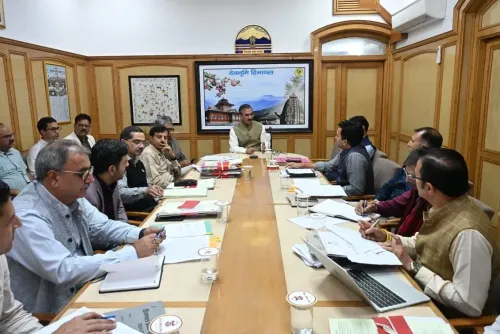
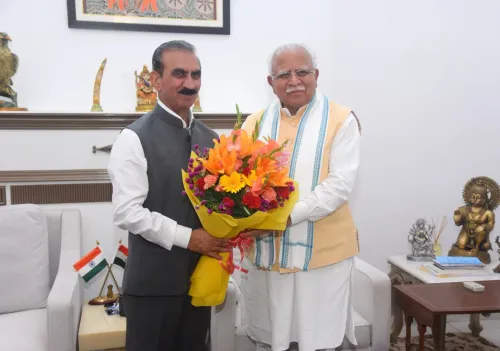
The Chief Minister's Office of Himachal Pradesh on Wednesday, 17 June 2026 formally sought an increase in the state's free-power royalty share from the 180-megawatt Baira Siul Hydroelectric Project to 50 percent, citing the completion of 44 years of the project's operation as grounds for the upward revision.
The post stated: '180 megawatt ki Baira-Syul jalavidyut pariyojana ke sanchalan ke 44 varsh poorn hone ke parinam svaroop is pariyojana mein nihshulk bijli ki hissedari ko badhakar 50 pratishat karne ka agrah kiya' — translating to: 'On completion of 44 years of operation of the 180 MW Baira Siul Hydroelectric Project, a request has been made to increase the free-power share in this project to 50 percent.'
Context
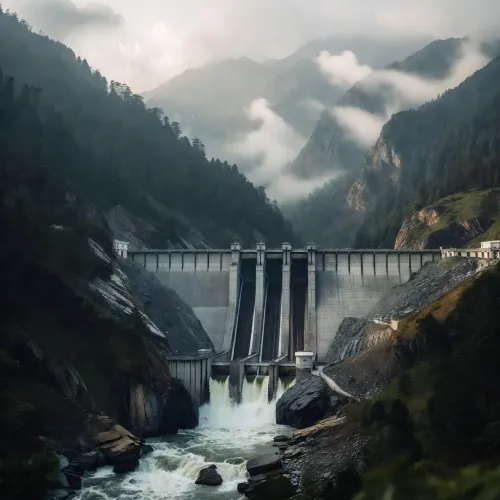
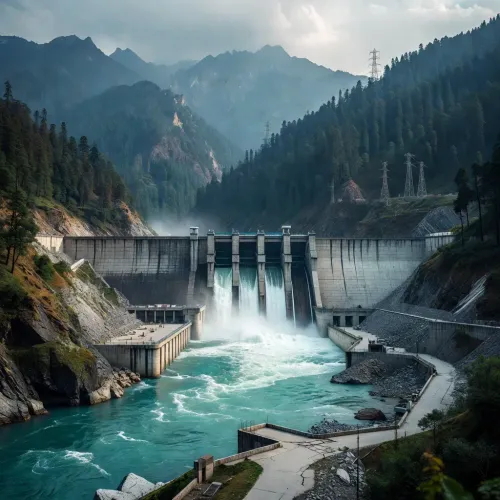
The Baira Siul Hydroelectric Project, located in Chamba district, Himachal Pradesh, is a run-of-river station commissioned in 1982 and operated by NHPC Limited, a central public-sector undertaking. It stands among India's earliest central-sector hydropower installations in the Himalayan region. The project has now completed over four decades of continuous power generation.
Himachal Pradesh, as the host state, receives a share of the electricity generated as free-power royalty — a standard arrangement between central utilities and state governments for hydro assets on their territory. The current free-power percentage received by the state from Baira Siul has not been officially confirmed in public records.
Policy Backdrop
India's 2008 Hydro Power Policy set a minimum free-power royalty of 13 percent to host states from new projects, establishing a benchmark that hill states have since cited in negotiations over legacy stations commissioned before that policy framework existed. The Baira Siul project, commissioned in 1982, predates this policy and falls under older power-purchase agreements.
Himachal Pradesh has substantial central-sector hydro assets within its borders and has consistently sought upward revisions of free-power allocations from ageing projects. The state's argument rests on the ecological burden, land submergence, and foregone local revenue that host communities bear over decades of a project's operational life.
Stakeholders and Impact
A revision to 50 percent free-power share would represent a significant increase from existing arrangements and could meaningfully expand the electricity available to Himachal Pradesh for distribution to its residents, potentially reducing power purchase costs for the state utility. Local communities in Chamba district — which hosts the project infrastructure — stand to benefit if additional royalty power translates into improved local supply or revenue.
For NHPC Limited, any upward revision of free-power obligations on an operational plant would affect the commercial terms of the existing power-purchase agreement and require consent from the Ministry of Power at the central level. Similar demands have previously been raised by Uttarakhand and Jammu and Kashmir for pre-1990s NHPC and SJVN stations, reflecting a broader pattern of hill states leveraging project anniversaries to reopen revenue-sharing terms.
What's Next
The request is expected to trigger formal discussions between the Himachal Pradesh government and the Ministry of Power or the NHPC board regarding a possible amendment to the original power-purchase agreement governing Baira Siul. Any amendment would set a precedent for how India renegotiates free-power terms for other 1980s-era central hydro plants still in operation across hill states.
As ageing Himalayan hydropower stations approach and cross the 40-year mark, the question of revised royalty sharing is likely to intensify across multiple states, making the Baira Siul case a closely watched test of central willingness to reopen legacy agreements.
Point of View
The state implicitly argues that long-term ecological and social costs to host communities justify a far larger royalty than legacy agreements provide. This fits a broader arc in which India's hill states are systematically challenging pre-2008 power-sharing terms as ageing Himalayan plants become commercially mature and politically visible. The outcome will be watched closely by Uttarakhand and Jammu and Kashmir, whose own pending demands against NHPC and SJVN could hinge on how the Centre responds to Himachal Pradesh's precedent-setting case.
NationPress
16 Sept 2026
Frequently Asked Questions
What is the Baira Siul Hydroelectric Project?
The Baira Siul Hydroelectric Project is a 180 MW run-of-river hydropower station located in Chamba district, Himachal Pradesh , commissioned in 1982 and operated by NHPC Limited , a central public-sector undertaking.
Why is Himachal Pradesh demanding 50 percent free power from Baira Siul?
Himachal Pradesh is citing the completion of 44 years of the project's operation as grounds to revise the free-power royalty upward to 50 percent , arguing that the long operational life justifies a larger share for the host state.
What is free power royalty in Indian hydropower projects?
Free power royalty is a percentage of electricity generated by a hydropower project that is given without charge to the host state as compensation for land use, submergence, and ecological impact. India's 2008 Hydro Power Policy set a minimum of 13 percent for new projects.
Who operates the Baira Siul project and who decides the free power share?
NHPC Limited , a central government undertaking, operates the Baira Siul project. Any revision to the free-power share would require agreement between the state government, NHPC, and the Ministry of Power .
Have other hill states made similar free power demands?
Yes. Uttarakhand and Jammu and Kashmir have raised comparable demands for upward revision of free-power royalties from pre-1990s NHPC and SJVN stations, reflecting a recurring pattern across Himalayan host states.