How India and Nepal Are Powering Regional Energy Integration in South Asia?
Synopsis
Nepal and India are forging a stronger energy partnership through enhanced cross-border electricity exchange and infrastructure development. Key agreements made during the recent Joint Technical Team meeting pave the way for significant electricity trade, promising a cleaner energy future for both nations and the wider South Asian region.
Key Takeaways
Strengthened cross-border electricity exchange between Nepal and India.
Development of new transmission lines to enhance capacity.
Agreements to expedite ongoing projects for timely completion.
Implementation of advanced technology for improved infrastructure.
Focus on renewable energy export from Nepal to India and Bangladesh.
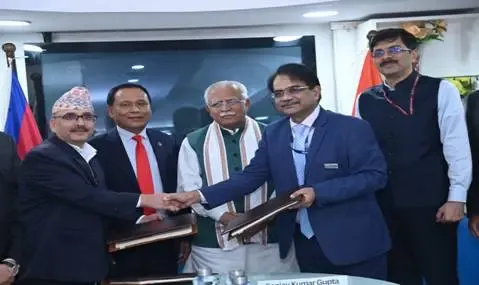
Kathmandu, Nov 5 (NationPress) Officials from Nepal and India have reached an agreement to boost cross-border electricity exchange and enhance transmission infrastructure by accelerating efforts on several ongoing and upcoming transmission line projects.
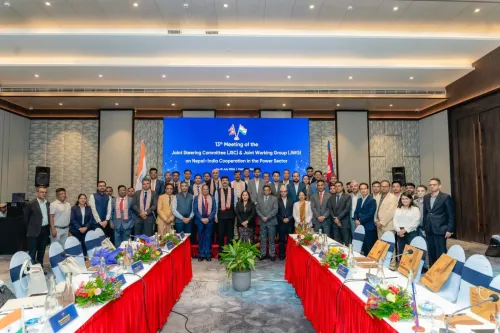
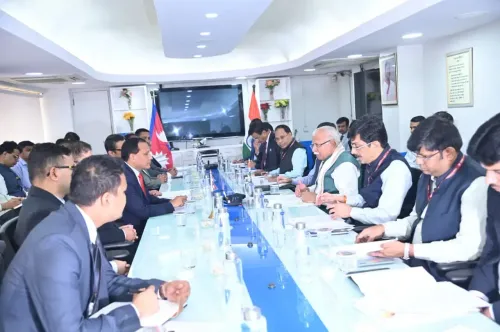
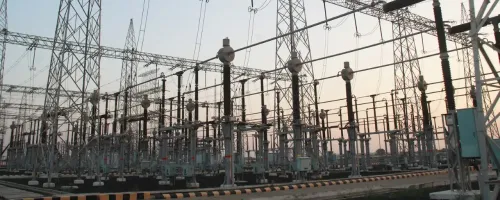
During the 17th session of the Joint Technical Team (JTT) under the energy ministries of both nations, convened in the picturesque city of Pokhara on Monday and Tuesday, discussions revolved around electricity trade, the establishment of new cross-border transmission lines, and the reinforcement of the existing transmission system, culminating in several significant agreements.
As per a press release from Nepal's Ministry of Energy, Water Resources and Irrigation on Wednesday, both nations consented to draft a joint Detailed Project Report (DPR) for the proposed Chameliya–Jauljibi 220 kV double-circuit cross-border transmission line by November 2025, with the project projected for completion by December 2027. This line aims to connect Nepal's far-western region to India's Uttarakhand state.
Moreover, both countries agreed to initially operate the under-construction New Butwal–Gorakhpur 400 kV cross-border transmission line at 220 kV upon its completion. A meeting with the Uttar Pradesh Transmission Company will be scheduled within 15 days to finalize the import and export capacity of this line. Nepali officials indicated that construction activities on both sides of the border have gained momentum in recent months. The project was inaugurated jointly during the visit of Nepal’s former Prime Minister Pushpa Kamal Dahal in May-June 2023.
The two nations also reevaluated the power exchange capacity of the Dhalkebar–Muzaffarpur and the under-construction Dhalkebar–Sitamarhi cross-border transmission lines, confirming that Nepal can export up to 1500 MW and import up to 1400 MW through each line. Initially designed for 1000 MW, the Dhalkebar–Muzaffarpur line is currently the sole operational 400 kV cross-border transmission line between Nepal and India, alongside approximately a dozen smaller power links.
The Dhalkebar–Sitamarhi line's construction is nearing completion, developed by the SJVN Arun-3 Power Development Company, a subsidiary of India’s SJVN Limited, which is also working on the 900 MW Arun-3 Hydropower Project in eastern Nepal.
According to the latest agreements, Nepal will provide essential technical information within a month to prepare the DPR for the proposed Nijgadh–Motihari 400 kV cross-border transmission line, which will be collaboratively drafted by a technical team from both countries. Additionally, a Joint Study Team will finalize the endpoint of the proposed Lamahi–Lucknow 400 kV line on the Nepali side, deciding between Lamahi or Kohalpur, two towns located in the Dang and Banke districts respectively.
Both sides have also agreed to implement High-Temperature Low-Sag (HTLS) technology for reconductoring the Dhalkebar–Muzaffarpur line and to jointly investigate the replacement of existing conductors with HTLS conductors in the Raxaul–Parwanipur and Ramnagar–Gandak 132 kV lines to bolster capacity.
This latest set of agreements represents another progressive step towards regional energy integration in South Asia, as Nepal aims to increase the export of its renewable energy to India and Bangladesh. Currently, Nepal exports around 1000 MW of electricity to India, which has committed to purchase up to 10,000 MW over the next decade as part of a bilateral agreement. To achieve this ambitious target, both nations are prioritizing the development of cross-border transmission infrastructure alongside the construction of major hydropower facilities in Nepal.
The meeting was co-chaired by Sandeep Kumar Dev, Joint Secretary at Nepal’s Energy Ministry, and Bhagwan Sahay Bhairwa, Chief Engineer at India’s Central Electricity Authority (CEA), as reported by Nepal’s energy ministry.
Point of View
The recent agreements between Nepal and India symbolize a pivotal moment in regional energy cooperation. The collaboration not only enhances energy security for both nations but also showcases Nepal's potential as a renewable energy powerhouse. By prioritizing cross-border infrastructure, both countries are taking significant strides towards a sustainable energy future that could benefit the entire South Asian region.
NationPress
23 Sept 2026
Frequently Asked Questions
What is the purpose of the recent agreements between Nepal and India?
The agreements aim to enhance cross-border electricity exchange and strengthen transmission infrastructure, enabling both countries to improve their energy trade and capacity.
What are the key projects discussed in the meeting?
Key projects include the Chameliya–Jauljibi double-circuit transmission line, New Butwal–Gorakhpur line, and the Dhalkebar–Muzaffarpur and Dhalkebar–Sitamarhi lines.
How much electricity can Nepal export to India?
Nepal can currently export up to 1500 MW through the Dhalkebar–Muzaffarpur line and aims to increase its capacity significantly in the coming years.
What technology will be adopted for enhancing transmission capacity?
Both countries agreed to implement High-Temperature Low-Sag (HTLS) technology for reconductoring existing lines to enhance capacity.
How does this collaboration impact South Asia's energy landscape?
This collaboration marks a significant step towards regional energy integration, positioning Nepal as a vital player in supplying clean energy to India and Bangladesh.