Has the Proportional Election Process Commenced in Nepal?
Synopsis
The registration process for political parties to participate in Nepal's upcoming parliamentary elections under the PR system has officially started. This development comes as the country gears up for elections scheduled for March 5, aiming to improve representation and participation.
Key Takeaways
The registration of political parties for Nepal's parliamentary elections has begun.
165 members are elected through FPTP and 110 through PR.
At least one-third of elected members must be women.
Final candidate lists are due on December 28 and 29.
Voting will occur on March 5, from 7:00 a.m. to 5:00 p.m.
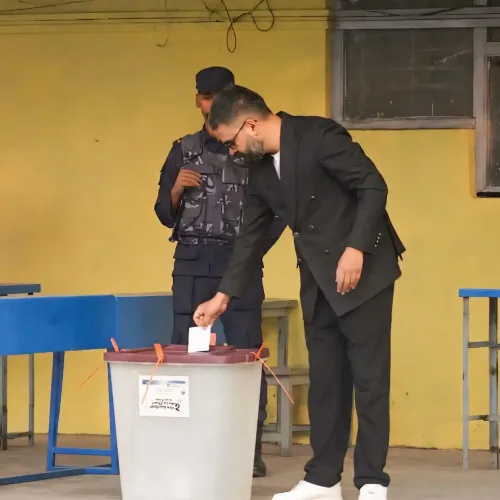
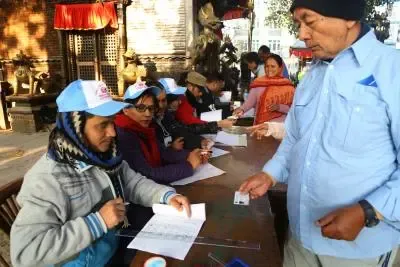
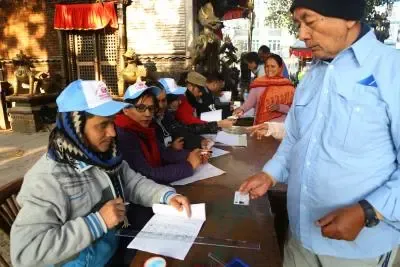
Kathmandu, Dec 7 (NationPress) The process of registering political parties to participate in the parliamentary elections, set for March 5 of the upcoming year under the proportional representation (PR) framework, officially commenced in Nepal on Sunday.
Nepal conducts elections for members of the House of Representatives via both the First-Past-The-Post (FPTP) and PR systems.
Within the 275-member lower house, 165 members are elected through the FPTP approach while 110 members are chosen under the PR system, as outlined in Nepal’s Constitution.
“According to the timetable released earlier by the Election Commission (EC), delegates from political parties have been arriving at the EC office since early Sunday morning to register for the PR system,” stated Suman Ghimire, the information officer at the EC, during an interview with IANS.
The EC's published schedule indicates that parties must submit their registration applications from 10 a.m. on Sunday until 4 p.m. on Tuesday. The EC is set to announce the list of registered political parties for the PR system on December 10.
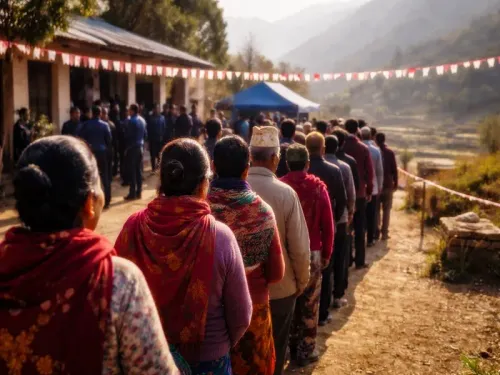
On December 28 and 29, political parties are required to present the final closed list of candidates who will compete under the PR category. The EC will reveal this final list of candidates on February 3 of next year. According to the approved election timeline, voting is scheduled to occur at designated polling centers on March 5 from 7:00 a.m. to 5:00 p.m., as outlined by the EC.
In accordance with Nepal's Constitution, it is mandated that at least one-third of the total members elected from each political party represented in the Federal Parliament must be women.
The PR system is essential to ensure a minimum of 33 percent representation of women if the candidates elected under the FPTP system do not meet this quota.
When nominating candidates under the proportional electoral system, political parties must ensure that representation—based on population—includes women, Dalits, Indigenous nationalities, Khas Arya, Madhesis, Tharus, Muslims, and individuals from marginalized regions, as required by the Constitution.
Political parties are also required to incorporate at least 50 percent women in the closed list submitted to the EC for the PR category, per Section 28 of the House of Representatives Election Act.
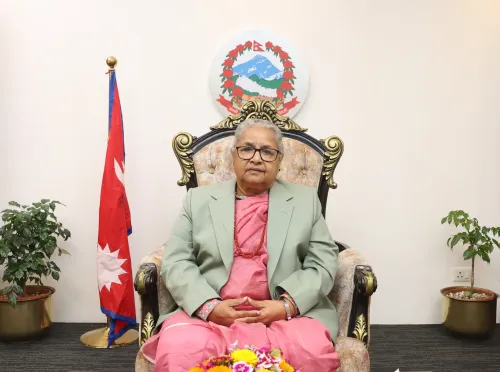
Currently, approximately 117 political parties have registered with the EC to compete in the elections under the FPTP system, as reported by Ghimire. A number of these are new political entities representing Gen Z, whose activism led to the downfall of the government led by KP Sharma Oli, paving the way for the current administration led by Sushila Karki.
Point of View
It is essential to recognize the importance of the proportional representation system in Nepal's election process. This initiative aims to foster inclusivity, ensuring that women and marginalized communities have a voice in governance, reflecting our commitment to democracy and representation.
NationPress
29 Sept 2026
Frequently Asked Questions
What is the proportional representation system?
The proportional representation system is an electoral mechanism that allows political parties to gain seats in the parliament based on the percentage of votes they receive, ensuring fair representation.
How many members are elected through the PR system in Nepal?
In the House of Representatives, 110 members are elected under the proportional representation system.
What is the significance of women's representation in Nepal's elections?
Nepal's Constitution mandates that at least one-third of members elected from each political party must be women, promoting gender equality in governance.
When will the final list of candidates be published?
The final closed list of candidates contesting under the proportional representation category will be published by the Election Commission on February 3 next year.
What are the registration deadlines for political parties?
Political parties must register from 10 a.m. on Sunday until 4 p.m. on Tuesday, as per the Election Commission's schedule.