Nepal grows Mitsumata for Japan banknotes 5,200 km from Tokyo
Synopsis
The paper in Japan's banknotes traces back to a Himalayan shrub grown 5,200 km from Tokyo. Nepal now produces around 100 tons of Mitsumata annually — up from 30 — after an Osaka firm spent decades training mountain communities, turning a domestic Japanese supply crisis into a cross-border livelihood model that also empowers rural women.
Key Takeaways
Most of Japan's Mitsumata (Oriental paperbush), used in Japanese banknotes , is cultivated in Nepal , roughly 5,200 km from Japan.
Kanpou Inc , an Osaka-based company, began Mitsumata cultivation in Nepal in 1990 after domestic supply in Japan declined.
The Jiri region of Nepal was identified as a natural habitat for Mitsumata and became the primary production zone.
Annual output grew from approximately 30 tons to around 100 tons after JICA joined the initiative in 2016 .
The programme has provided cash income to rural women and helped fund children's education in Himalayan villages.
The initiative comes as Japan and Nepal approach the 70th anniversary of their diplomatic relations.
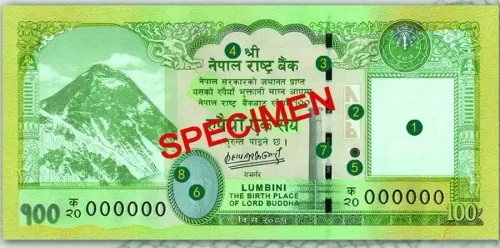
The Mitsumata plant — the primary raw material for Japanese banknotes — is cultivated not in Japan but on the mountain slopes of Nepal, some 5,200 km from Tokyo, according to the Japan International Cooperation Agency (JICA). The revelation, shared as Japan and Nepal approach the 70th anniversary of their diplomatic relations, highlights a quiet but consequential supply chain that stretches across the Himalayas.
What Is Mitsumata
Mitsumata, or Oriental paperbush, is a deciduous shrub whose name literally means 'three-forked' in Japanese — a reference to the way its branches divide into three at the tips. Its fibres are exceptionally strong, making it a prized material for Japanese banknotes and traditional washi paper for centuries. Today, Mitsumata grown in Nepal is considered the highest quality in the world, according to Kanpou Inc President Matsubara Tadashi.
How Nepal Became the Source
Kanpou Inc, an Osaka-based company, first entered Nepal in 1990 after a staff member from Japan's Ministry of Finance printing bureau flagged a domestic supply crisis. 'Fewer people are growing Mitsumata, and it's becoming difficult to secure enough of it in Japan. Apparently, Mitsumata originates from the Himalayan region,' the official reportedly said. That observation prompted Kanpou to investigate Nepal as a cultivation base.
After several years of on-ground research, the company identified the Jiri region — where Mitsumata grew naturally across mountain slopes — as an ideal production zone. Matsubara then trained local communities, using video-based instruction rather than written materials to bridge language barriers.
How the Process Works
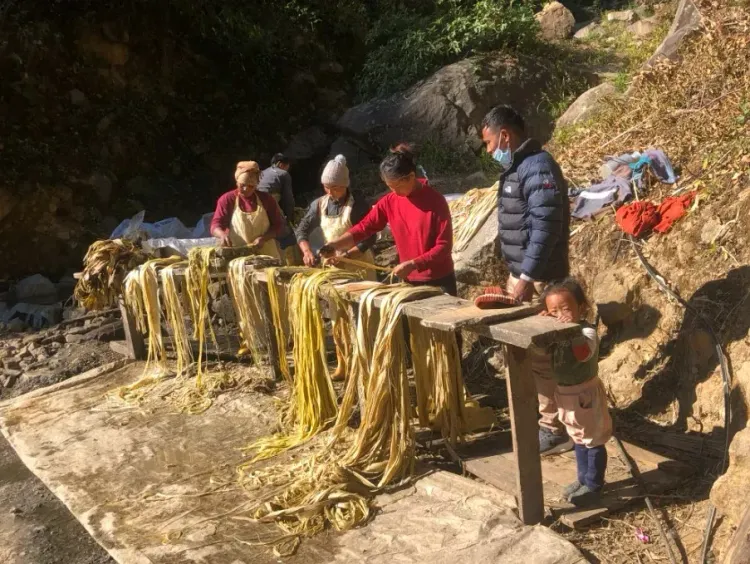
The production method involves harvesting Mitsumata on mountain slopes, steaming the plant to soften it, carefully peeling off the outer bark, washing it with water, and then drying it. According to JICA, these steps require no specialised knowledge and are not physically demanding, enabling broad community participation. 'Women living in mountain villages were able to work in their spare time between housework and childcare. By earning cash income, women who had long been in socially vulnerable positions gradually gained confidence,' JICA noted.
Economic Impact on Himalayan Communities
The income generated from Mitsumata cultivation has helped families in Nepal's mountain villages cover children's school fees and other household expenses, opening new educational pathways. The project has had a measurable effect on women's economic agency in communities that had historically lacked formal income opportunities.
In 2016, the initiative was selected for JICA's 'Support for Japanese Small and Medium-sized Enterprises Overseas Business Development' programme, following a referral through the Japanese Embassy in Nepal. With institutional backing, production areas expanded significantly and annual output grew from approximately 30 tons to around 100 tons, providing stable supply for Japan's banknote paper demand.
What This Means for Japan-Nepal Ties
The Mitsumata supply chain is now an essential pillar of Japan's currency production infrastructure. As both nations mark seven decades of diplomatic relations, the partnership illustrates how bilateral cooperation can generate durable economic outcomes — linking a Himalayan shrub to the banknotes circulating in one of the world's largest economies. Whether this model can be scaled further across other heritage materials remains an open question as Japan looks to diversify and secure its specialised supply chains.
Point of View
The model looks resilient. Yet concentrating banknote-grade raw material production in one mountainous zone of a developing country carries geopolitical and climate risk that neither JICA nor Kanpou has publicly addressed. The women's empowerment dimension is genuine and documented, but it should not obscure the strategic question: what happens to Japan's banknote supply if the Jiri region faces a bad harvest season or political disruption?
NationPress
23 Sept 2026
Frequently Asked Questions
Why is Mitsumata grown in Nepal for Japanese banknotes?
Domestic Mitsumata cultivation in Japan declined over decades, creating a supply shortage for banknote paper. Osaka-based Kanpou Inc identified Nepal's Himalayan region — where the plant grows naturally — as an alternative source and began training local communities in 1990.
What is Mitsumata and why is it used in banknotes?
Mitsumata, or Oriental paperbush, is a deciduous shrub with exceptionally strong fibres that have been used in Japanese banknotes and traditional washi paper for centuries. Its name means 'three-forked' in Japanese, referring to the branching pattern of its tips.
How much Mitsumata does Nepal produce for Japan?
Nepal's annual Mitsumata output has grown from approximately 30 tons to around 100 tons, according to JICA, following the expansion of production areas supported by the JICA programme from 2016 onwards.
How has the Mitsumata project benefited communities in Nepal?
The project has provided cash income to rural women in mountain villages, who can participate in harvesting and processing during spare time. The earnings have helped families pay for children's school fees, creating new educational opportunities in communities with limited formal income sources.
When did JICA get involved in the Nepal Mitsumata project?
JICA formally joined the initiative in 2016, when the project was selected for its 'Support for Japanese Small and Medium-sized Enterprises Overseas Business Development' programme, following a referral through the Japanese Embassy in Nepal.