Is South Korea's Bird Flu Outbreak Growing with 34 Cases Confirmed?

Synopsis
South Korea's battle against bird flu intensifies with a confirmed case at a duck farm, escalating the total to 34. As authorities respond with measures to control the outbreak, the agriculture ministry steps in to stabilize egg prices through imports. Stay informed on the unfolding situation and its potential impacts on the poultry industry.
Key Takeaways
34 confirmed cases of bird flu in South Korea this season.
Recent case detected at a duck farm in Naju.
Authorities have initiated culling of infected birds.
2.24 million fresh eggs to be imported from the US.
Over 4.32 million laying hens have been culled.
Seoul, Jan 9 (NationPress) South Korea has reported a new instance of highly pathogenic avian influenza at a poultry farm, increasing the total number of cases this season to 34, according to officials on Friday.
The most recent case was identified at a duck farm in Naju, located approximately 285 kilometers south of Seoul, where around 27,000 ducks are being raised, as reported by the Central Disaster Management Headquarters and Yonhap News Agency.
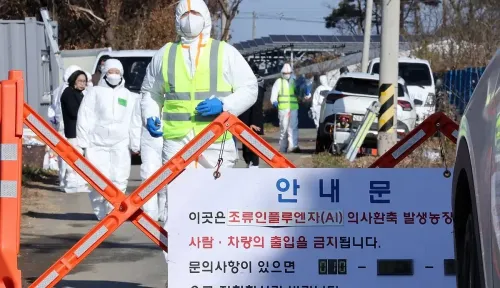
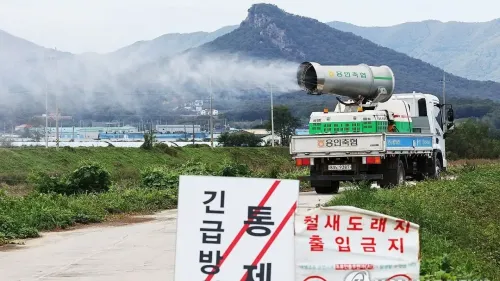
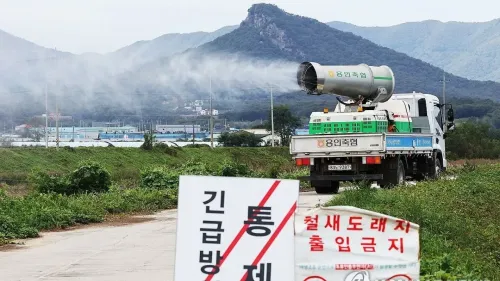
In response, authorities have restricted access to the farm, initiated culling of the affected birds, and are investigating the incident. The virus has now spread to over 20 cities and counties, raising alarms about potential further infections.
To facilitate early detection, officials plan to conduct rigorous inspections of breeder duck farms and hatcheries nationwide, they announced.
On Wednesday, South Korea's agriculture ministry declared that the country will import 2.24 million fresh eggs from the United States this month to help stabilize domestic egg prices amidst the ongoing spread of this highly contagious avian influenza (AI).
The eggs will be procured by the Korea Agro-Fisheries and Food Trade Corp. and distributed to supermarkets and food ingredient suppliers. This marks the first import of US-produced eggs in two years, with the last shipment occurring in January 2024, according to a ministry official.
This initiative is a proactive measure against a possible egg supply shortage, as the country has been facing the challenges posed by the ongoing outbreak of bird flu in recent months.
Since the onset of the cold season, over 4.32 million laying hens have been culled at farms impacted by AI, according to information from the ministry.
Despite the ongoing challenges, the ministry indicated that the egg supply remains stable, with the number of laying hens increasing by 1.2 percent year-over-year as of the end of 2025, although daily egg production has decreased by 1.1 percent to 49 million during this time.
Point of View
It is crucial to acknowledge the seriousness of the current avian influenza outbreak in South Korea. The government's proactive measures reflect its commitment to safeguarding public health and the poultry industry. While the situation is concerning, the authorities' swift response and import strategy are steps in the right direction to ensure stability in egg supply and prices. The nation's resilience in facing such crises will be tested, and ongoing vigilance is essential.
NationPress
18 Sept 2026
Frequently Asked Questions
What recent case of bird flu was reported in South Korea?
An additional case of highly pathogenic avian influenza was confirmed at a duck farm in Naju, increasing the total number of cases this season to 34.
How is South Korea responding to the bird flu outbreak?
Authorities have restricted access to the affected farm, begun culling infected birds, and are conducting intensive inspections of poultry farms nationwide.
What measures are being taken to stabilize egg prices?
South Korea will import 2.24 million fresh eggs from the United States to help stabilize domestic egg prices amidst the bird flu outbreak.
How many laying hens have been culled due to avian influenza?
Over 4.32 million laying hens have been culled at farms affected by avian influenza since the start of the cold season.
Is the egg supply in South Korea stable despite the outbreak?
The agriculture ministry reports that the egg supply remains stable, with a slight increase in the number of laying hens compared to the previous year.