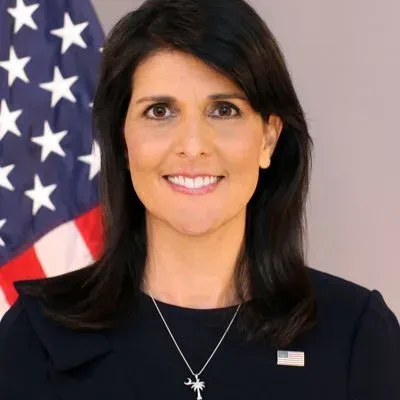
Nikki Haley rules out South Carolina Senate run to replace Lindsey Graham
Synopsis
Nikki Haley has ruled out a Senate run to replace the late Lindsey Graham, leaving South Carolina's Republican field wide open. With Trump hinting at a preferred candidate and the filing window opening 21 July, the race to succeed one of the GOP's most prominent figures is only just beginning — and Trump's endorsement could settle it before a single vote is cast.
Key Takeaways
Nikki Haley confirmed on 13 July she will not seek the Senate seat vacated by the death of Senator Lindsey Graham .
Potential candidates include Congresswoman Nancy Mace , Congressman Ralph Norman , Lieutenant Governor Pamela Evette , and businessman Mark Lynch .
President Donald Trump says he has a preferred candidate but has not yet revealed the name.
Governor Henry McMaster can appoint an interim senator; his office has not announced a timeline.
The special election filing window runs 21–28 July ; the Republican primary is set for 11 August , with a runoff on 25 August if needed.
The seat is rated 'Likely Republican'; Democrat Annie Andrews will contest the November general election.
Former South Carolina Governor Nikki Haley will not contest the special election to fill the Senate seat left vacant by the death of Senator Lindsey Graham, her spokesperson confirmed on Sunday, 13 July, closing off one of the most-watched succession questions in recent Republican politics. The announcement ends early speculation that the prominent Indian American Republican — a former governor, former UN Ambassador, and 2024 presidential contender — might seek a return to elected office.
What Haley's Camp Said
'While she has been blessed to serve her state and country as Governor, UN Ambassador, and as a candidate for President, she has no plans to run for office at this time,' her spokesperson said in a statement cited in media reports.
Haley had earlier paid tribute to Graham, stopping short of addressing the succession contest. 'Lindsey loved South Carolina deeply. There was never a day he stopped fighting for the people of our state,' she said. 'Through his military service and years in public office, he gave his all to protect America and our freedom-loving allies. He was truly one of a kind.'
The Field Taking Shape
Haley's name had surfaced alongside several other Republicans flagged as potential candidates, including Congresswoman Nancy Mace, Congressman Ralph Norman, Lieutenant Governor Pamela Evette, and businessman Mark Lynch. Mace told reporters that 'there will be time to decide' on whether she would seek the seat; Norman said he had not yet made a decision. Evette, meanwhile, has reportedly been receiving calls urging her to enter the race, according to a source familiar with the matter.
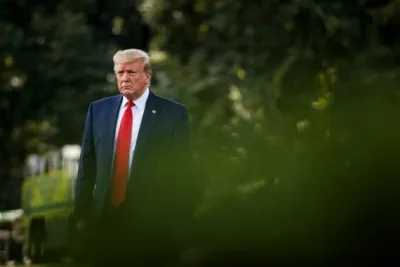
President Donald Trump told reporters he already has a preferred candidate in mind but declined to name the person, saying it was 'too soon with Lindsey.' 'I have somebody that I think would be great, but I don't want to say it now,' Trump said. 'I do have somebody that I think is really good.'
How the Vacancy Will Be Filled
Under South Carolina law, Governor Henry McMaster, a Republican, holds the authority to appoint an interim senator to serve until Graham's term expires in January. His office has not indicated whom he is considering or when an appointment will be announced.
'At this time, our focus is on honoring Senator Graham's life and service,' a McMaster spokesperson said. 'Questions regarding the process for filling the vacancy will be addressed by the Governor's Office when there are updates to share.'
The filing period for special election candidates opens on 21 July and closes on 28 July. A special Republican primary is scheduled for 11 August, followed by a runoff on 25 August if no candidate secures a majority. The Republican nominee will then face Democrat Annie Andrews in the November general election, a contest rated 'Likely Republican' by political analysts at Inside Elections.
Haley's Political Journey
Haley served as South Carolina's governor from 2011 to 2017, becoming the first woman and the first Indian American to lead the state. President Trump subsequently appointed her as US Ambassador to the United Nations, a post she held before launching a challenge to Trump himself for the 2024 Republican presidential nomination — ultimately becoming his last major rival to exit the race. She has remained active in Republican politics and foreign policy discussions since, but has not signalled an intent to seek elected office again.
What Comes Next
With Haley out, attention shifts to whether Lieutenant Governor Evette, Mace, or a Trump-backed dark horse enters the race before the 28 July filing deadline. Trump's endorsement, when it comes, is likely to prove decisive in a South Carolina Republican primary. The seat's outcome will have limited impact on the Senate's partisan balance given the 'Likely Republican' rating, but the contest will serve as an early test of Trump's influence over the post-Graham GOP in his home state's political ecosystem.
Point of View
The same state Republican establishment that once rallied behind Haley now waits on a single Trump signal. Graham's death removes a rare independent voice in the Senate GOP; whoever fills the seat will almost certainly be a more loyal Trump ally, reshaping the chamber's foreign policy tone on issues Graham championed, from Ukraine aid to NATO commitments.
NationPress
13 Jul 2026
Frequently Asked Questions
Why did Nikki Haley rule out running for Lindsey Graham's Senate seat?
Haley's spokesperson said she 'has no plans to run for office at this time,' citing her past service as Governor, UN Ambassador, and presidential candidate. No further reason was given for her decision not to contest the special election.
Who are the likely candidates to replace Senator Lindsey Graham?
Among the names being discussed are Congresswoman Nancy Mace, Congressman Ralph Norman, Lieutenant Governor Pamela Evette, and businessman Mark Lynch. President Trump has indicated he has a preferred candidate but has not yet revealed the name.
How will the South Carolina Senate vacancy be filled?
Governor Henry McMaster can appoint an interim senator immediately to serve until Graham's term expires in January. A special election will then be held, with the filing period running 21–28 July, a Republican primary on 11 August, and a potential runoff on 25 August.
Who is Nikki Haley and what is her political background?
Nikki Haley served as South Carolina's governor from 2011 to 2017, becoming the first woman and first Indian American to hold that office. She later served as US Ambassador to the United Nations under President Trump and was his last major rival in the 2024 Republican presidential primary.
What are the chances of a Democrat winning Lindsey Graham's Senate seat?
Political analysts at Inside Elections have rated the contest as 'Likely Republican,' making a Democratic victory unlikely. Democrat Annie Andrews is the party's candidate for the November general election.