Shekhawat Highlights India's Rise in Tech, Startups & Manufacturing
Synopsis
Union Culture and Tourism Minister Gajendra Singh Shekhawat on 13 July 2026 highlighted India's expanding economic strength in technology, startups, and manufacturing, calling it 'the power of the new India' and 'the flight of the future' amid global headwinds.
Key Takeaways
Union Minister Gajendra Singh Shekhawat posted on 13 July 2026 asserting India's growing strength amid global challenges.
He specifically cited economy, technology, startups, and manufacturing as sectors where India is building a new identity.
The post echoes the political narrative anchored in the Make in India (2014) and Startup India (2016) programmes.
India is currently the world's fifth-largest economy , with PLI schemes driving manufacturing ambitions across multiple sectors.
Global supply-chain diversification has created new opportunities for India to emerge as an alternative manufacturing and technology hub.
The next Union Budget and multilateral trade forums will be key indicators of whether policy commitments match the political confidence being expressed.
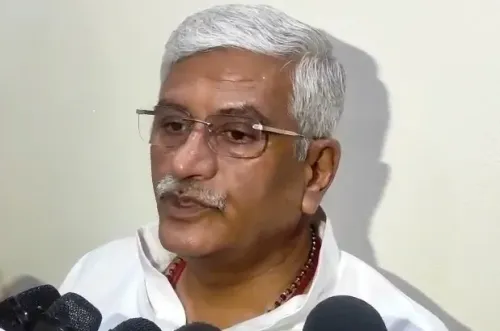
Union Culture and Tourism Minister Gajendra Singh Shekhawat on Monday, 13 July 2026, took to X to underline India's growing economic strength, pointing to advances in technology, startups, and manufacturing as markers of a resurgent nation navigating a complex global environment.
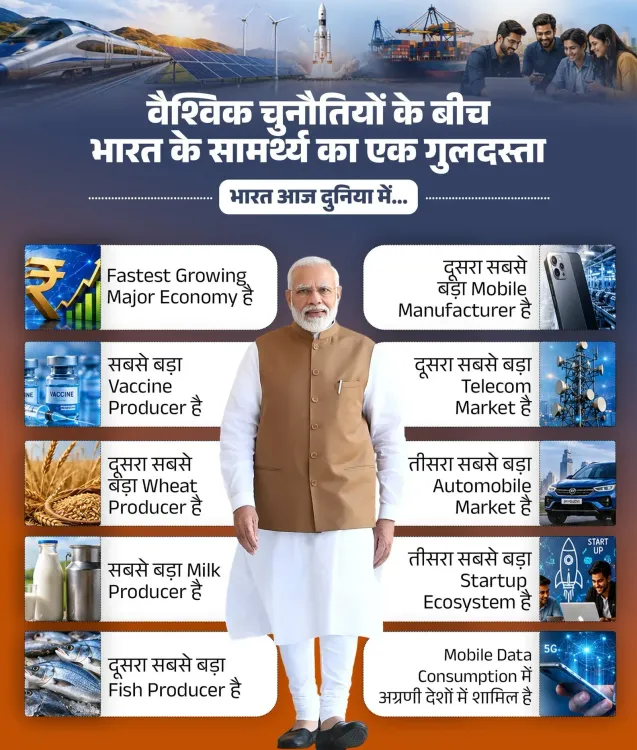
In his post, the senior BJP leader and Lok Sabha MP from Jodhpur, Rajasthan, wrote: 'वैश्विक चुनौतियों के बीच भारत का बढ़ता सामर्थ्य' — 'India's growing strength amid global challenges' — adding that the country is forging a new identity in economy, technology, startups, and manufacturing. He described this as 'the power of the new India' and 'the flight of the future.'
Context
Shekhawat's remarks reflect a broader political narrative that senior government figures have consistently championed: that India has demonstrated economic resilience and self-reliance in the face of post-pandemic supply-chain disruptions and ongoing geopolitical realignments. The observation that India is 'building a new identity' aligns with messaging that has been central to the ruling dispensation since 2014.
India is currently the world's fifth-largest economy, and policymakers have pointed to its expanding digital infrastructure, rising startup count, and manufacturing output as evidence of structural transformation rather than cyclical growth.
Policy Backdrop
The twin pillars of this economic narrative are the Make in India programme, launched in 2014 to attract investment and scale domestic manufacturing, and the Startup India initiative, introduced in 2016 to foster entrepreneurship and innovation ecosystems across the country. Both schemes have since been supplemented by Production-Linked Incentive (PLI) schemes spanning sectors from semiconductors to pharmaceuticals and mobile electronics.
Global supply-chain diversification — accelerated by geopolitical tensions and a push by multinational firms to reduce dependence on concentrated manufacturing bases — has opened new windows for India to position itself as an alternative production hub, a point that government leaders have repeatedly emphasised in domestic and international forums.
Stakeholders and Impact
The constituencies most directly addressed by this narrative are Indian startups, technology firms, and the manufacturing sector — all of which have benefited, to varying degrees, from policy support under PLI schemes, digital public infrastructure, and liberalised foreign direct investment norms. The startup ecosystem in particular has grown substantially since 2016, with India now counted among the world's top startup nations by volume of registered ventures and unicorn count.
For ordinary citizens, the messaging connects economic policy to national identity — framing growth in tech and manufacturing not merely as statistical achievement but as a civilisational assertion of capability on the world stage.
What's Next
Observers will watch the next Union Budget and forthcoming economic surveys for updated allocations to semiconductor manufacturing, PLI extensions, and digital infrastructure — all of which will test whether the political confidence expressed in posts such as Shekhawat's translates into sustained fiscal commitment. India's positioning at upcoming multilateral trade and technology forums will also signal how the government intends to convert this economic momentum into strategic partnerships. The degree to which global headwinds — ranging from trade policy shifts to currency volatility — affect India's growth trajectory will be the ultimate measure of the resilience being claimed.
Point of View
Particularly when global uncertainty makes domestic confidence-signalling politically valuable. By invoking technology, startups, and manufacturing together, the message deliberately conflates distinct policy domains into a singular 'new India' brand, a communications strategy that has been refined over more than a decade. The timing, amid what the post itself acknowledges as 'global challenges,' suggests an attempt to pre-empt any domestic anxiety about external economic pressures. Whether such messaging translates into measurable policy acceleration or remains primarily symbolic will depend on the specifics of upcoming budgetary and legislative action.
NationPress
13 Jul 2026
Frequently Asked Questions
What did Gajendra Singh Shekhawat say about India's economy?
Shekhawat posted on 13 July 2026 that India is building a new identity in economy, technology, startups, and manufacturing amid global challenges, calling it 'the power of the new India.'
What is the Make in India programme?
Make in India is a government initiative launched in 2014 to boost domestic manufacturing, attract foreign investment, and position India as a global production hub across sectors including electronics, defence, and pharmaceuticals.
What is the Startup India initiative?
Startup India was launched in 2016 to promote entrepreneurship and innovation by offering regulatory ease, tax benefits, and funding support to new businesses across the country.
Why is India seen as a rising manufacturing destination?
Post-pandemic supply-chain disruptions and geopolitical realignments have pushed multinational firms to diversify away from concentrated manufacturing bases, opening opportunities for India, which has backed this shift with Production-Linked Incentive schemes.
What is India's current rank in the global economy?
India is the world's fifth-largest economy and has been pursuing sustained growth through digital infrastructure, PLI schemes, and a rapidly expanding startup ecosystem.