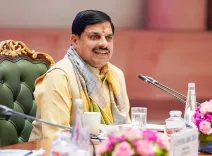
Nitish Kumar, Tejashwi Yadav offer chadar at Patna shrines on Eid-Milad-un-Nabi
Synopsis
On Eid-Milad-un-Nabi, Bihar's two most prominent political rivals — Nitish Kumar and Tejashwi Yadav — independently visited Patna's historic Sufi shrines to offer chadar. The parallel outreach at dargahs with deep Ganga-Jamuni roots, including one tied to Tipu Sultan's family, highlights how Bihar's political class continues to treat Sufi spaces as essential ground for community engagement.
Key Takeaways
Nitish Kumar visited Khanqah Mujibia in Phulwari Sharif, Patna on 27 August , offering chadar and participating in the Chadar-poshi ceremony on Eid-Milad-un-Nabi.
He met presiding Pir Hazrat Maulana Ayatullah Qadri Sahib and prayed for peace, communal harmony, and Bihar's prosperity.
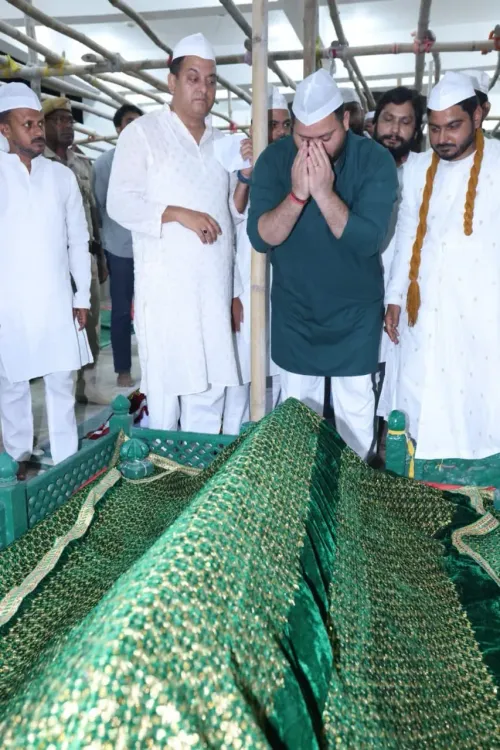
Tejashwi Prasad Yadav offered chadar at Khanqah Bargah-e-Ishq Takia Sharif at Mitan Ghat, Patna City , and also visited Khanqah Mujibia on Wednesday evening.
The Takia Sharif shrine houses the grave of Shahzada Muhammad Karim Shah , great-grandson of Tipu Sultan , reflecting its rare historical significance.
Both visits underscored Bihar's Ganga-Jamuni cultural tradition and the role of Sufi shrines in the state's political and social fabric.
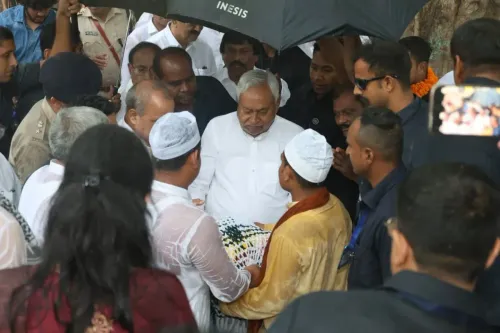
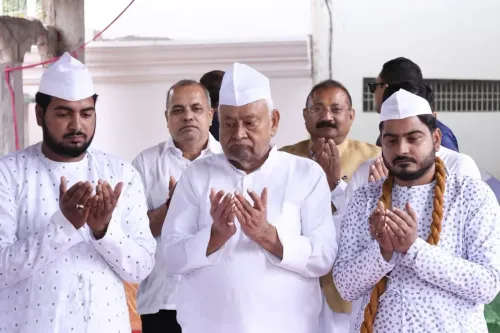
On the occasion of Eid-Milad-un-Nabi, former Bihar Chief Minister Nitish Kumar on Thursday, 27 August visited the historic Khanqah Mujibia in Phulwari Sharif, Patna, offering a ceremonial chadar and praying for communal harmony and the state's prosperity. The visit underscored the significance of the Sufi shrine as a symbol of Bihar's composite cultural fabric.
Nitish Kumar at Khanqah Mujibia
Kumar met the presiding Pir, Hazrat Maulana Ayatullah Qadri Sahib, and offered a chadar at the shrine of the Khanqah's founder, Hazrat Maulana Pir Mujibullah Qadri. He participated in the Chadar-poshi ceremony and visited several religious sites within the complex.
Kumar said he had been visiting Khanqah Mujibia for many years and shared a longstanding connection with the shrine, adding that the visits brought him a sense of peace. He prayed for peace, brotherhood, communal harmony, and the prosperity of Bihar and India. Khanqah manager Hazrat Maulana Minhajuddin Qadri Mujibi and MLA Shyam Rajak welcomed him. A large gathering of devotees assembled after news of his arrival spread, and Kumar extended his Eid-Milad-un-Nabi greetings to those present.
Tejashwi Yadav's Visits Across Two Shrines
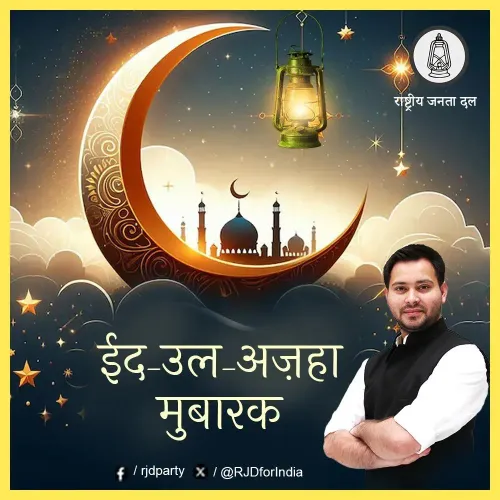
Rashtriya Janata Dal (RJD) National Executive President Tejashwi Prasad Yadav offered chadar at Khanqah Bargah-e-Ishq Takia Sharif at Mitan Ghat in Patna City, praying for the peace, prosperity, happiness, and progress of Bihar. He had also visited Khanqah Mujibia in Phulwari Sharif on Wednesday evening to offer chadar at the Dargah.
The Khanqah Bargah-e-Ishq Takia Sharif is a site of deep historical significance, associated with Bihar's Sufi tradition and its Ganga-Jamuni cultural heritage. It houses the shrine of Hazrat Khwaja Ruknuddin Ishq and draws devotees from across the region during the annual Urs. Notably, the complex also holds a historical connection to the family of Tipu Sultan — Shahzada Muhammad Karim Shah, Tipu Sultan's great-grandson, is buried there along with several other family members.
The Significance of Eid-Milad-un-Nabi in Bihar
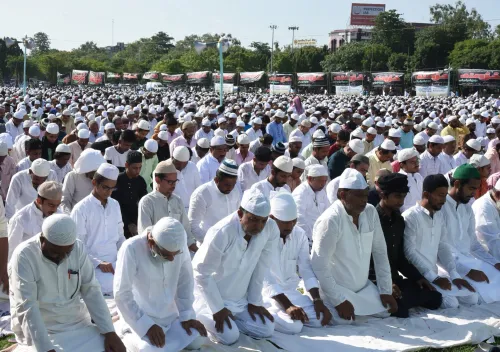
Eid-Milad-un-Nabi, observed to mark the birth anniversary of Prophet Muhammad, is one of the most widely celebrated occasions across Bihar's Muslim communities. The chadar-offering tradition at Sufi shrines on this day reflects the syncretic character of the state's religious culture, which has historically bridged communities.
The visits by both leaders on this occasion carried a shared message of peace and communal harmony at a time when political figures across India have increasingly used religious observances as platforms for outreach. This is consistent with a pattern of Bihar's political class — across party lines — maintaining visible engagement with the state's Sufi shrines.
Political Context
The simultaneous outreach by Kumar and Yadav — rivals in Bihar's competitive political landscape — at shared sacred spaces on Eid-Milad-un-Nabi signals the continued importance of minority community engagement ahead of the state's political cycle. Both leaders' participation in the Chadar-poshi ceremonies reflects a tradition of cross-party presence at Bihar's prominent Sufi dargahs during major religious occasions.
Point of View
Or remain symbolic ritual, is the question Bihar's electorate will eventually answer.
NationPress
27 Aug 2026
Frequently Asked Questions
Why did Nitish Kumar visit Khanqah Mujibia on Eid-Milad-un-Nabi?
Nitish Kumar visited Khanqah Mujibia in Phulwari Sharif, Patna, to offer a ceremonial chadar and pray for peace, communal harmony, and Bihar's prosperity on the occasion of Eid-Milad-un-Nabi. He noted a longstanding personal connection with the shrine, saying visits there brought him a sense of peace.
Which shrines did Tejashwi Yadav visit on Eid-Milad-un-Nabi?
Tejashwi Yadav visited two shrines — Khanqah Bargah-e-Ishq Takia Sharif at Mitan Ghat in Patna City, and Khanqah Mujibia in Phulwari Sharif, the latter on Wednesday evening. At both sites he offered chadar and prayed for Bihar's peace and progress.
What is the historical significance of Khanqah Bargah-e-Ishq Takia Sharif?
The shrine at Mitan Ghat in Patna City is associated with Bihar's Sufi tradition and Ganga-Jamuni culture. It houses the shrine of Hazrat Khwaja Ruknuddin Ishq and is also the burial site of Shahzada Muhammad Karim Shah, great-grandson of Tipu Sultan, along with other members of his family.
What is Eid-Milad-un-Nabi and how is it observed in Bihar?
Eid-Milad-un-Nabi marks the birth anniversary of Prophet Muhammad and is widely observed across Bihar's Muslim communities. The chadar-offering tradition at Sufi dargahs on this day reflects the state's syncretic religious culture, drawing devotees and public figures alike to historic shrines.
What is the Chadar-poshi ceremony?
Chadar-poshi is a traditional ritual at Sufi shrines in which a ceremonial cloth (chadar) is offered at the grave of a saint as a mark of reverence and devotion. It is commonly performed by devotees and public figures during major Islamic occasions and annual Urs celebrations.