JD Vance: No Risk of Extended Conflict in the Middle East

Synopsis
In a recent statement, US Vice President JD Vance dismissed the likelihood of a prolonged military engagement in the Middle East, despite ongoing tensions and military considerations regarding Iran. His remarks shed light on the administration's strategic approach amid evolving international dynamics.
Key Takeaways
Vance's Assertion: No prolonged US war in the Middle East.
Military Options: Consideration of strikes against Iran.
Diplomatic Preference: Favoring diplomacy over military action.
Strategic Positioning: Ongoing US military presence in the region.
Internal Conservative Debate: Divergent views on US involvement in the Middle East.
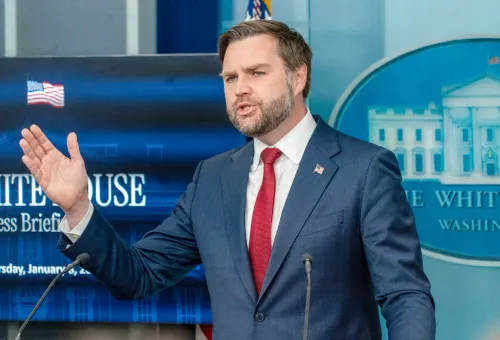
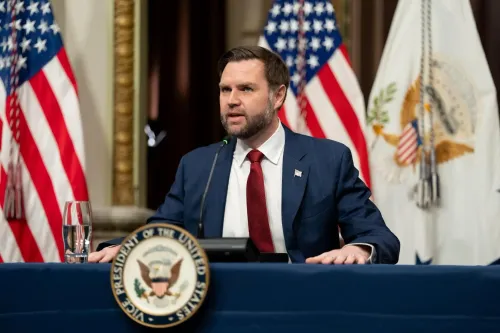
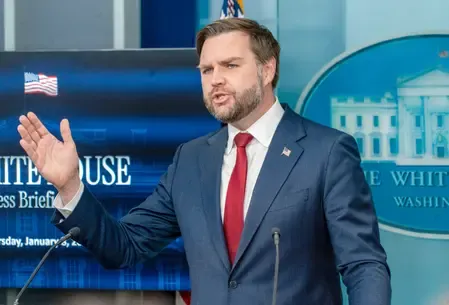
Washington, Feb 27 (NationPress) US Vice President JD Vance asserted that there is “no possibility” of the United States being embroiled in a lengthy military conflict in the Middle East, even as President Donald Trump considers new military strategies regarding Iran.
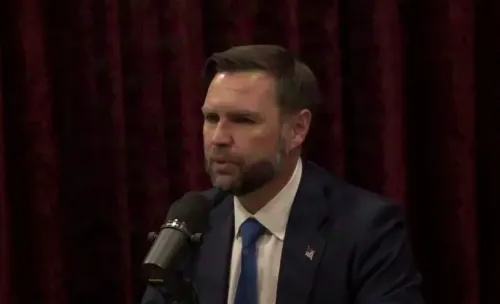
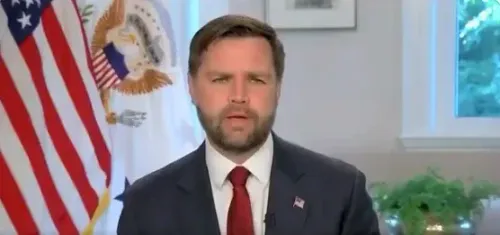
In a discussion with The Washington Post aboard Air Force Two, Vance indicated that while military action against Iran is still on the table, he does not anticipate that such measures would lead to an enduring war.
“The notion that we would engage in a Middle Eastern war for an extended period without a resolution — that is not going to happen,” Vance stated.
He noted that he is unsure of what Trump will ultimately decide, which could range from military action “to prevent Iran from acquiring nuclear weapons” to finding “a diplomatic resolution.”
“I think we all favor the diplomatic route,” Vance remarked. “However, it truly depends on Iran's actions and statements.”
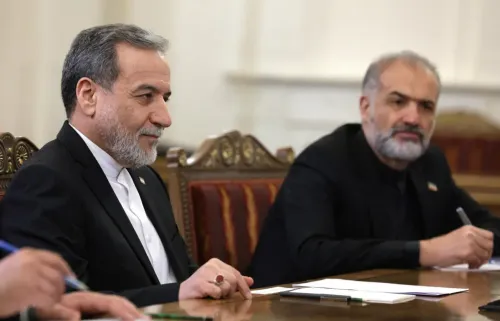
Negotiations between the United States and Iran resumed Thursday in Geneva, coinciding with a significant mobilization of US military forces around Iran, yet no agreements were reached. Mediators indicated discussions would continue next week.
Trump has openly expressed his desire for regime change to dethrone Iran’s supreme leader, Ayatollah Ali Khamenei, stating this month that it “would be the best outcome.”
Vance, a 41-year-old veteran of the Iraq War, has identified himself as a “skeptic of foreign military interventions.” He reiterated this stance on Thursday, suggesting that it also applies to Trump.
“Well, you know, life can take unexpected turns,” Vance remarked. “But I believe Trump is an ‘America First’ president, advocating policies that benefit the American populace.”
He urged caution against repeating past mistakes. “We must avoid repeating previous errors, but we must also be careful not to overcorrect. Just because one president mishandled a military situation does not mean we should shy away from military engagement forever. We need to proceed cautiously, and I believe the president is doing just that.”
Within conservative circles, opinions have diverged regarding US engagement in the Middle East and its relationship with Israel. Vance has contended that Israel-critical perspectives should be included in the internal party discussions while still acknowledging the significance of Israel as a strategic partner.
“My takeaway is that this is an important conversation that will be crucial for the right, not just for the upcoming years but for the long-term future,” he commented.
“When considering the Trump coalition in 2024, it includes individuals like Joe Rogan, Mark Levin, Sean Hannity, Tucker Carlson, and myself, JD Vance, along with a diverse group of supporters… but achieving this requires a willingness to accept debate and differing opinions,” he added. “And I think that’s beneficial.”
The United States has sustained a notable military footprint in the Middle East for over twenty years, particularly following the 2003 invasion of Iraq. Subsequent administrations have encountered pressure to avert another drawn-out regional conflict.
Tensions with Iran have fluctuated concerning its nuclear ambitions and regional influence. Diplomatic initiatives, including discussions in Europe, have persistently aimed to limit Tehran's nuclear objectives while preventing further escalation in an already unstable region.
Point of View
It's crucial to highlight the nuanced political landscape surrounding US foreign policy in the Middle East. Vance's assertion reflects a cautious approach, prioritizing diplomatic solutions over military engagement, while recognizing the complexities of geopolitical relationships, particularly with Iran and Israel.
NationPress
24 Sept 2026
Frequently Asked Questions
What did JD Vance say about a potential Middle East war?
JD Vance stated there is 'no chance' the US will be involved in a prolonged war in the Middle East.
What military options are being considered against Iran?
Options include military strikes to prevent Iran from obtaining nuclear weapons or resolving the issue diplomatically.
What is Trump's position regarding Iran?
Trump has expressed interest in regime change in Iran, suggesting it would be beneficial for the situation.
How has Vance described his view on foreign military interventions?
Vance has identified himself as a skeptic of foreign military interventions, advocating for caution.
What is the current status of US-Iran negotiations?
Negotiations are ongoing in Geneva, but no resolution has been reached yet.