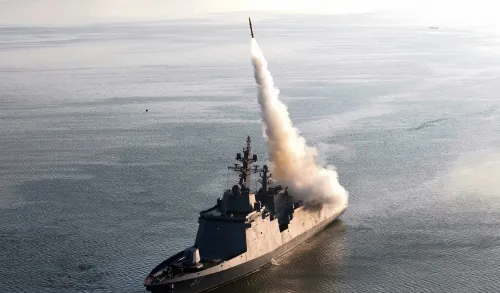
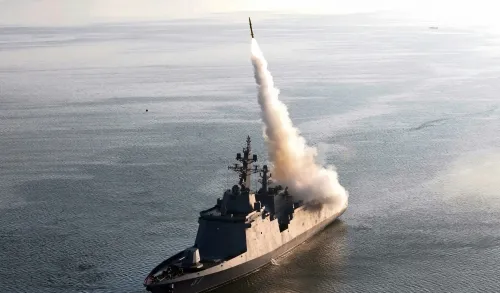
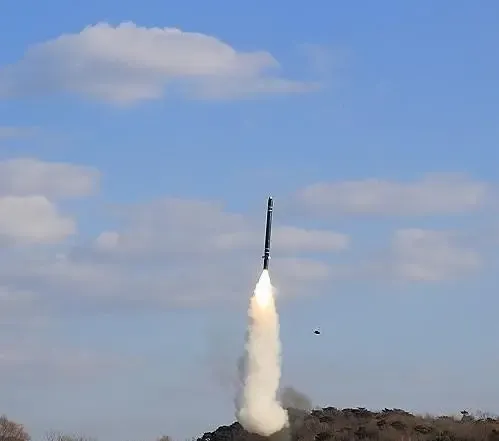
North Korea fires cruise missiles from nuclear submarine in East Sea test
Synopsis
North Korea has test-fired two types of strategic cruise missiles from what experts believe is its 3,000-ton nuclear attack submarine — the first such launch in nearly two years. Coming days after a separate ballistic missile test, the move signals Pyongyang is actively hardening its underwater nuclear deterrent, raising the stakes for Seoul and Washington as the Kim regime demonstrates it no longer needs the leader's personal presence to greenlight a weapons test.
Key Takeaways
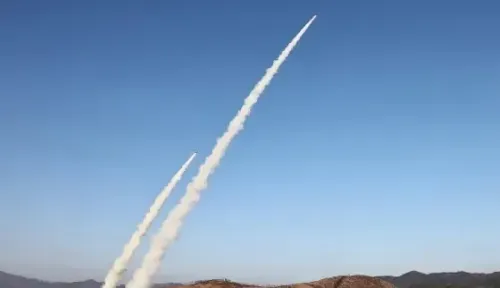
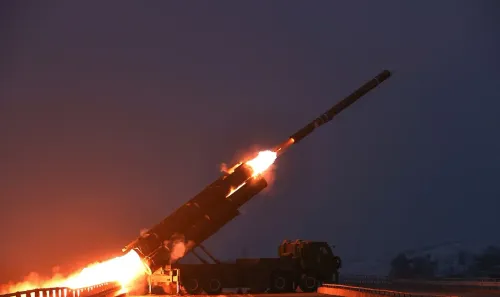
North Korea test-fired two types of strategic cruise missiles into the East Sea on 15 October 2026 .
Experts believe the launch came from the Hero Kim Kun Ok , Pyongyang's first 3,000-ton-class tactical nuclear attack submarine, unveiled in September 2023 .
This is the first submarine-launched cruise missile test since January 2024 , when the Pulhwasal-3-31 missile was fired from a 2,000-ton-class vessel.
Kim Jong-un was absent from the test — seen as a deliberate signal of the Navy's independent operational capability.
South Korea's Joint Chiefs of Staff confirmed full tracking of the missiles from pre-launch to end of flight.
Earlier that same week, North Korea also test-fired tactical ballistic missiles from the Pyongyang area, underscoring an accelerating weapons development tempo.
North Korea announced on Thursday, 15 October 2026 that it had test-fired two types of strategic cruise missiles into the East Sea the previous day, in what experts believe may be the first such launch from its 3,000-ton-class nuclear attack submarine, unveiled in 2023. The test marks a significant escalation in Pyongyang's underwater weapons programme and signals a growing emphasis on submarine-based nuclear deterrence.
What the Launch Involved
According to North Korea's state-run Korean Central News Agency (KCNA), the test-fire was designed to 'examine the current mobilised posture of the underwater combat systems' and to demonstrate 'high reliability, trustworthiness and ability of the war deterrents of the DPRK.' The agency added that the exercise 'did not have any adverse impact on the security of neighboring countries.'
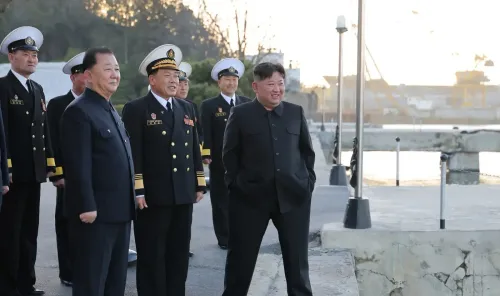
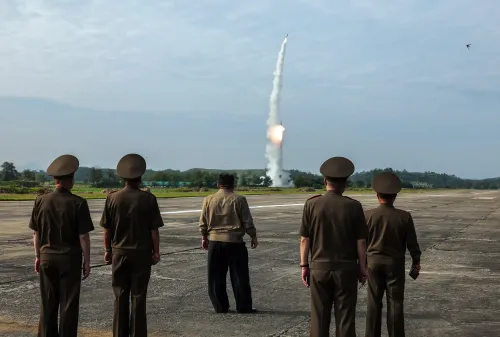
The launch was overseen by Kim Jong-sik, a member of the Central Military Commission of the Workers' Party of Korea, and Jang Chang-ha, director-general of the Missile Administration, along with Navy underwater weapon system engineers.
Notably, the test was conducted without the attendance of North Korean leader Kim Jong-un — a deliberate signal, analysts suggest, intended to showcase the Navy's independent operational capability while avoiding the heightened international scrutiny that typically accompanies Kim's personal appearances at weapons tests.
The Submarine in Focus
Experts believe the missiles were likely launched from the Hero Kim Kun Ok, which North Korea described as its first tactical nuclear attack submarine when it unveiled the vessel in September 2023. At the launch ceremony on 6 September 2023, Kim Jong-un was quoted as declaring that arming the navy with nuclear weapons 'brooks no further delay.'
Wednesday's test is the first of its kind since January 2024, when Pyongyang reported firing Pulhwasal-3-31 strategic cruise missiles from the 2,000-ton-class submarine 8.24 Yongung, with Kim watching. North Korea first reported a submarine-launched cruise missile test from that same vessel in March 2023.
South Korea's military confirmed it had tracked the missiles throughout their entire flight path. Captain Jang Do-young, spokesperson for the Joint Chiefs of Staff (JCS), told reporters: 'Our military has persistently monitored and tracked the North Korean cruise missile activity reported yesterday, using various assets from before the launch through the cruise phase to the end of the flight.' He declined to specify the surveillance assets employed, citing confidentiality agreements with the United States. Captain Jang also confirmed that one type of missile was fired from a vertical launching system, while another was deployed from a torpedo launcher.
Pattern of Escalation
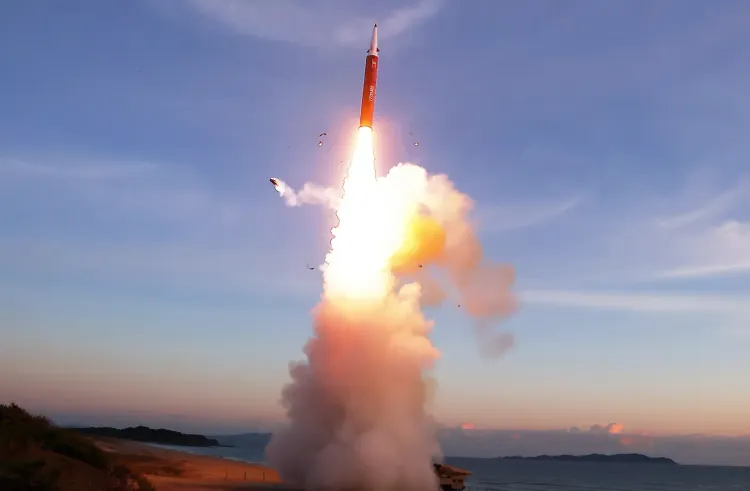
This test does not stand in isolation. Earlier in the same week, Pyongyang test-fired tactical ballistic missiles from the Pyongyang area toward the East Sea, stating on Tuesday that the launch was intended to 'confirm the success in the research for the technical upgrading of an important core element.' The back-to-back tests point to an accelerating weapons development tempo that has drawn consistent concern from Seoul, Washington, and Tokyo.
Notably, the Rodong Sinmun, North Korea's most widely circulated state newspaper, did not publish a report on Wednesday's cruise missile launch — an unusual omission that may reflect a calibrated approach to managing international reaction.
Strategic Implications
The potential operationalisation of submarine-launched cruise missiles aboard a 3,000-ton vessel represents a qualitative shift in North Korea's second-strike capability. Unlike land-based launchers, submarines are inherently mobile and harder to pre-emptively target, adding a layer of survivability to Pyongyang's nuclear arsenal. South Korea and the United States have not yet issued a joint statement in response to the latest test, though the JCS confirmed continuous surveillance was maintained throughout. Regional security analysts will be closely watching whether this triggers further diplomatic engagement — or further tests from Pyongyang in the weeks ahead.
Point of View
Submarine-based nuclear delivery system fundamentally complicates South Korea and the US's deterrence calculus, because it cannot be neutralised in a pre-emptive strike the way a land-based launcher can. The absence of Kim Jong-un at the test is also telling: Pyongyang is signalling institutional readiness, not just a leader's ambition. Back-to-back tests — ballistic missiles earlier in the week, cruise missiles now — suggest a coordinated demonstration cycle, not reactive posturing. The silence from the Rodong Sinmun raises a separate question: who exactly is this message being sent to, and what does Pyongyang expect in return?
NationPress
15 Oct 2026
Frequently Asked Questions
What did North Korea test-fire on 15 October 2026?
North Korea test-fired two types of strategic cruise missiles into the East Sea on 15 October 2026, reportedly from a 3,000-ton-class nuclear attack submarine. State media KCNA said the test was aimed at examining the Navy's underwater combat readiness and demonstrating the reliability of its nuclear deterrents.
Which submarine did North Korea allegedly use for the cruise missile launch?
Experts believe the missiles were launched from the Hero Kim Kun Ok, North Korea's first tactical nuclear attack submarine, which was unveiled in September 2023. Kim Jong-un described the vessel at its launch ceremony as one of the 'core underwater offensive means' of the North Korean navy.
When was North Korea's last submarine-launched cruise missile test?
The previous test was in January 2024, when North Korea fired Pulhwasal-3-31 strategic cruise missiles from the 2,000-ton-class submarine 8.24 Yongung, with Kim Jong-un personally in attendance. Wednesday's launch is the first such test in roughly nine months.
How did South Korea respond to North Korea's missile test?
South Korea's military said it tracked the missiles throughout their entire flight — from pre-launch through the cruise phase to the end of flight — using multiple surveillance assets. Captain Jang Do-young of the Joint Chiefs of Staff confirmed full monitoring but declined to detail the assets used, citing confidentiality with the United States.
Why is a submarine-launched cruise missile more significant than a land-based test?
Submarine-launched missiles are inherently harder to detect and pre-emptively destroy compared to land-based launchers, adding a survivable second-strike dimension to North Korea's nuclear arsenal. If the 3,000-ton vessel is now operational in this role, it marks a meaningful upgrade in Pyongyang's deterrent posture that complicates defence planning for Seoul and Washington.