North Korea's 13th missile launch of 2026: Strike drill follows trilateral exercise
Synopsis
North Korea's 13th ballistic missile launch of the year wasn't just a routine provocation — it was a carefully timed response to a US-South Korea-Japan trilateral drill, featuring new drone and cruise missile systems, yet conspicuously absent Kim Jong-un. The report reaching only foreign-facing state media, not domestic outlets, raises questions about the intended audience for this show of force.
Key Takeaways
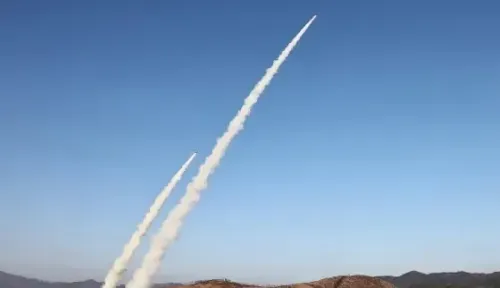
North Korea launched multiple short-range ballistic missiles from Wonsan on 12 September 2026 — its 13th ballistic missile launch of the year.
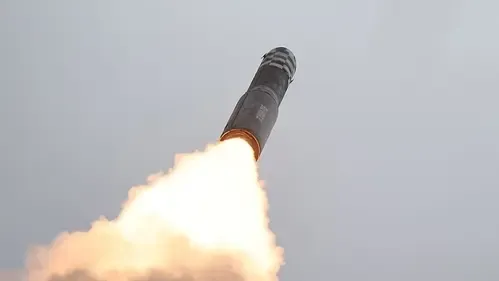
The drill involved attack drones, tactical cruise missiles, thermal-pressure rocket launchers and Hwasong-11 series missiles, with Pyongyang claiming 100% target accuracy .
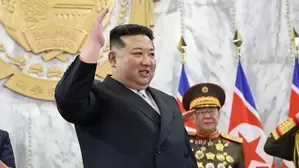
Kim Jong-un did not attend; the exercise was observed by Pak Jong-chon , vice chairman of the Central Military Commission .
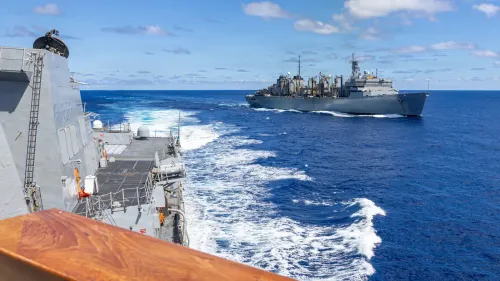
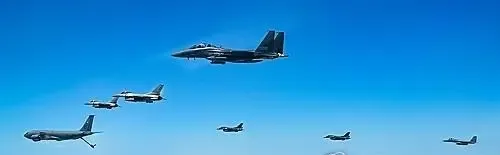
The launch followed the Freedom Edge five-day trilateral exercise by South Korea , the US , and Japan near Jeju Island .
North Korea's state report was carried only by KCNA for foreign audiences — not domestic outlet Rodong Sinmun — a departure from standard practice.
US President Donald Trump had previously scaled back the Ulchi Freedom Shield exercise and expressed willingness to meet Kim Jong-un this year.
North Korea conducted a joint firepower strike drill involving artillery and missile units on 12 September, state media confirmed on Monday, 14 September, marking the country's 13th ballistic missile launch of the year. The drill came days after South Korea, the United States, and Japan concluded a five-day trilateral military exercise near the Korean Peninsula.
What the Drill Involved
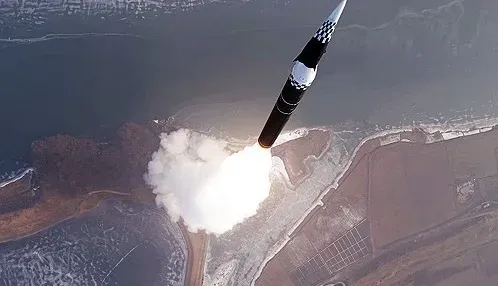
South Korea's Joint Chiefs of Staff (JCS) detected multiple short-range ballistic missiles launched from the North's Wonsan area toward the East Sea on Saturday, 12 September. According to North Korea's Korean Central News Agency (KCNA), the exercise was a 'joint firepower attack drill of long-range artillery and missile units of the combined units at all levels of the Korean People's Army.'
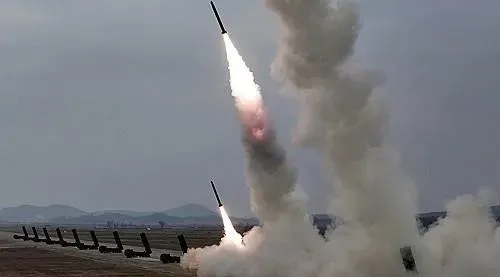
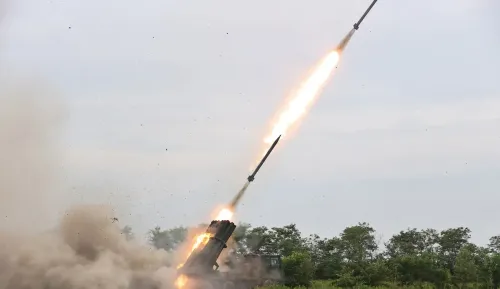
The drill featured subunits drawn from five artillery and missile joint units and included new combat systems — among them attack drones, tactical cruise missiles, large-calibre thermal-pressure multiple rocket launchers, and tactical ballistic missiles. Pyongyang claimed all strike systems hit their targets with 100 per cent accuracy, calling the exercise a demonstration of the 'unity and simultaneity of firepower attack.'
The missiles were assessed to be Hwasong-11 series short-range ballistic missiles and rounds fired from 600-millimetre super-large multiple rocket launchers.
Key Figures and Reactions
Notably, North Korean leader Kim Jong-un did not attend the drill. In his place, Pak Jong-chon, vice chairman of the North's Central Military Commission, observed the exercise. Yu Chang-son, director of the artillery bureau of the military, said the drill would sharpen the 'level of specialisation to bring down the enemy's armed forces organisationally and structurally,' and vowed to 'steadily enhance the counterattack posture against the enemy through practical drills.'
Meanwhile, North Korean Defence Minister Kim Song-gi strongly criticised the preceding trilateral exercise — known as the Freedom Edge exercise — which Seoul, Washington, and Tokyo concluded on Friday in international waters east and south of Jeju Island. Kim warned that Pyongyang would take 'strong and reflective countermeasures' against what it called US-led military provocations.
A Departure from Usual Reporting Patterns
Pyongyang typically reports missile launches the following day. However, this report arrived a day later than usual and appeared only in the KCNA — a channel primarily aimed at foreign audiences — and was not carried by domestic outlets including the party newspaper Rodong Sinmun. Analysts note this selective dissemination is unusual and may reflect internal messaging considerations.
This comes amid a broader pattern: in recent months, North Korea had skipped such missile reports altogether, making Monday's disclosure a notable, if delayed, exception.
Diplomatic Context
The launches occurred even as the diplomatic landscape showed tentative signs of movement. The trilateral Freedom Edge drills proceeded as planned, despite Seoul and Washington having scaled back their annual combined Ulchi Freedom Shield (UFS) exercise last month, following an order from US President Donald Trump — widely interpreted as a conciliatory gesture toward Pyongyang. Trump has separately expressed willingness to meet with Kim Jong-un this year, adding a layer of geopolitical ambiguity to the otherwise escalatory optics of Saturday's launches.
With Kim Jong-un's diplomatic posture remaining unpredictable and military exercises on both sides continuing, the Korean Peninsula remains one of the most closely watched flashpoints in the Indo-Pacific.
Point of View
But the selective reporting — KCNA only, no Rodong Sinmun — suggests Pyongyang is calibrating the signal carefully, sending a message abroad without inflaming its domestic audience. Kim Jong-un's absence from the drill is equally telling: it distances the leadership from direct escalation while preserving deniability. Meanwhile, Trump's dual-track approach — scaling back Ulchi Freedom Shield as a goodwill gesture while allowing Freedom Edge to proceed — may be creating strategic ambiguity that Pyongyang is exploiting. The pattern of launching in response to allied exercises, then floating diplomatic overtures, has become a recurring playbook that has so far yielded North Korea concessions without reciprocal denuclearisation steps.
NationPress
14 Sept 2026
Frequently Asked Questions
What did North Korea launch on 12 September 2026?
North Korea launched multiple short-range ballistic missiles from the Wonsan area toward the East Sea on 12 September 2026, as part of a joint firepower strike drill. South Korea's Joint Chiefs of Staff detected the launches, which were later assessed to be Hwasong-11 series missiles and rounds from 600-millimetre super-large multiple rocket launchers.
Why did North Korea conduct this missile drill?
Pyongyang described the drill as a response to the Freedom Edge trilateral exercise conducted by South Korea, the United States, and Japan, which concluded on Friday near Jeju Island. North Korean Defence Minister Kim Song-gi warned of 'strong and reflective countermeasures' against what the North called US-led military provocations.
Was Kim Jong-un present at the drill?
No. Kim Jong-un did not attend the drill. Pak Jong-chon, vice chairman of North Korea's Central Military Commission, observed the exercise in his place, which analysts say is notable given the scale of the launch.
How does this launch fit into North Korea's pattern this year?
Saturday's launches were North Korea's 13th ballistic missile launch of 2026. In recent months, Pyongyang had skipped reporting such launches, making Monday's KCNA disclosure — arriving a day later than usual and absent from domestic outlets — an unusual departure from standard state media practice.
What is the diplomatic backdrop to these launches?
US President Donald Trump had ordered a scaling-back of the annual Ulchi Freedom Shield exercise last month, seen as a gesture toward Pyongyang, and has expressed willingness to meet Kim Jong-un. Despite this, the Freedom Edge trilateral exercise proceeded as planned, and North Korea's missile drill suggests the conciliatory moves have not halted its military activity.