Kim Jong-un vows to 'overtake the world' in nuclear arsenal expansion push
Synopsis
Kim Jong-un’s latest directive goes beyond the usual nuclear posturing — the explicit phrase ‘overtaking the world’ marks a rhetorical escalation, paired with concrete orders: a 10,000-tonne missile cruiser, new naval bases, border fortifications, and faster weapons production. With a leadership reshuffle and a coal-sector overhaul added to the mix, Pyongyang is signalling a comprehensive military-economic mobilisation, not a one-off statement.
Key Takeaways
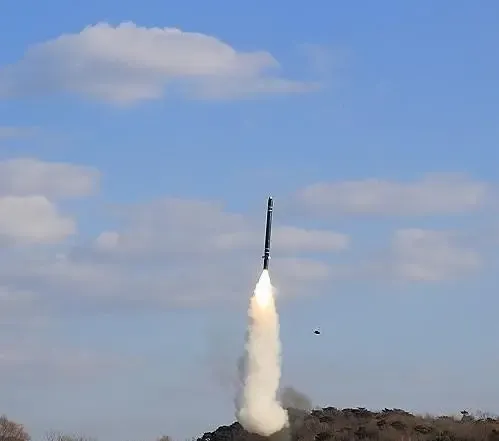
Kim Jong-un directed North Korea to expand its nuclear arsenal ‘with a goal of overtaking the world,’ according to state media on 23 June .
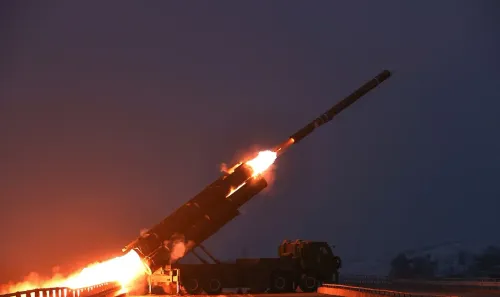
The Workers’ Party of Korea plenary session unanimously reaffirmed nuclear forces as ‘the core of military sovereignty.’ Construction of a 10,000-tonne-class strategic guided missile cruiser is to be accelerated, following an April party decision.
Pyongyang denounced the Nuclear Consultative Group (NCG) between Seoul and Washington as a ‘nuclear war body.’ Jo Yong-won was restored to a top party post; Kim Jae-ryong was removed from multiple leadership roles amid reported corruption allegations.
The coal sector was designated a strategic economic pillar, with Kim calling for a nationwide industry overhaul.
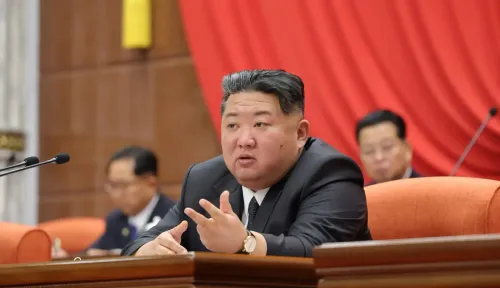
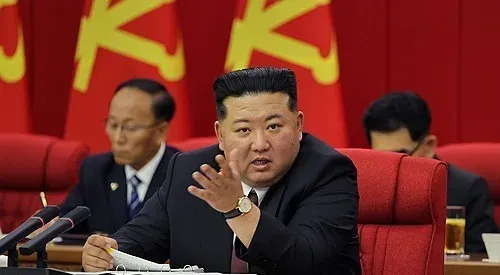
North Korean leader Kim Jong-un has directed his country to accelerate its nuclear weapons build-up with an explicit goal of ‘overtaking the world,’ according to state media reports published on Tuesday, 23 June. The directive emerged from a high-level ruling party session in Pyongyang, signalling a sharper edge to the regime’s already maximalist nuclear posture.
What the Party Session Decided
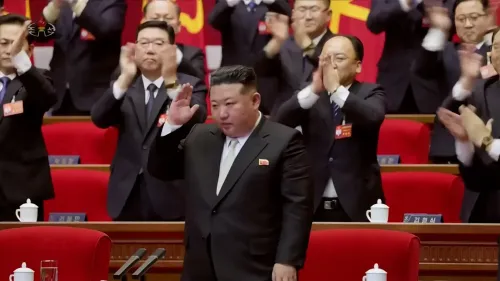
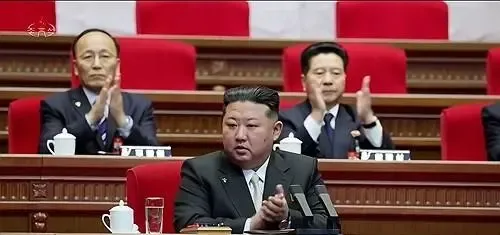
The Workers’ Party of Korea (WPK) convened the second plenary meeting of its ninth central committee over three days from Saturday, presided over by Kim. The session reviewed the country’s policy performance in the first half of the year and revisited the agenda set at a major party congress in February 2025.
The meeting unanimously reaffirmed that expanding nuclear forces — described as ‘the core of the military sovereignty’ of the nation and ‘the pivot of implementing the strategy for deterring or fighting a war’ — was the regime’s overriding strategic priority. The session declared that ‘thoroughly exercising the position of a nuclear weapons state is the most correct and unique way to actively and confidently cope with the unpredictable international military and political situation getting complicated in multiple ways,’ according to the Korean Central News Agency (KCNA).
Kim reportedly set forth tasks to ‘dynamically carry out the work to increase powerful defense assets without pause in our own way and with a goal of overtaking the world,’ with the state media report adding that ‘more extensive, innovative and encouraging plans would be carried out with increasing speed’ using nuclear technology as a foundation.
Military Build-Up: Ships, Bases and Border Fortifications
Beyond the nuclear directive, the plenary session pledged to accelerate construction of a 10,000-tonne-class strategic guided missile cruiser, a programme first authorised by the party in April. Kim also stressed the need to build new naval bases and additional military infrastructure to reinforce the country’s defence posture.
Notably, the session underscored the need to fortify ‘the southern border’ — a theme Kim has returned to repeatedly in recent months. Last month, he convened a separate meeting with senior military commanders, calling for reinforcement of front-line units. That followed an earlier order to deploy a new self-propelled howitzer along the border by year’s end.
Sharp Criticism of Seoul-Washington Alliance
Pyongyang reiterated its designation of South Korea as its most hostile nation and sharply criticised the military alliance between Seoul and Washington. The plenary session singled out the Nuclear Consultative Group (NCG) — a key nuclear deterrence forum that met earlier this month — denouncing it as ‘a nuclear war body whose purpose is to attack’ North Korea and claiming it ‘drew detailed nuclear war scenarios, including war mode, sequence of missions, drills and operation element.’
This comes amid an already tense peninsula, where cross-border tensions have been elevated since Pyongyang formally codified its nuclear status in law in 2022 and subsequently declared South Korea its principal adversary.
Leadership Reshuffle at the Top
The session also produced a significant party leadership change. Jo Yong-won was elected secretary of the party’s central committee, effectively restoring him to one of the most powerful positions in the country. Jo previously served as chairman of the standing committee of the Supreme People’s Assembly, the country’s parliament.
Simultaneously, Kim Jae-ryong was removed from the presidium of the party politburo as well as his posts as party secretary and department director. The reason for the removal was not immediately clear, though it may be linked to corruption allegations against Park Hee-chol, deputy director of the Korean People’s Army’s general political bureau, who was reportedly referred to authorities.
Coal Sector Named a Strategic Economic Pillar
On the economic front, the meeting spotlighted coal as a strategic pillar of national development, calling for a nationwide overhaul of the sector and its mining communities. Kim described eliminating the ‘centuries-old backwardness’ of the coal industry as ‘a strategic issue of weighty significance’ for both the current five-year plan and the country’s longer-term economic trajectory.
The session declared that modernising the coal sector would be ‘of weighty historic significance in rapidly boosting the overall economy,’ according to reports citing Yonhap news agency. The February congress — the country’s most important political gathering and the first since 2021, held from 19–25 February — had already set a five-year course covering the economy, defence, and diplomacy.
With the latest directives in place, Pyongyang appears set to press ahead on all fronts simultaneously — nuclear expansion, conventional military build-up, border hardening, and economic restructuring — raising the stakes for regional diplomacy in the months ahead.
Point of View
Suggesting Pyongyang is now framing its nuclear programme in terms of global primacy rather than self-defence. Paired with a missile cruiser programme, new naval bases, and intensified border fortifications, this plenary session reads less like a policy review and more like a mobilisation order. What mainstream coverage may underweight is the leadership reshuffle: restoring Jo Yong-won while purging Kim Jae-ryong amid corruption allegations points to internal consolidation ahead of an externally aggressive posture. The coal-sector directive is also telling — sanctions-hit Pyongyang is doubling down on domestic resource extraction to fund its military ambitions, suggesting the regime has largely abandoned hope of near-term sanctions relief.
NationPress
23 Jun 2026
Frequently Asked Questions
What did Kim Jong-un say about North Korea's nuclear arsenal?
Kim Jong-un directed North Korea to expand its nuclear weapons stockpile ‘with a goal of overtaking the world,’ according to state media reports on 23 June. The ruling Workers’ Party of Korea plenary session reaffirmed nuclear forces as the ‘core of military sovereignty’ and the ‘pivot of implementing the strategy for deterring or fighting a war.’
What is the 10,000-tonne strategic missile cruiser North Korea plans to build?
It is a large naval vessel authorised by the Workers’ Party of Korea in April, whose construction the June plenary session pledged to accelerate. The cruiser is intended to bolster North Korea’s strategic strike capabilities at sea, complementing its land-based missile programmes.
Why did North Korea criticise the Nuclear Consultative Group (NCG)?
Pyongyang denounced the NCG — a nuclear deterrence forum involving South Korea and the United States — as ‘a nuclear war body whose purpose is to attack’ North Korea, claiming the group drew up detailed nuclear war scenarios. The NCG had convened earlier in June, prompting the sharp official response.
Who is Jo Yong-won and why does his return matter?
Jo Yong-won is a senior North Korean official who was elected secretary of the Workers’ Party central committee at the June plenary, restoring him to one of the most powerful positions in the country. He previously served as chairman of the standing committee of the Supreme People’s Assembly, and his return signals a consolidation of trusted figures around Kim Jong-un.
What economic decisions came out of the North Korea party meeting?
The plenary session designated the coal sector as a strategic economic pillar, calling for a nationwide overhaul of the industry and its mining communities. Kim Jong-un described eliminating the ‘centuries-old backwardness’ of coal mining as a strategic priority for both the current five-year plan and the country’s longer-term development.