Kim Jong-un oversees North Korea weapons tests targeting South Korea
Synopsis
Kim Jong-un chose the 76th anniversary of the Korean War’s outbreak to personally oversee tests of three upgraded weapons systems — including a rocket launcher with a 90km range and a howitzer that experts say can reach Seoul. The deliberate timing and the explicit ‘offensive posture’ framing mark a notable escalation in Pyongyang’s declared military doctrine.
Key Takeaways
Kim Jong-un supervised weapons tests on 26 June , the 76th anniversary of the Korean War’s outbreak.
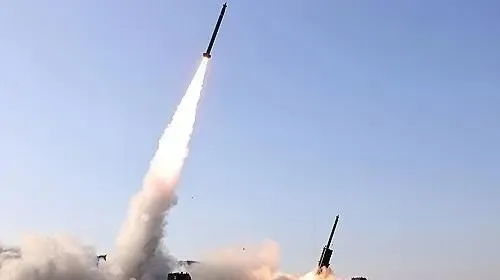
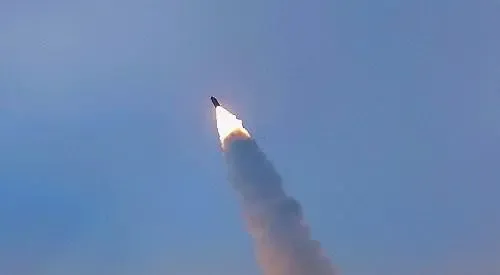
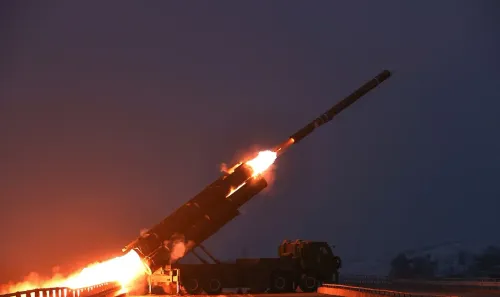
An upgraded 240mm 24-tubular multiple rocket launcher was tested with a firing range extended to 90 kilometres . ‘Special mission’ warheads for tactical ballistic missiles were tested, reportedly designed to strike airfields, ports, and power infrastructure.
Extended-range shells for a 155mm self-propelled howitzer with a 65km range were also fired — enough, experts say, to put Seoul within reach.
South Korea’s Joint Chiefs of Staff confirmed detecting around 10 rounds from multiple rocket launchers but classified them as artillery, not ballistic missiles.
North Korea formally declared inter-Korean ties as those between ‘two hostile states’ in late 2023 , providing political backdrop to the latest tests.
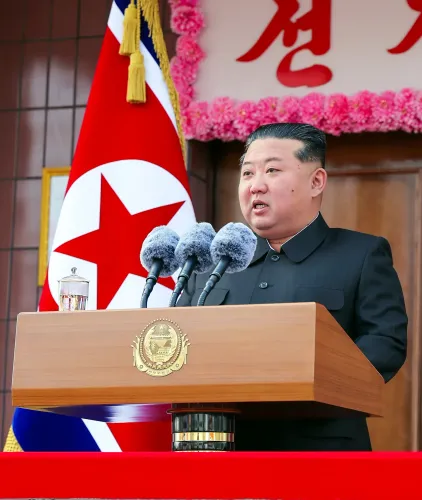
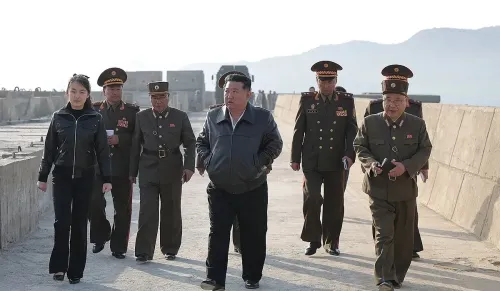
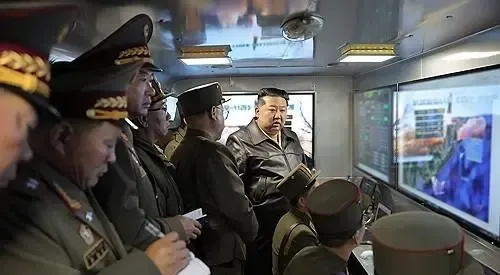
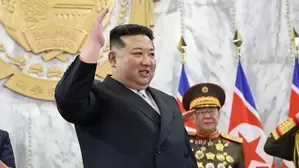
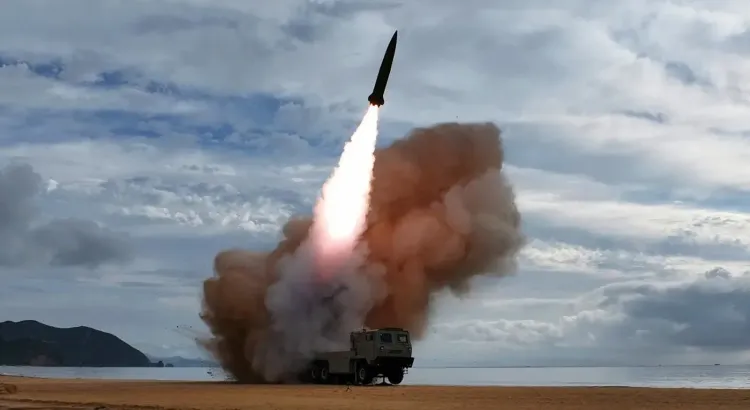
North Korean leader Kim Jong-un personally supervised a series of weapons tests on Thursday, 26 June — the 76th anniversary of the outbreak of the 1950–53 Korean War — with state media reporting that the drills were aimed at sharpening Pyongyang's “deadly and destructive” offensive posture against what the North calls its “primary foe,” South Korea. The Korean Central News Agency (KCNA) said the tests were conducted under a five-year defence development plan to modernise artillery and missile forces.
Weapons Systems Tested
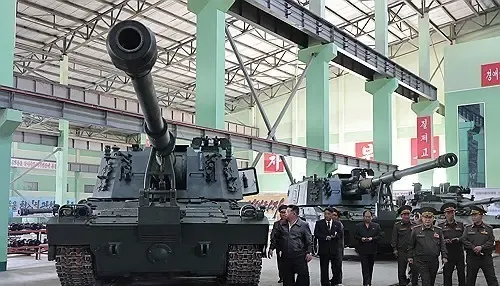
The tests involved three distinct systems. First, an upgraded 240mm-calibre 24-tubular multiple rocket launcher equipped with an autonomous precision guidance system — described by KCNA as an “improved corps-level firepower system” with a firing range extended to 90 kilometres. Second, “special mission” warheads for tactical ballistic missiles, designed, according to Pyongyang, to inflict “fatal damage” on targets such as enemy airfields, ports, and electricity infrastructure. Third, extended-range shells for a 155mm self-propelled howitzer, with a claimed range of 65 kilometres.
Strategic Significance
Analysts note that a 90km rocket range and a 65km howitzer range would, if the claims hold, place Seoul — located roughly 55 kilometres from the Demilitarised Zone — within direct striking distance. Experts cited by South Korean media raised the possibility that the “special mission” warheads could include cluster munitions or armour-piercing rounds capable of striking relatively wide areas, though North Korea did not elaborate on the warhead type. This comes amid a broader pattern of Pyongyang declaring inter-Korean ties as those between “two states hostile to each other,” a position formally adopted in late 2023.
What Kim Said
Kim was quoted by KCNA as saying that the country’s self-defence policy “is not merely for the enhancement of the defensive function relying on defensive means but for further strengthening the deadly and destructive offensive posture to make no enemy dare to confront.” He added: “To make the enemies feel constant uneasiness and fear is just an important aspect of the exercise of war deterrent.” Kim also stated that the tests proved “major weapons’ technical progress” and pledged to replace long-range strike assets “with upgraded ones in the shortest possible time.”
Seoul’s Response
The South Korean military did not issue a press notice on the tests, assessing the weapons as multiple rocket launchers rather than short-range ballistic missiles — a distinction that affects the level of formal alert. An official at the Joint Chiefs of Staff confirmed: “The military detected around 10 rounds fired from multiple rocket launchers (Thursday), and is currently analyzing the details.” The muted official response contrasts with the gravity of Pyongyang’s own framing of the drills.
Broader Context
The timing — on the anniversary of the Korean War’s start — is widely read as deliberate signalling. North Korea has in recent years accelerated weapons testing cycles, including intercontinental ballistic missile launches and nuclear posture declarations, while diplomatic channels with both Seoul and Washington remain effectively frozen. The latest tests underscore Pyongyang’s stated pivot from deterrence to a forward offensive doctrine, a shift that security analysts say has material implications for alliance planning on the peninsula.
Point of View
And this iteration is more operationally specific than most. What stands out is the explicit shift in stated doctrine: Kim is no longer framing these systems as deterrents but as offensive instruments designed to induce ‘uneasiness and fear.’ That language, combined with range claims that cover Seoul, puts pressure on South Korea and the US-ROK alliance to recalibrate threat assessments. Yet Seoul’s decision not to issue a press notice — classifying the launches as artillery rather than missiles — suggests a deliberate effort to avoid escalatory optics, even as the underlying military calculus tightens.
NationPress
26 Jun 2026
Frequently Asked Questions
What weapons did North Korea test on 26 June?
North Korea tested three systems: an upgraded 240mm 24-tubular multiple rocket launcher with a 90km range, special mission warheads for tactical ballistic missiles designed to strike airfields and infrastructure, and extended-range shells for a 155mm self-propelled howitzer with a claimed 65km range.
Why did North Korea conduct tests on 26 June specifically?
26 June marks the 76th anniversary of the outbreak of the 1950–53 Korean War, a date Pyongyang has historically used for symbolic military demonstrations. The timing is widely seen as deliberate signalling of offensive capability against South Korea.
Can North Korea’s new weapons reach Seoul?
Experts assess that both the 90km rocket launcher and the 65km howitzer shells, if the performance claims are accurate, could place Seoul — roughly 55 kilometres from the Demilitarised Zone — within striking range. South Korea’s military is still analysing the test data.
How did South Korea respond to the weapons tests?
South Korea’s military did not issue a formal press notice, classifying the launches as multiple rocket launcher fire rather than short-range ballistic missiles. The Joint Chiefs of Staff confirmed detecting around 10 rounds and said analysis was ongoing.
What is the broader context of North Korea’s military posture?
North Korea formally declared inter-Korean relations as those between two hostile states in late 2023 and has since accelerated its weapons modernisation under a five-year defence development plan. Diplomatic channels with Seoul and Washington remain frozen, and Pyongyang has increasingly framed its arsenal in offensive rather than purely deterrent terms.