Trump Takes Action to Protect Gulf Shipping Amid Rising Oil Prices
Synopsis
As tensions rise in the Middle East, President Trump announces protective measures for Gulf shipping, leading to a surge in oil and natural gas prices. This article explores the implications of the escalating conflict and its impact on global energy markets.
Key Takeaways
Oil prices surged amid fears of disruptions in the Strait of Hormuz.
Trump's protective measures include insurance for maritime trade.
The Strait of Hormuz is crucial for global energy supply.
Market analysts warn of potential price spikes above $100 per barrel.
Global financial markets are reacting negatively to the situation.
Washington, March 4 (NationPress) Oil and natural gas prices surged dramatically as the ongoing conflict involving Iran escalated fears of potential disruptions to the Strait of Hormuz, a vital shipping route for global energy. In response, US President Donald Trump took steps to reassure the markets and safeguard tanker operations.
Energy markets experienced a rapid uptick as investors reacted to the expanding Middle East conflict and the rising threats to the narrow waterway through which approximately a fifth of the world’s oil and gas is transported.
As reported by The New York Times, the primary international oil benchmark increased by about 5 percent, reaching approximately $81.40 per barrel, while natural gas prices also saw a significant rise amid concerns that the conflict might disrupt supplies from the region.
Earlier, prices had soared as traders feared that hostilities involving the US, Israel, and Iran could endanger shipping through the Strait of Hormuz. However, markets stabilized later following Trump's announcement of measures intended to protect shipping in the Gulf.
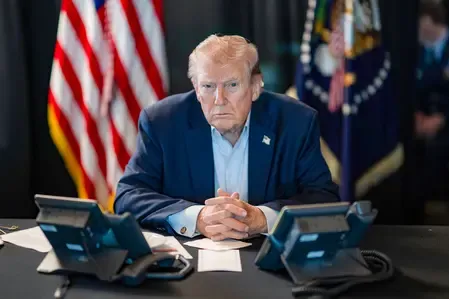
“Effective IMMEDIATELY, I have directed the United States Development Finance Corporation (DFC) to offer political risk insurance and guarantees at a reasonable price for the financial security of ALL Maritime Trade, especially Energy, navigating through the Gulf,” Trump stated.
This protection is set to be broadly available to shipping companies operating in the region.
“This will be accessible to all Shipping Lines,” the president confirmed, adding that Washington was prepared to consider further military actions if necessary.
“If required, the United States Navy will commence escorting tankers through the Strait of Hormuz at the earliest opportunity.”
This announcement aimed to reassure energy markets and tanker operators who were apprehensive about Iranian threats to shipping routes. According to The New York Times, tensions have escalated around this strategic waterway, with an Iranian commander cautioning that vessels attempting to pass through could face retaliation.
Trump sought to convey assurance that the United States could maintain the flow of global energy supplies despite the escalating conflict.
“No matter what, the United States will ensure the FREE FLOW of ENERGY to the WORLD,” he asserted.
The reaction in energy markets was swift. CNBC reported that US crude prices rose by approximately 4.68 percent to $74.56 per barrel, while the global benchmark Brent crude gained about 4.71 percent, reaching around $81.40 following the president's announcement regarding the provision of insurance and protection for shipping across the Persian Gulf.
Analysts cautioned that the outlook could worsen if the Strait of Hormuz were to be disrupted for an extended period. CNBC reported that some market strategists speculate that oil prices could soar beyond $100 per barrel if tanker traffic through the waterway were obstructed.
Trump acknowledged that the conflict might temporarily inflate energy prices.
“So if we have a little high oil prices for a little while, but as it drops, I believe, lower than even before,” he mentioned during a meeting with German Chancellor Friedrich Merz at the White House.
The unrest also unsettled global financial markets, with The New York Times reporting that stock markets experienced declines worldwide as investors responded to the dangers posed by the escalating Middle East conflict.
The Strait of Hormuz, situated between Iran and Oman, is one of the world's most crucial energy chokepoints, handling a significant portion of globally traded oil and liquefied natural gas. Any disruption there can swiftly impact fuel prices, shipping expenses, and inflation on a global scale.
India and other Asian economies are particularly vulnerable to such shocks due to their heavy reliance on crude imports from the Gulf region, making stability in this shipping corridor essential for energy security and economic stability.
Point of View
The situation in the Gulf is increasingly precarious. With rising tensions and potential disruptions to global energy supplies, the measures taken by President Trump are crucial. The stability of the Strait of Hormuz is vital not only for the US but for economies worldwide.
NationPress
21 Oct 2026
Frequently Asked Questions
Why are oil prices rising?
Oil prices are rising due to escalating tensions in the Middle East, particularly relating to the conflict in Iran which raises concerns about disruptions to the Strait of Hormuz.
What measures has President Trump announced?
President Trump has ordered the United States Development Finance Corporation to provide political risk insurance and guarantees to protect maritime trade through the Gulf.
How does the Strait of Hormuz affect global energy supplies?
The Strait of Hormuz is a critical chokepoint for global oil and gas shipping, with about a fifth of the world's energy passing through it. Any disruption can significantly impact fuel prices and global markets.
What could happen if tanker traffic is blocked?
If tanker traffic through the Strait of Hormuz is blocked, oil prices could potentially spike above $100 per barrel, according to market analysts.
How are global financial markets reacting?
Global financial markets are experiencing volatility due to the heightened risks associated with the Middle East conflict, leading to declines in stock markets worldwide.