PAID OFF Act: US Senate panel advances foreign agent disclosure bill targeting China, Russia
Synopsis
A bipartisan coalition in the US Senate has cleared the PAID OFF Act through committee — a bill that would force agents of China, Russia, Iran, North Korea, and Cuba to register under FARA regardless of commercial exemptions. With named examples like Russia's Nord Stream 2 lobbying and Hikvision's sanctions push already on the record, lawmakers are betting transparency can do what enforcement alone has not.
Key Takeaways
The Senate Foreign Relations Committee advanced the PAID OFF Act on 18 June with bipartisan support.
The bill closes FARA loopholes, requiring agents of China, Russia, Iran, North Korea, and Cuba to register with the US government regardless of commercial exemptions.
The legislation would remain in effect for five years , with the Secretary of State able to recommend changes to the country list subject to congressional approval.
Supporters cited Russia's Nord Stream 2 lobbying and Hikvision's sanctions-avoidance efforts as examples of past exploitation.
The bill now advances to the full US Senate for floor consideration.
A bipartisan group of US senators has advanced legislation to tighten foreign agent disclosure rules, after the Senate Foreign Relations Committee cleared the Preventing Adversary Influence, Disinformation and Obscured Foreign Financing (PAID OFF) Act on 18 June. The bill targets influence campaigns by China, Russia, Iran, North Korea, and Cuba, and seeks to close loopholes in the Foreign Agents Registration Act (FARA) that have allowed some foreign-linked lobbyists to operate without registering with the US government.
What the PAID OFF Act Does
Under the proposed legislation, agents working on behalf of the governments or commercial entities of China, Russia, Iran, North Korea, or Cuba would be required to register under FARA — regardless of whether they currently claim exemptions tied to commercial activity, domestic interests, or existing lobbying statutes. Supporters argue that these exemptions have been systematically exploited to shape US policy debates without full public disclosure.
The bill would remain in force for five years. It also includes a mechanism allowing the US Secretary of State to recommend additions or removals from the list of designated countries of concern, subject to congressional approval.
What Senators Said
Sen. John Cornyn of Texas said after the committee vote: 'American policy should not in any way reflect the handiwork of foreign adversaries who are actively working to tip the scales in their favour and undermine our interests. By exposing the efforts of countries of concern like China or Russia to exert malign influence, this legislation would better safeguard US decision-making.'
Sen. Sheldon Whitehouse described the bill as long overdue: 'When foreign adversaries skirt loopholes to lobby Congress, they directly threaten our democracy. This bipartisan legislation is long overdue and will help prevent unregistered foreign agents from putting a thumb on the scale of American policy.'
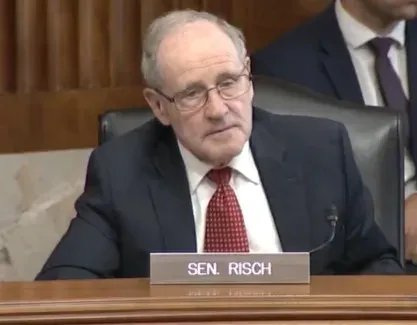
Sen. Jim Risch cited specific examples of past exploitation: 'For years, the United States' biggest adversaries have exploited loopholes in US lobbying laws to influence senior government officials and advance their geopolitical goals. Well-known examples include Russia's efforts to prevent sanctions against its Nord Stream 2 pipeline and Chinese surveillance firm Hikvision's attempts to avoid sanctions.'
Bipartisan Backing and Key Voices
The legislation is backed by a broad coalition spanning both parties, including Sens. Thom Tillis, Chuck Grassley, Deb Fischer, Peter Welch, and John Kennedy. Tillis called the bill a national security imperative, stating: 'Foreign adversaries like China and Russia should never be allowed to covertly influence American policy or public opinion.'
Sen. Welch argued that foreign influence operations had deepened public cynicism about democratic institutions: 'Foreign adversaries have exacerbated that distrust by using loopholes in US lobbying laws to undermine US decision-making and influence politics.' Kennedy framed it as a transparency issue: 'If you're being paid to push the interests of our enemies, the American people deserve to know who is signing the checks and what you're up to.'
Background: FARA's Long-Standing Gaps
FARA, originally enacted in 1938, has long been criticised for its patchwork of exemptions. Critics argue that commercial and legal-services carve-outs have allowed well-funded lobbying operations tied to foreign governments to avoid the scrutiny that full FARA registration entails. This is not the first legislative attempt to strengthen the law — previous reform efforts have stalled in Congress — making the committee's bipartisan clearance of the PAID OFF Act a notable development.
The bill now moves to the full Senate for consideration. Whether it can survive floor debate and potential amendments remains to be seen, but its bipartisan committee passage signals unusually broad consensus on the foreign influence threat.
Point of View
But for what it admits: that FARA, one of America's oldest foreign-influence statutes, has been effectively porous for decades. The bill's bipartisan framing is a political asset, but the harder test comes on the Senate floor, where lobbying interests directly affected by the legislation will have every incentive to water it down. Notably, the five-year sunset clause and the Secretary of State's discretion to modify the country list introduce flexibility that could cut both ways — shielding allies or, critics might argue, creating new avenues for executive-branch carve-outs. The real measure of the PAID OFF Act will not be its passage, but whether its registration requirements are actually enforced.
NationPress
22 Sept 2026
Frequently Asked Questions
What is the PAID OFF Act?
The PAID OFF Act — short for Preventing Adversary Influence, Disinformation and Obscured Foreign Financing Act — is a bipartisan US Senate bill that would require agents working for the governments or commercial entities of China, Russia, Iran, North Korea, and Cuba to register under the Foreign Agents Registration Act (FARA), regardless of existing exemptions. It cleared the Senate Foreign Relations Committee on 18 June.
What loopholes does the bill target?
The bill targets exemptions in FARA tied to commercial activity, domestic interests, and existing lobbying statutes, which have allowed some foreign-linked lobbyists to avoid registering with the US government. Senators cited Russia's Nord Stream 2 lobbying and Chinese firm Hikvision's sanctions-avoidance efforts as documented examples of exploitation.
Who supports the PAID OFF Act?
The bill has bipartisan backing from Senators John Cornyn, Sheldon Whitehouse, Jim Risch, Thom Tillis, Chuck Grassley, Deb Fischer, Peter Welch, and John Kennedy, spanning both Republican and Democratic parties.
How long would the PAID OFF Act remain in effect?
The legislation is designed to remain in force for five years. It also includes a provision allowing the US Secretary of State to recommend additions or removals from the list of designated countries of concern, subject to congressional approval.
What happens next with the bill?
Having cleared the Senate Foreign Relations Committee, the PAID OFF Act now moves to the full US Senate for floor consideration. Its fate will depend on whether it can survive amendments and secure sufficient votes for passage.