US foreign investment bill targets China, ethics in FDI oversight
Synopsis
Democratic senators are pushing to create an entirely new federal watchdog — FIRA — to scrutinise foreign investment deals worth hundreds of billions of dollars, with China squarely in the crosshairs and an ethics clause that would force disclosures when officials or their families profit. The bill names $1.4 trillion in combined pledges from Japan, South Korea and Taiwan, and arrives as Washington simultaneously woos allies and negotiates with Beijing.
Key Takeaways
Senator Tammy Baldwin and Congressman Ro Khanna introduced legislation on 12 June to establish the Foreign Investment Review Authority (FIRA) .
FIRA would track, review and publicly disclose large foreign investment commitments, assessing their 'net economic benefit' to the US.
The bill references announced commitments of $550 billion from Japan , $350 billion from South Korea and $500 billion from Taiwan .
A Chief Ethics Officer and mandatory disclosures for officials or family members benefiting from covered investments are included in the proposal.
The United Auto Workers (UAW) union and Representatives Thomas Suozzi , Debbie Dingell and Shontel Brown have backed the bill.
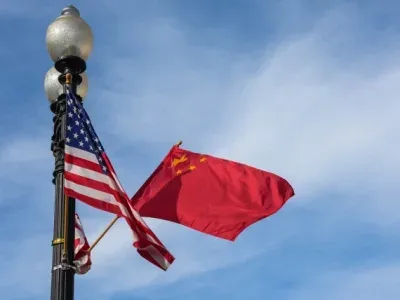
Lawmakers specifically cite the People's Republic of China as an economic adversary that could exploit FDI to gain unfair US market access.
Democratic lawmakers in Washington introduced legislation on 12 June that would establish a new federal body to review, track and publicly disclose large foreign investment commitments made to the United States, arguing that stronger oversight is needed to protect American workers and prevent ethical conflicts involving public officials.
What the Bill Proposes
The proposal, led by Senator Tammy Baldwin and Congressman Ro Khanna, would create the Foreign Investment Review Authority (FIRA) — a dedicated agency tasked with assessing whether incoming foreign direct investment delivers a 'net economic benefit' through job creation, domestic production and supply-chain integration. FIRA would also maintain a publicly accessible database of covered investments and enforce reporting requirements.
The legislation would additionally establish a Chief Ethics Officer, a Public Oversight Board and mechanisms for public complaints. Critically, it would mandate disclosures when senior government officials or their family members stand to benefit financially from covered investments.
What Lawmakers Said
'While foreign investments can create jobs and support our local economies, they also can open the door to adversaries undercutting American workers and the President lining his pockets,' Baldwin said. She added that basic oversight was necessary to ensure 'American workers and American communities' — not adversaries or well-connected insiders — see the returns.
Khanna framed the bill explicitly around the China threat: 'Establishing the Foreign Investment Review Authority (FIRA) would empower the US government with the tools it needs to ensure investment commitments negotiated by the President benefit working Americans and never our economic adversaries, such as the People's Republic of China (PRC).' He also warned against 'corrupt deals that lack Congressional oversight.'
Key Investment Figures Cited
The bill references specific announced investment commitments that have been trumpeted by the White House: $550 billion from Japan, $350 billion from South Korea and $500 billion from Taiwan. It also flags anticipated investments linked to a recently announced US-China Board of Investment and Board of Trade, signalling that scrutiny would extend to Beijing-linked capital flows as well.
Labour Unions Back the Measure
The proposal has drawn support from Representatives Thomas Suozzi, Debbie Dingell and Shontel Brown, as well as the United Auto Workers (UAW) union. Rajiv Sicora, legislative director of the UAW, argued that existing trade and investment rules 'have empowered corporations to destroy jobs, erode union density, and undercut the working class,' and called for all foreign direct investment to uphold 'the highest standards' — especially when tied to trade concessions.
Broader Context
The bill arrives as the White House actively courts hundreds of billions in foreign investment pledges from allied nations, while simultaneously pursuing broader economic engagement with China. Critics argue that without a formal review mechanism, such commitments carry both strategic and ethical risks. This is not the first time Congress has sought to tighten FDI oversight — the Committee on Foreign Investment in the United States (CFIUS) already reviews deals for national security concerns, but lawmakers contend that CFIUS does not cover the scale of investment commitments now being announced, nor does it address domestic ethics obligations. The FIRA bill represents a push to fill that gap with a transparency-first, worker-centred framework.
Point of View
Yet lawmakers felt compelled to build an entirely parallel body; that gap speaks to how inadequate existing frameworks are when dealing with investment 'commitments' that are announced with fanfare but never formally reviewed. The $1.4 trillion in pledges from Japan, South Korea and Taiwan also raises a question: if allied-nation investment needs this level of scrutiny, the bar for China-linked capital will be considerably higher, potentially complicating the very US-China economic engagement the White House is pursuing simultaneously.
NationPress
20 Sept 2026
Frequently Asked Questions
What is the Foreign Investment Review Authority (FIRA)?
FIRA is a proposed new US federal body that would review, track and publicly disclose large foreign investment commitments made to the United States. Introduced on 12 June by Senator Tammy Baldwin and Congressman Ro Khanna, it would assess whether investments create quality jobs, support domestic competition and strengthen American supply chains.
Why are Democratic lawmakers pushing for stronger FDI oversight now?
Lawmakers argue that existing mechanisms do not cover the scale of investment commitments currently being announced by the White House, nor do they address potential ethical conflicts when officials or their families benefit. They also cite concerns that economic adversaries, particularly China, could use investment to gain unfair access to the US market.
Which countries' investments does the bill specifically reference?
The bill cites announced commitments of $550 billion from Japan, $350 billion from South Korea and $500 billion from Taiwan. It also references anticipated investments linked to a newly announced US-China Board of Investment and Board of Trade.
How does the bill address conflicts of interest for government officials?
The legislation would require mandatory disclosures when senior government officials or their family members stand to benefit financially from investments covered by FIRA. It would also establish a Chief Ethics Officer and a Public Oversight Board to enforce these requirements.
Who supports the FIRA bill?
The bill has backing from Representatives Thomas Suozzi, Debbie Dingell and Shontel Brown, as well as the United Auto Workers (UAW) union, whose legislative director Rajiv Sicora called for all FDI to uphold the highest labour standards, especially when linked to trade concessions.