Balochistan: Pak forces kill 3 civilians, disappear 3 in fresh crackdown
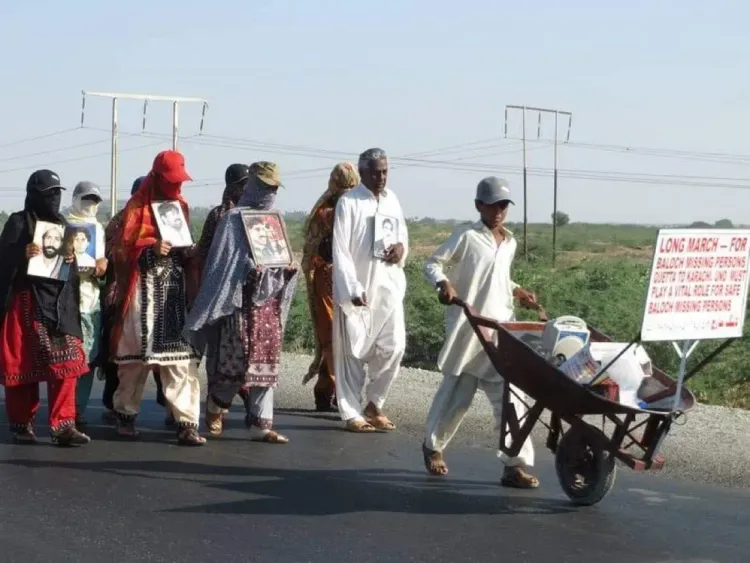
Synopsis
Hours after Asma Jattak publicly named the men threatening her family, her father was shot dead — one of three Baloch civilians killed and three others disappeared, allegedly by Pakistani forces, in a single day's documentation by rights groups. The cases, spanning Khuzdar, Panjgur, Kech, and Karachi, reinforce what advocates call a deliberate pattern of collective punishment against Baloch families with political ties.
Key Takeaways
Three Baloch civilians were reportedly killed extrajudicially and three others forcibly disappeared, allegedly by Pakistani forces , as documented on 5 August .
Inayatullah Jattak was shot dead in Khuzdar hours after his daughter Asma Jattak publicly warned of threats from death squad member Zahoor Jamalzai .
The bullet-riddled body of Salman Bangulzai, 33 , was recovered from Panjgur on 31 July after months of disappearance; Attahullah Baloch, 35 , was killed on 21 June following enforced disappearance.
Brothers Shahid Bijjar and Fahad Bijjar were disappeared in a night raid in Turbat, Kech district ; student Khalil Ahmed was taken from Karachi University .
Rights groups — including BVJ , BYC , BNM , and Paank — say the incidents reflect a systematic pattern of collective punishment with no legal accountability.
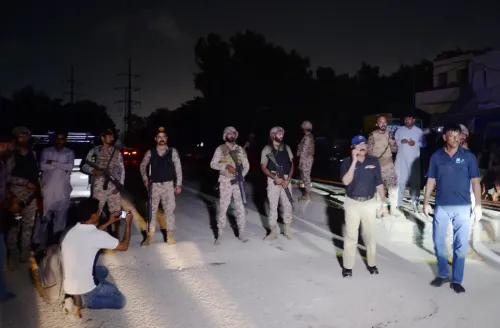
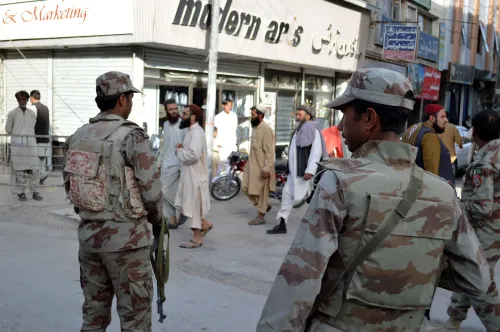
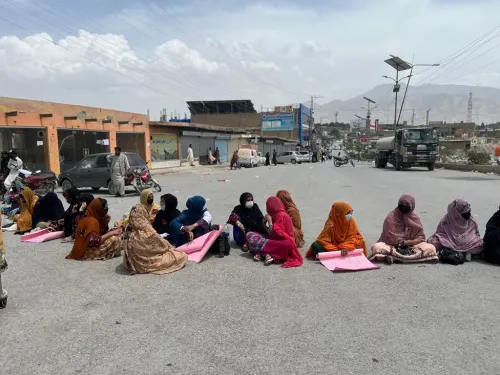
Human rights organisations on Wednesday, 5 August documented the extrajudicial killing of three Baloch civilians and the enforced disappearance of three others, allegedly at the hands of Pakistani forces and state-backed death squads across Balochistan. The disclosures, made by multiple advocacy groups, point to what critics describe as a systematic campaign of violence against the civilian population with no legal accountability.
Inayatullah Jattak Killed Hours After Daughter's Public Plea
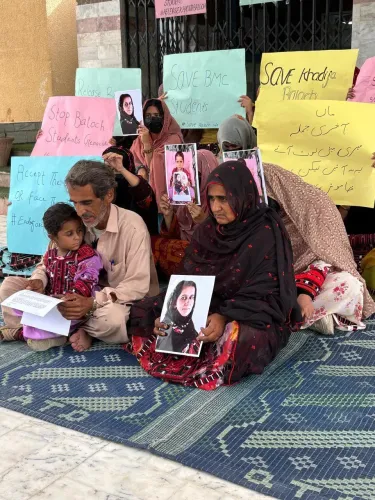
Baloch civilian Inayatullah Jattak was shot dead on Tuesday in Khuzdar district, according to the Baloch Voice for Justice (BVJ) — hours after his daughter, Asma Jattak, publicly appealed for protection and warned that her family faced mortal danger. In a video statement shared by BVJ on X, Asma alleged that death squad member Zahoor Jamalzai and his group had explicitly threatened to kill her father and brothers.
Naseem Baloch, chairman of the Baloch National Movement (BNM), condemned the killing, stating: 'This murder was preceded by clear and repeated threats. Earlier this year, Zahoor killed Asma's uncle, Ashraf Nichari, and then phoned the family to claim responsibility and threaten that other family members would also be killed. Zahoor was also responsible for abducting Asma in February 2025.'
Shalee Baloch, central organiser of the Baloch Women Forum (BWF), wrote on X: 'The targeted killing of Asma Jatak's father only hours after she publicly revealed that she was receiving threats from state-backed death squads is a chilling reminder of the systematic campaign of intimidation imposed on Baloch families.'
Two More Deaths Linked to Enforced Disappearances
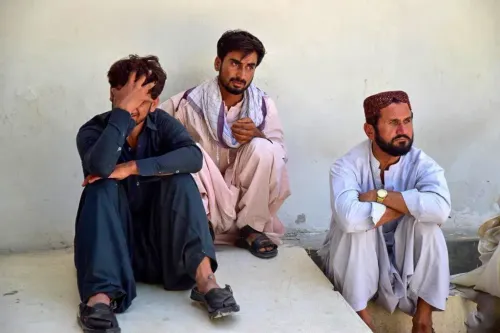
The Baloch Yakjehti Committee (BYC) revealed that the bullet-riddled body of Salman Bangulzai, 33, was recovered from the Newan Koor area of Panjgur on 31 July, after he had been missing for several months. 'A shopkeeper striving to provide for his loved ones, he was forcibly disappeared without his family knowing his fate. After days of waiting, the family received his bullet-riddled body instead of welcoming him home,' the BYC stated.
Separately, Attahullah Baloch, 35, a resident of the Kodask region in Khuzdar, was reportedly killed by Pakistani forces on 21 June in Panjgur district following an earlier enforced disappearance. The BYC said his case 'reflects a systematic pattern of enforced disappearances, custodial torture, and extrajudicial killings carried out with complete impunity in Balochistan. There is no legal process, no accountability, and no justice — only enforced disappearances, torture, and death.'
Three Others Forcibly Disappeared in Kech and Karachi
Paank, the human rights department of the Baloch National Movement, reported that brothers Shahid Bijjar and Fahad Bijjar were forcibly disappeared during a late-night raid on their home on Tuesday by Pakistani forces in the Turbat region of Kech district.
In a separate incident the same day, student Khalil Ahmed, a resident of Awaran district, was taken by Pakistani forces from Karachi University. Paank noted that Khalil is the nephew of Kamal Baloch, Deputy Secretary General of the BNM and former chairman of the Baloch Students Organisation (Azad). According to Paank, 'His enforced disappearance reflects the Pakistani military's ongoing practice of collective punishment, in which family members of Baloch political leaders and activists are targeted in retaliation for their relatives' political activities.'
Pattern of Impunity, No Accountability
The incidents documented on Wednesday are not isolated. Rights groups have for years reported a cycle of enforced disappearances, custodial deaths, and extrajudicial killings in Balochistan, with families rarely receiving any official explanation or legal recourse. The BYC noted that families are 'left to bury their loved ones without ever knowing why they were taken and brutally killed.' This comes amid sustained international concern over the human rights situation in the province, with Baloch diaspora organisations and advocacy groups repeatedly urging the United Nations to intervene. Pakistani authorities have not publicly responded to Wednesday's specific allegations.
Point of View
According to rights groups, a feature of how enforcement operates in Balochistan: public appeals are met with accelerated violence, not protection. What is striking is the geographic spread of a single day's documentation — Khuzdar, Panjgur, Kech, Karachi — suggesting coordinated pressure rather than localised incidents. The targeting of Khalil Ahmed, a student whose only apparent offence is being the nephew of a BNM official, fits a pattern of collective punishment that international human rights law explicitly prohibits. Pakistan has consistently denied systematic abuses in Balochistan; the absence of any official response to these specific allegations leaves that denial increasingly difficult to sustain before international forums.
NationPress
20 Sept 2026
Frequently Asked Questions
What happened in Balochistan on 5 August 2025?
Human rights organisations documented the extrajudicial killing of three Baloch civilians and the enforced disappearance of three others, allegedly carried out by Pakistani forces and state-backed death squads across multiple districts of Balochistan. The incidents were reported by groups including the Baloch Voice for Justice, Baloch Yakjehti Committee, and Paank.
Who was Inayatullah Jattak and how was he killed?
Inayatullah Jattak was a Baloch civilian from Khuzdar district who was shot dead on Tuesday, hours after his daughter Asma Jattak publicly appealed for protection and named death squad member Zahoor Jamalzai as the threat. According to the BNM's Naseem Baloch, Zahoor had previously killed Asma's uncle and abducted Asma herself in February 2025.
Who are the three civilians reported disappeared?
The three reported disappearances involve brothers Shahid Bijjar and Fahad Bijjar, taken in a night raid in Turbat, Kech district, and student Khalil Ahmed, picked up from Karachi University. Khalil is the nephew of BNM Deputy Secretary General Kamal Baloch, and rights groups say his case exemplifies collective punishment targeting relatives of political activists.
What is the broader pattern rights groups are pointing to?
Rights organisations including the Baloch Yakjehti Committee and Paank say these incidents are part of a long-standing cycle of enforced disappearances, custodial torture, and extrajudicial killings in Balochistan carried out with no legal accountability. Families, they say, routinely receive bullet-riddled bodies with no official explanation.
Has Pakistan responded to these allegations?
Pakistani authorities have not publicly responded to the specific allegations documented on 5 August. Pakistan has historically denied systematic human rights abuses in Balochistan, but rights groups and Baloch diaspora organisations have repeatedly called on the United Nations to investigate the situation in the province.