Balochistan extrajudicial killings: 3 more civilians found dead, rights groups allege Pakistani forces
Synopsis
Rights groups allege Pakistani forces killed three more Baloch civilians — all previously disappeared — with their tortured bodies recovered from Osta Muhammad on 24 August. The HRCB's July 2026 report puts the broader toll at 59 killings and 108 enforced disappearances in a single month, making this one of the most documented escalations in the province's long-running human rights crisis.
Key Takeaways
Bodies of Hafiz Muhammad Waqas , Mitha Khan , and Maqbool Ahmed were recovered on 24 August 2026 from Osta Muhammad , Balochistan, bearing signs of torture.
Baloch Voice for Justice (BVJ) alleges all three had been subjected to enforced disappearance before being killed by Pakistani forces.
More than 15 bodies have been recovered in recent days across Panjgur , Mastung , Kharan , and Osta Muhammad .
The Human Rights Council of Balochistan (HRCB) documented 59 killings and 108 enforced disappearances in Balochistan during July 2026 alone.
Of the disappearances, only 47 individuals have reappeared; 3 were killed in custody and the majority remain unaccounted for.
Rights bodies have called for independent investigations and immediate disclosure of the whereabouts of all forcibly disappeared persons.
Three more civilians were allegedly killed extrajudicially by Pakistani forces in Balochistan, with their mutilated bodies recovered on 24 August 2026 from the Osta Muhammad area, according to human rights organisation Baloch Voice for Justice (BVJ). The incident has drawn fresh condemnation amid what rights groups describe as a worsening pattern of enforced disappearances and unlawful killings across the province.
The deceased were identified as Hafiz Muhammad Waqas, a Levies official, his brother Mitha Khan, and Maqbool Ahmed. According to BVJ, all three had previously been subjected to enforced disappearance before their deaths.
What the Rights Groups Documented
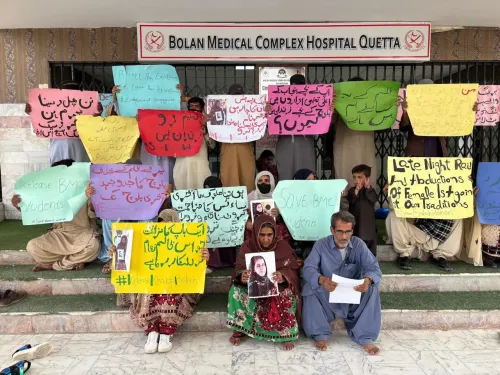
'The recovery of their bodies, bearing signs of torture, raises grave concerns over the fate of forcibly disappeared persons in Balochistan,' BVJ stated. The organisation added that more than 15 bodies have been recovered in recent days from Panjgur, Mastung, Kharan, and Osta Muhammad. Several have been identified as individuals previously subjected to enforced disappearance by Pakistani forces, while others remain unidentified.
BVJ called for an independent and impartial investigation into the killings, full accountability for those responsible, and the immediate disclosure of the whereabouts of all forcibly disappeared persons. 'Every detainee has the right to life, due process and a fair trial. Enforced disappearance and extrajudicial killing must end,' the organisation noted.
July 2026: A Month of Documented Abuses
Separately, the Human Rights Council of Balochistan (HRCB) released a report documenting 59 killings and 105 cases of enforced disappearances across the province in July 2026, alongside a severe military crackdown that included demolition of residential houses.
Of the 59 killings recorded in July, 57 were men and two were women; the identities of 8 victims could not be confirmed. According to the HRCB report, target killings were the most frequently recorded mode, accounting for 17 of the 59 cases, followed by custodial killings at 15. Fake encounters accounted for six cases, shelling for five, and drone strikes and honour killings for four each.
Enforced Disappearances: Scale and Breakdown
The HRCB documented a total of 108 enforced disappearances during July 2026, of which 97 victims were male and eight were female. Only 47 of those taken have reappeared; 3 were killed in custody, while the majority remain unaccounted for.
House raids were the predominant mode of abduction, accounting for 84 of the 108 recorded cases. Detention at the time of disappearance accounted for 15 cases, while five occurred at checkpoints and one followed a summons to a military camp.
Calls for Accountability
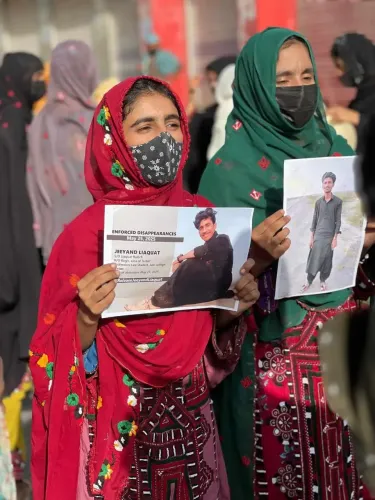
Both BVJ and HRCB have urged Pakistani authorities and the international community to act on the documented abuses. The rights bodies have demanded independent investigations, transparency on the fate of the disappeared, and an immediate end to what they describe as systematic state violence against Baloch civilians. Pakistani authorities have not publicly responded to these specific allegations, according to available reports. The situation in Balochistan continues to draw scrutiny from international human rights observers.
Point of View
108 disappearances, 84 house raids — is not a spike; it is a baseline. What makes this moment different is the documentation granularity: mode-of-killing breakdowns, gender counts, reappearance rates. That level of detail makes deniability harder. Yet Pakistani authorities have not publicly engaged with these specific figures, and international pressure has remained episodic rather than sustained. The Balochistan crisis has persisted for decades precisely because accountability mechanisms have never matched the scale of documented abuses. The question is whether this accumulation of evidence finally shifts that calculus — or becomes another archive of unacted-upon findings.
NationPress
11 Oct 2026
Frequently Asked Questions
Who were the three civilians allegedly killed by Pakistani forces in Balochistan?
The three civilians were identified as Hafiz Muhammad Waqas, a Levies official, his brother Mitha Khan, and Maqbool Ahmed. Their bodies were recovered on 24 August 2026 from the Osta Muhammad area in Balochistan, bearing signs of torture, according to Baloch Voice for Justice.
What is Baloch Voice for Justice (BVJ) and what has it alleged?
Baloch Voice for Justice (BVJ) is a human rights organisation that monitors abuses in Balochistan. It has alleged that the three recovered civilians were previously subjected to enforced disappearance before being killed, and has called for an independent investigation and accountability for those responsible.
What did the Human Rights Council of Balochistan report for July 2026?
The Human Rights Council of Balochistan (HRCB) documented 59 killings and 108 enforced disappearances in Balochistan during July 2026, along with a military crackdown that included demolition of residential houses. Target killings accounted for 17 of the 59 deaths, and house raids were the predominant mode of abduction, covering 84 of the 108 disappearance cases.
How many of the disappeared persons have been accounted for?
Of the 108 enforced disappearances recorded in July 2026, only 47 individuals have reappeared. Three were killed in custody, while the majority remain unaccounted for, according to the HRCB report.
What are rights groups demanding in response to the Balochistan killings?
Both BVJ and HRCB have demanded an independent and impartial investigation into the killings, full accountability for those responsible, and the immediate disclosure of the whereabouts of all forcibly disappeared persons. They have also called for an end to enforced disappearances and extrajudicial killings in the province.