Pakistan SC acquits last convicts in 2014 Christian couple's lynching case
Synopsis
Eleven years after Shahzad Masih and his pregnant wife Shama Bibi were burned alive in a brick kiln by a mob of over 1,000 people in Kasur, Pakistan's Supreme Court has acquitted the last remaining convicts — leaving the case with zero convictions. Senior Catholic bishops say it is proof of a pattern, not an aberration.
Key Takeaways
Pakistan's Supreme Court acquitted the final three convicted men in the 2014 Kasur brick kiln lynching, leaving no one convicted in the case.
Shahzad Masih , 26, and his pregnant wife Shama Bibi , 24, were thrown alive into a furnace by a mob of over 1,000 people on 4 November 2014 .
The court also dismissed the Punjab government's appeal against the acquittal of 102 other accused.
An anti-terrorism court had originally awarded the death penalty to five men; convictions were progressively overturned over 11 years .
Bishop Samson Shukardin and Bishop Indrias Rehmat condemned the ruling, citing a systemic pattern of acquittals in minority-targeted violence cases.
Separately, two young Christian men were shot dead in Balochistan earlier this month, and over 24 Christian families have fled homes amid fresh blasphemy threats.
Pakistan's Supreme Court has acquitted the final three men convicted in the 2014 lynching of a Christian couple, effectively leaving no individual convicted in one of the country's most brutal incidents of mob violence against a religious minority. The ruling, reported on 19 July, has drawn sharp condemnation from senior Catholic Church leaders, who say it confirms a systemic pattern of justice denial for minority communities in Pakistan.
What Happened to Shahzad Masih and Shama Bibi
Shahzad Masih, 26, and his 24-year-old pregnant wife Shama Bibi were killed on 4 November 2014 in Kasur district, Punjab province, after a mob falsely accused them of desecrating pages of the Quran. The couple, who worked as labourers at a local brick kiln, were reportedly prevented from fleeing by the kiln's owner over an alleged financial dispute.
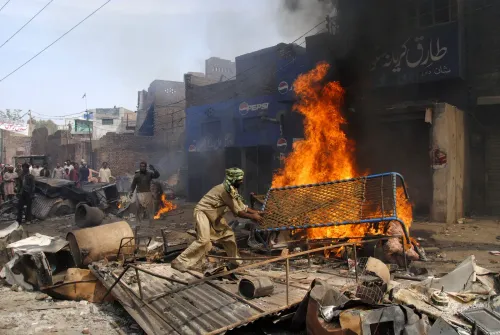
According to reports, a local Islamic cleric used a mosque loudspeaker to incite the crowd. A mob of more than 1,000 people allegedly gathered, beat and tortured the couple, and then threw them alive into the blazing industrial furnace, where they were burned to death.
The Long Unravelling of Convictions
Following the killings, an anti-terrorism court had convicted several accused, awarding the death penalty to five men and sentencing eight others to two years' imprisonment. However, higher courts progressively set aside most convictions over the years, citing deficiencies in evidence and shortcomings in the prosecution's case. In 2018, a court acquitted 20 additional accused.
The Supreme Court's latest ruling also dismissed the Punjab provincial government's appeal challenging the acquittal of 102 other people accused of participating in the attack. As a result, not a single person now stands convicted in the murder of the couple — a full 11 years after the crime.
Church Leaders: 'History Has Repeated Itself'
Bishop Samson Shukardin, President of the Catholic Bishops' Conference of Pakistan, reacted with dismay, saying: 'Shahzad and his wife, Shama, who was pregnant, were thrown into the fire alive. In the end, what is the result of all these efforts towards justice?'
Bishop Indrias Rehmat of Faisalabad, speaking to the Catholic charity Aid to the Church in Need (ACN), said: 'We are deeply disappointed that after 12 years, history has yet again repeated itself — those who have suffered are the ones who suffer yet more discrimination and humiliation.' The Bishop of Hyderabad added that minority communities 'feel they have no voice; that no one is listening.'
Both bishops alleged that arrests after mob violence targeting minorities are routinely followed by acquittals or dropped charges at later judicial stages — a pattern they say has become entrenched.
A Broader Pattern: Jaranwala and Balochistan
Bishop Rehmat also referenced a verdict delivered on 13 July by the Anti-Terrorism Court in Faisalabad related to the August 2023 Jaranwala violence in Punjab, during which 26 churches and more than 80 Christian homes were attacked. In that case, one man was sentenced to 10 years in prison for using a crane to damage church buildings, while 12 other accused were acquitted. Bishop Rehmat questioned whether even that lone conviction would stand.
This comes amid a wider climate of reported insecurity for Pakistan's Christian community. Earlier this month, Ayush Masih, 21, and Domnik Masih, 24, were fatally shot by gunmen on motorcycles in the Shamsabad area of Mastung district, Balochistan, according to the rights body Voice of Pakistan Minority (VOPM). Separately, over 24 Christian families have reportedly been forced to flee their homes in Jhulan village after blasphemy allegations against a Pakistan-based pastor living in the US prompted police to advise residents to leave as a precaution against potential mob violence.
What Comes Next
Church representatives and rights advocates say the Supreme Court acquittal closes the last legal avenue in the Kasur case, with no further appeals reported as pending. The verdict is expected to intensify calls from international human rights bodies and minority advocacy groups for structural reforms to Pakistan's blasphemy-related legal proceedings and witness protection mechanisms. For Pakistan's Christian community, critics argue, the ruling is less a legal endpoint than a confirmation of institutional failure.
Point of View
A conviction secured at the anti-terrorism court level was systematically dismantled on appeal, with evidentiary gaps that critics say reflect structural failures in how Pakistan investigates mob violence against minorities rather than isolated prosecutorial lapses. The Supreme Court's simultaneous dismissal of the Punjab government's appeal against 102 acquittals signals that accountability was never going to survive the full judicial journey. What the Church leaders are describing — initial arrests followed by progressive acquittals — mirrors the trajectory of the Jaranwala case and several others before it. Without witness protection, independent evidence-gathering, and insulation of prosecutors from community pressure, the pattern will repeat. The international community has noted Pakistan's blasphemy-related violence for decades; the Kasur verdict gives that concern a specific, documented endpoint.
NationPress
20 Jul 2026
Frequently Asked Questions
Who were Shahzad Masih and Shama Bibi?
Shahzad Masih, 26, and Shama Bibi, 24 and pregnant, were a Christian couple who worked as labourers at a brick kiln in Kasur district, Punjab, Pakistan. They were falsely accused of desecrating the Quran and were beaten and thrown alive into the kiln's furnace by a mob of over 1,000 people on 4 November 2014.
What did Pakistan's Supreme Court rule in the Kasur lynching case?
The Supreme Court acquitted the final three men who had remained convicted in the case, and also dismissed the Punjab government's appeal against the earlier acquittal of 102 other accused. The ruling means no individual is now convicted in the murder of the Christian couple.
Why have Church leaders criticised the verdict?
Senior Catholic bishops, including Bishop Samson Shukardin and Bishop Indrias Rehmat, say the acquittals confirm a broader pattern in which minorities targeted by mob violence in Pakistan initially see arrests but rarely see lasting convictions. They describe the outcome as a systemic failure of justice rather than an isolated legal decision.
What is the Jaranwala case referenced by Church leaders?
The Jaranwala violence occurred in August 2023 in Punjab's Faisalabad district, during which 26 churches and over 80 Christian homes were attacked by a mob. In a verdict on 13 July, an Anti-Terrorism Court sentenced one man to 10 years in prison while acquitting 12 others — an outcome Bishop Rehmat also criticised as inadequate.
Are there other recent incidents of violence against Christians in Pakistan?
Yes. According to rights body Voice of Pakistan Minority (VOPM), two young Christian men — Ayush Masih, 21, and Domnik Masih, 24 — were shot dead by gunmen on motorcycles in Mastung district, Balochistan, earlier this month. Separately, over 24 Christian families have reportedly fled Jhulan village after fresh blasphemy allegations prompted police to advise them to leave for their safety.