Pakistan ranks 130th in WJP Rule of Law Index 2025 amid rights lawyer sentencing row
Synopsis
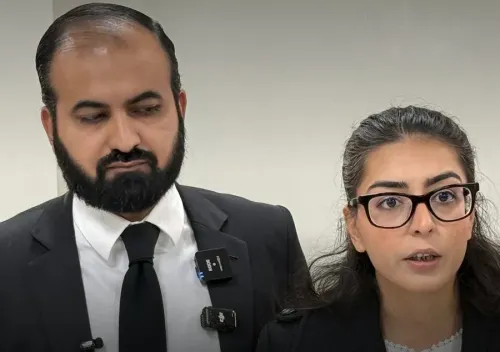
Pakistan’s 130th-of-143 finish in the WJP Rule of Law Index 2025 landed the same week an Islamabad anti-terrorism court sentenced human rights lawyers Imaan Zainab Mazari-Hazir and Hadi Ali Chattha to 10 years each — a juxtaposition that critics say is less coincidence than confirmation of the index’s findings.
Key Takeaways
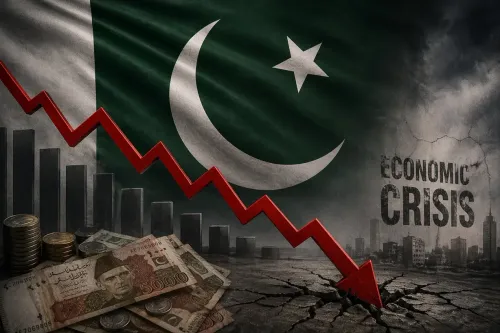
Pakistan ranked 130th out of 143 nations in the WJP Rule of Law Index 2025 .
Pakistan scored 0.28 on unreasonable delay in civil justice — its weakest sub-score — and ranked 129th in Civil Justice overall.
An anti-terrorism court in Islamabad sentenced rights lawyers Imaan Zainab Mazari-Hazir and Hadi Ali Chattha to 10 years each on 30 October 2025 .
The Baloch Yakjehti Committee (BYC) condemned the verdict as evidence of ‘military dominance’ over Pakistan’s judiciary.
Commentator Shahid Hussain Kamboyo urged contextual reading of the index, noting that some underlying survey data may predate recent institutional changes.
Pakistan has secured the 130th position among 143 nations in the World Justice Project (WJP) Rule of Law Index 2025, a ranking that analysts say warrants serious reflection rather than dismissal or blanket blame. The index, which evaluates countries across eight dimensions of governance and justice, places Pakistan near the bottom of the global table — a standing that mirrors longstanding structural concerns about its legal system.
How Pakistan Scores Across Key Dimensions
The WJP index assesses countries on eight components: constraints on government powers, corruption, open government, fundamental rights, order and security, regulatory enforcement, civil justice, and criminal justice. Pakistan ranked 129th in Civil Justice and notably better at 101st in Criminal Justice, though both figures signal deep systemic gaps.
On civil justice sub-indicators, Pakistan scored 0.36 on accessibility and affordability, 0.28 on unreasonable delay — its weakest sub-score — and 0.35 on effective enforcement. The delay figure is particularly telling: it reflects a justice system where cases languish for years, disproportionately burdening ordinary citizens without resources to navigate prolonged legal battles.
The Argument for Contextual Reading
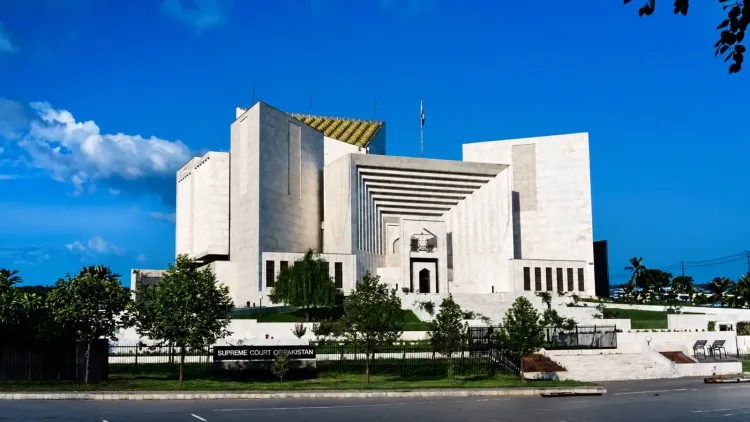
Commentator Shahid Hussain Kamboyo, writing in leading Pakistani daily The Express Tribune, cautioned against reading the index as a verdict solely on the courts. “International indices can reveal shortcomings and encourage reform, but surveys and expert assessments should be considered alongside institutional records and lived experience. Some evidence underlying annual assessments predates recent changes, whose effects may take time to emerge. Pakistan’s ranking warrants reflection, neither dismissal nor indiscriminate blame,” he wrote.
Kamboyo added that the true measure of progress lies not in index placement but in lived outcomes: “Ultimately, justice must be felt in the worker who recovers his wages, the widow who secures her inheritance, and the pensioner who receives relief while it still matters. The true measure of progress is not a better place on a table, but a lasting public confidence that the law will protect people when they need it most.”
Rights Lawyer Sentencing Deepens Credibility Crisis
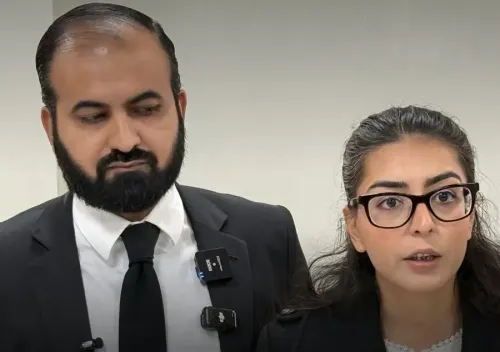
The index release coincides with a high-profile case that critics argue illustrates the very dynamics the WJP data captures. On 30 October 2025, an anti-terrorism court in Islamabad sentenced human rights lawyers Imaan Zainab Mazari-Hazir and her husband Hadi Ali Chattha to 10 years in prison each, along with a fine of PKR one lakh each under the Anti-Terrorism Act (ATA), 1997. The case stemmed from an incident involving the removal of road barricades during a cricket match in Islamabad in 2024.
The Baloch Yakjehti Committee (BYC), a prominent human rights organisation, condemned the verdict as “a clear example of the helplessness of the judiciary in Pakistan, the absence of justice, and a system based on military dominance.” The BYC described both as not merely lawyers but as activists who consistently raised their voices against atrocities committed against the Baloch, Pashtun, and other marginalised communities.
BYC’s Statement and Wider Implications
In a statement posted on X, the BYC said: “Sentencing Iman Zainab Mazari and Hadi Ali Chatha to ten years in prison each is a clear example of the helplessness of the judiciary in Pakistan, the absence of justice, and a system based on military dominance. It is a reality that those who tirelessly struggle day and night to secure justice for others in a tyrannical state, and who raise their voices for the protection of human rights, eventually find themselves standing in the dock of a court under an oppressive system, forced to face state injustice themselves.”
The BYC further questioned: “The question is: Is raising one’s voice for justice a crime? Is standing with oppressed nations a punishable act?” It argued that the sentencing sends “an alarming message to all those voices that speak out for the oppressed,” adding that “when lawyers and human rights activists begin to feel unsafe themselves, it is only natural for questions to arise about the entire justice system.”
This is not the first time Pakistan’s rule of law credentials have come under international scrutiny — the country has consistently ranked in the bottom quarter of the WJP index in recent years. The simultaneous release of the 2025 rankings and the lawyers’ sentencing has drawn fresh attention to the gap between institutional claims of reform and the experience of rights defenders on the ground. How Pakistan’s government and judiciary respond to both the index and the international outcry over the sentencing will be closely watched in the months ahead.
Point of View
But credible reform requires more than asking international indices to wait: it requires visible, documented changes in outcomes for ordinary litigants and civil society actors. Until then, the gap between official optimism and index reality will persist.
NationPress
2 Nov 2026
Frequently Asked Questions
What is the WJP Rule of Law Index 2025 and where did Pakistan rank?
The World Justice Project (WJP) Rule of Law Index is an annual global assessment that ranks countries across eight rule-of-law dimensions including civil justice, criminal justice, and fundamental rights. Pakistan ranked 130th out of 143 nations in the 2025 edition, placing it among the lowest-ranked countries globally.
Which specific areas pulled Pakistan’s rule of law score down?
Pakistan ranked 129th in Civil Justice and scored only 0.28 on the unreasonable delay sub-indicator — its weakest figure. It also scored 0.36 on accessibility and affordability and 0.35 on effective enforcement of civil justice. It fared somewhat better in Criminal Justice, ranking 101st.
Who are Imaan Zainab Mazari-Hazir and Hadi Ali Chattha, and why were they sentenced?
Imaan Zainab Mazari-Hazir and Hadi Ali Chattha are human rights lawyers and activists who have raised their voices against alleged atrocities committed against Baloch, Pashtun, and other marginalised communities in Pakistan. An anti-terrorism court in Islamabad sentenced them to 10 years in prison each on 30 October 2025, in connection with removing road barricades during a cricket match in 2024.
What did the Baloch Yakjehti Committee say about the sentencing?
The Baloch Yakjehti Committee (BYC) condemned the verdict as 'a clear example of the helplessness of the judiciary in Pakistan, the absence of justice, and a system based on military dominance.' In a statement on X, the BYC described the sentences as an attempt to silence human rights defenders and called the case an alarming message to all those who speak out for oppressed communities.
Why do some analysts say Pakistan’s WJP ranking should be read with caution?
Commentator Shahid Hussain Kamboyo argued that some survey evidence underlying the annual assessment may predate recent institutional changes whose effects have yet to be reflected. He noted that courts do not determine all eight dimensions of the index and urged that rankings be read alongside institutional records and lived experience — though he also said the ranking 'warrants reflection, neither dismissal nor indiscriminate blame.'