Pakistan forces vanish six civilians in Balochistan, including infant
Synopsis
Six civilians — among them a 3-month-old infant and a teenager — were allegedly seized by around 60 Pakistan Frontier Corps personnel in a predawn raid on a home in Mastung, Balochistan. With no official acknowledgement three days later, rights groups warn this is part of a systematic pattern of gendered enforced disappearances that has now drawn calls for UN intervention.
Key Takeaways
Six civilians — including a 3-month-old infant , two other children, and two women — were allegedly disappeared by Pakistan Frontier Corps personnel from Killi Kongarh, Mastung district on 21 July 2025 .
Approximately 60 FC personnel in more than 20 vehicles , accompanied by three masked individuals , conducted the raid, according to Paank .
The victims include Bibi Rafia (33), her brother Muhammad Arif (40), niece Bibi Nida (18), and three children aged 3 months , 4 , and 6 .
Baloch Voice for Justice (BVJ) alleged that Baloch women in detention have reportedly been subjected to torture and coerced into scripted press conferences.
Rights bodies have urged UN Women and global human rights mechanisms to intervene immediately.
Sammi Deen Baloch of BYC linked the disappearances to a broader collapse of law in Balochistan, citing the killing of Sessions Judge Abdul Hakeem Kakar .
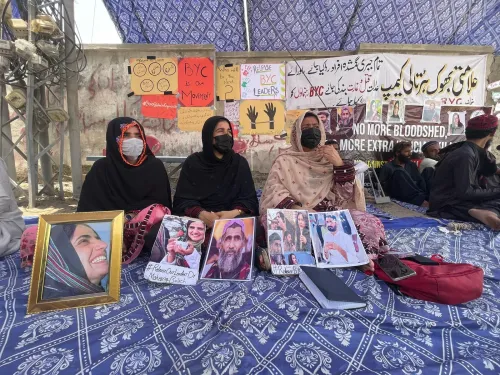
Pakistani security forces allegedly carried out the enforced disappearance of six civilians — including a 3-month-old infant, two other young children, and two women — from the Killi Kongarh area of Mastung district in Balochistan on 21 July 2025, drawing sharp condemnation from multiple human rights organisations. The victims' whereabouts remain unknown, with no official information provided to the family as of 24 July.
What Happened in Mastung
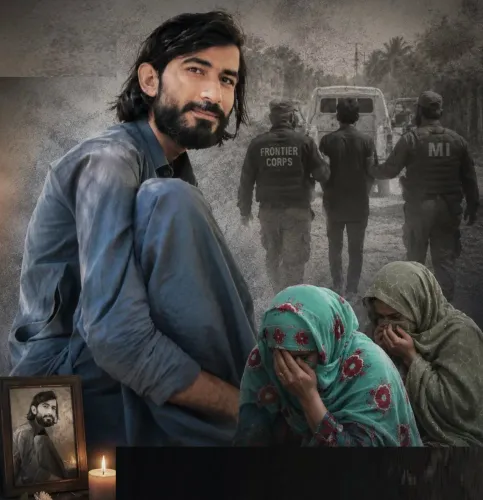
According to Paank, the human rights department of the Baloch National Movement, citing the victims' family, more than 20 Pakistan Frontier Corps (FC) vehicles carrying approximately 60 personnel — accompanied by three masked individuals in civilian clothing — raided the family's home on 21 July. Security personnel reportedly damaged household property under the pretext of a search operation before detaining all six individuals.
The six victims were identified as Bibi Rafia, 33, her three children aged 3 months, 4 years, and 6 years, her brother Muhammad Arif, 40, and her niece Bibi Nida, 18. No arrest warrants or official detention records have reportedly been shared with the family.
Rights Bodies Sound the Alarm
Paank stated that 'enforced disappearance is a serious violation of international human rights law and places those detained outside the protection of the law, exposing them to an increased risk of torture and other ill-treatment.' The organisation called on Pakistani authorities to immediately disclose the whereabouts of the detained individuals.
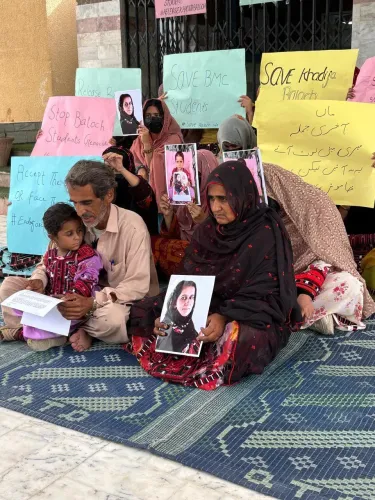
The Baloch Voice for Justice (BVJ) expressed grave concern over what it described as a continued pattern of enforced disappearances specifically targeting Baloch women. The group alleged that 'women have reportedly been subjected to torture in secret detention, while some have allegedly been forced at gunpoint to participate in scripted press conferences in which they are presented as suicide bombers.' The BVJ urged UN Women and other global human rights mechanisms to take immediate action.
Broader Crisis in Balochistan
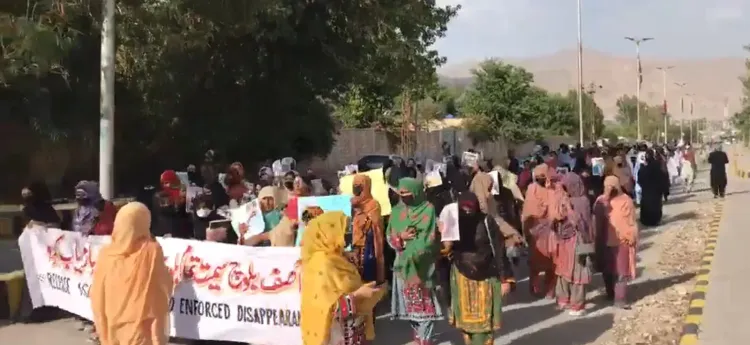
Sammi Deen Baloch, a member of the Baloch Yakjehti Committee (BYC), described Balochistan as having reached a point where 'people are forced to bury the dead almost every day.' She noted that the violence no longer distinguishes between civilians and officials, pointing to the killing of Sessions Judge Abdul Hakeem Kakar as evidence of the province's deepening lawlessness.
In a post on social media platform X, Sammi wrote: 'The daylight killing of Sessions Judge Abdul Hakeem Kakar is not merely a cause for alarm. It is a devastating indictment of the lawlessness engulfing Balochistan and the profound insecurity faced by its people.' She also criticised the Balochistan government for what she called a pattern of claiming normalcy on television while conducting crackdowns on peaceful activism and dissent.
Pattern of Disappearances
This incident is part of a long-documented pattern of alleged enforced disappearances in Balochistan, a resource-rich but conflict-affected province where security forces have faced persistent accusations of extrajudicial detention. International human rights bodies, including UN Special Rapporteurs, have previously raised concerns about the practice. The targeting of women and children in the 21 July raid marks what rights groups describe as an alarming escalation. Pakistani authorities had not issued an official response to these specific allegations as of the time of reporting.
Point of View
Which, if verified, would constitute a sophisticated propaganda operation layered on top of the detention itself. Pakistan's security establishment has consistently denied systematic enforced disappearances in Balochistan, but the volume and consistency of family testimonies, corroborated by multiple independent rights bodies, make blanket denial increasingly untenable. The silence of Pakistani authorities three days after a raid involving 60 personnel and 20 vehicles is itself a statement.
NationPress
23 Oct 2026
Frequently Asked Questions
Who were the six civilians disappeared in Balochistan on 21 July 2025?
The six individuals are Bibi Rafia (33), her three children aged 3 months, 4 years, and 6 years, her brother Muhammad Arif (40), and her niece Bibi Nida (18). They were taken from their home in the Killi Kongarh area of Mastung district, Balochistan, by Pakistan Frontier Corps personnel, according to Paank.
What is enforced disappearance and why is it a human rights violation?
Enforced disappearance occurs when state agents detain a person and then deny knowledge of their whereabouts or fate, placing the individual outside legal protection. It is prohibited under international human rights law and exposes victims to heightened risk of torture and extrajudicial execution, as noted by Paank in its condemnation of this incident.
What have rights groups demanded in response to the Mastung disappearances?
Paank and the Baloch Voice for Justice (BVJ) have demanded that Pakistani authorities immediately disclose the whereabouts of all six detainees and ensure their safety. The BVJ has also urged UN Women and other global human rights bodies to urgently intervene to protect Baloch women and children.
What did Sammi Deen Baloch say about the situation in Balochistan?
Sammi Deen Baloch of the Baloch Yakjehti Committee (BYC) said Balochistan has reached a stage where people are 'forced to bury the dead almost every day.' In a post on X, she described the killing of Sessions Judge Abdul Hakeem Kakar as 'a devastating indictment of the lawlessness engulfing Balochistan,' and accused the provincial government of prioritising television appearances over genuine security.
Has Pakistan's government responded to the Mastung disappearances?
As of 24 July 2025, no official response from Pakistani authorities had been issued regarding the specific allegations from Mastung. The Balochistan government has not publicly acknowledged the detention of the six individuals, and no official information has been provided to the victims' family, according to Paank.