Pakistan monsoon floods 2025: Gilgit-Baltistan hit hard as preparedness gaps widen
Synopsis
As monsoon floods batter Gilgit-Baltistan at six points in Diamer alone, Pakistan's preparedness machinery stands exposed — funds unreleased, drains undesilted, and evacuation notices ignored. The floods have now swept away 13 dumpers and a crushing plant from the Diamer-Bhasha Dam project, halting a flagship national infrastructure effort mid-construction.
Key Takeaways
Flash floods struck six locations in Diamer , Gilgit-Baltistan on 14 July , damaging the Karakoram Highway and cutting off Thore Valley .
Pakistan's Express Tribune reported that monsoon preparedness funds have not been released due to the country's ongoing financial crisis.
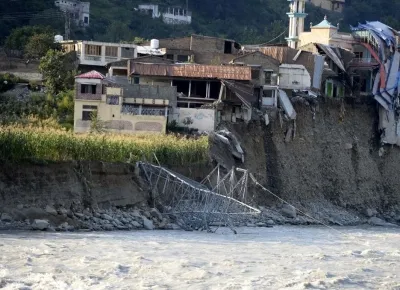
Entire houses with contents were swept away in Khanbari ; thousands are without power and road access.
A private contractor on the Diamer-Bhasha Dam project lost 13 dumpers , an excavator, a crushing plant, and 2 water tankers to floodwaters.
Residents have called on the NDMA and GBDMA to launch immediate relief, restore roads, and provide financial aid.
Evacuation notices for unsafe buildings in Rawalpindi remain unenforced, with court cases reportedly stalled due to alleged government-tenant collusion.
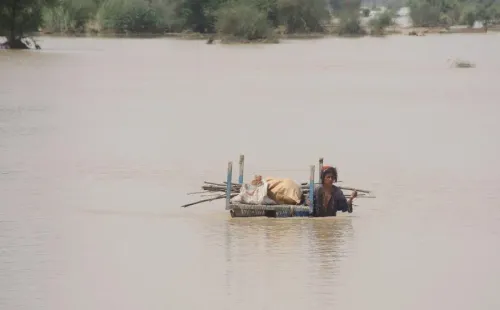
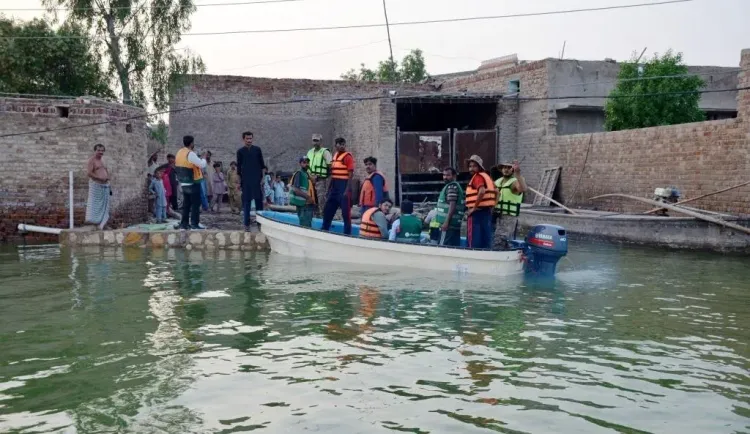
Pakistan's Gilgit-Baltistan region is reeling from devastating flash floods triggered by heavy monsoon rains, even as local media reports reveal that the country's flood preparedness measures remain critically incomplete — with funds reportedly withheld due to an ongoing financial crisis. The destruction, documented in reports dated 14 July, has swept away homes, livestock, key infrastructure, and heavy construction equipment, leaving thousands of residents without power or road access.
Preparedness Gaps Exposed
According to reports in Pakistan's Express Tribune, concrete flood mitigation measures had yet to be completed ahead of the monsoon season. 'Concrete measures to deal with possible flooding have yet to be completed. Owing to the ongoing financial crisis, funds required for monsoon preparedness have also not been released,' the publication noted.
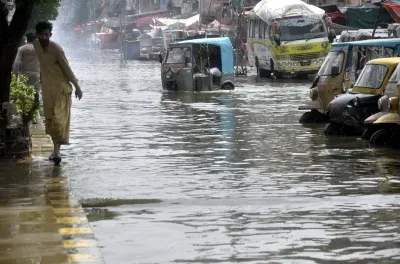
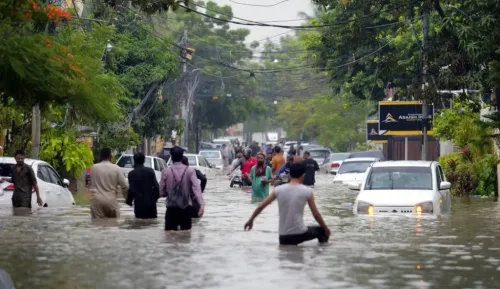
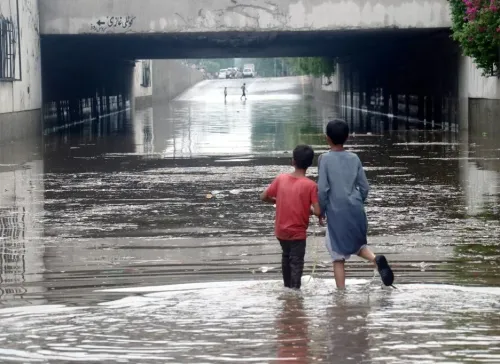
In Rawalpindi, several drains reportedly remain desilted, and residents of the Leh Nullah area have been temporarily relocated. Those in low-lying zones have moved valuables to safer locations. Critically, buildings and shops with leaking roofs and unstable walls continue to be occupied despite routine evacuation notices — a pattern that local reports say results in one or two partial or complete building collapses every monsoon season.
Cases tied to evacuation notices are reportedly pending in courts, with the government allegedly failing to pursue them effectively due to alleged collusion with tenants, leading to repeated adjournments, according to the Express Tribune.
Flash Floods Ravage Gilgit-Baltistan
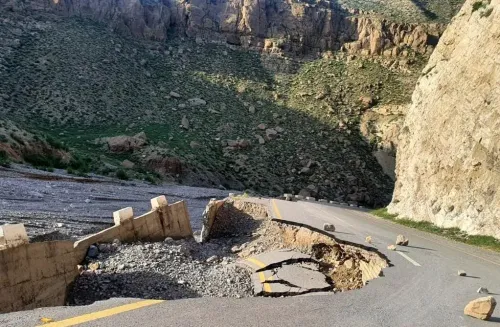
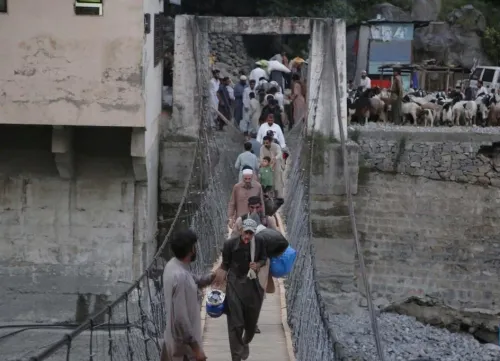
The Gilgit-Baltistan Disaster Management Authority (GBDMA) confirmed that flash floods struck six locations in Diamer district early on Monday. Pakistan's Dawn newspaper reported that the Karakoram Highway (KKH) — a critical artery linking Pakistan and China — was damaged at multiple points, and traffic in Thore Valley was completely suspended after the main road was washed away in several places.
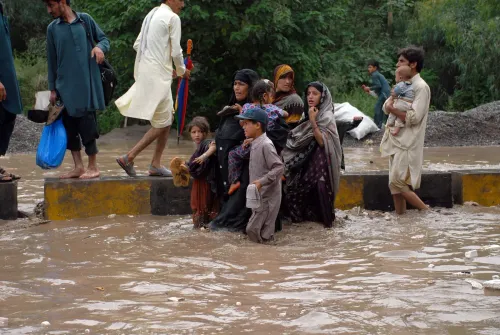
Entire houses along with their contents were swept away in Khanbari. Thousands of residents are facing acute hardship, with power transmission lines damaged and flood debris entering homes. Livestock losses were also reported across affected communities.
Diamer-Bhasha Dam Project Suffers Heavy Losses
The floods dealt a significant blow to ongoing infrastructure development. According to Dawn, a private company working on the Diamer-Bhasha Dam project lost 13 dumpers, an excavator, a crushing plant, and two water tankers to floodwaters, bringing construction activities to a standstill. The dam is a flagship water and energy project for Pakistan, making the disruption economically consequential beyond the immediate disaster.
Residents Demand Urgent Relief
Affected communities have urged the federal government, the National Disaster Management Authority (NDMA), the GBDMA, and other agencies to immediately launch relief operations, restore the KKH and other roads, resume electricity supply, and provide direct financial assistance to impacted families. The scale of damage — spanning homes, crops, agricultural land, and both public and private property — underscores the urgency of the appeal.
This is not an isolated event: Pakistan has faced catastrophic monsoon flooding in recent years, most notably in 2022, when floods submerged roughly one-third of the country. The recurrence of severe flooding alongside persistent preparedness shortfalls points to a structural vulnerability that financial constraints alone cannot fully explain.
Frequently Asked Questions
What triggered the flash floods in Gilgit-Baltistan in July 2025?
Heavy monsoon rains triggered flash floods at six locations in the Diamer district of Gilgit-Baltistan, according to the Gilgit-Baltistan Disaster Management Authority (GBDMA). The floods damaged the Karakoram Highway, swept away homes in Khanbari, and left thousands without power.
Why was Pakistan unprepared for the 2025 monsoon floods?
Reports in Pakistan's Express Tribune indicate that funds required for monsoon preparedness had not been released due to the country's ongoing financial crisis. Several drains in Rawalpindi also remained undesilted, and evacuation notices for unsafe buildings were reportedly not enforced.
How was the Diamer-Bhasha Dam project affected by the floods?
A private company working on the Diamer-Bhasha Dam project lost 13 dumpers, an excavator, a crushing plant, and two water tankers to floodwaters, according to Dawn. Construction activities at the site were brought to a standstill as a result.
What have affected residents demanded from the government?
Residents have urged the federal government, the NDMA, and the GBDMA to immediately launch relief operations, restore the Karakoram Highway and other damaged roads, resume power supply, and provide financial assistance to affected families.
Is this the first time Pakistan has faced severe monsoon flooding?
No. Pakistan has experienced recurring catastrophic monsoon floods, most devastatingly in 2022 when roughly one-third of the country was submerged. The 2025 floods continue a pattern of annual destruction that critics say is worsened by persistent gaps in disaster preparedness and infrastructure maintenance.