Balochistan: Pakistan forces kill 17-year-old, disappear woman in Gwadar
Synopsis
Paank has documented the killing of a 17-year-old student allegedly abducted by Pakistan's Frontier Corps, and the overnight disappearance of a woman in Gwadar whose minor brother was already taken in April — the latest in a pattern of alleged collective punishment that has displaced entire communities in Balochistan.
Key Takeaways
Paank documented the extrajudicial killing of 17-year-old Sameer Nasir Baloch , whose body was recovered in the Dazan area of Balochistan on Sunday, 8 November 2026 .
Sameer was allegedly abducted by Pakistan's Frontier Corps (FC) during a raid on Gubord village on 24 October 2026 , along with three others still missing.
21-year-old Shaista Noor Kalmati was reportedly disappeared by the Pakistani Army from Panwan village, Gwadar district , on Sunday night.
Shaista's minor brother Ali Asghar Kalmati was previously disappeared on 16 April 2026 ; the family has also had its home demolished, according to Paank.
Paank has called on Pakistani authorities and the United Nations to investigate and press Pakistan to end enforced disappearances of Baloch civilians.
Human rights body Paank, the Human Rights Department of the Baloch National Movement (BNM), on Monday, 9 November 2026, documented the extrajudicial killing of a teenage student and the enforced disappearance of a young woman in separate incidents across Balochistan, as allegations of systematic state violence against civilians in the province continue to mount.
Teenager's Body Recovered After Military Raid
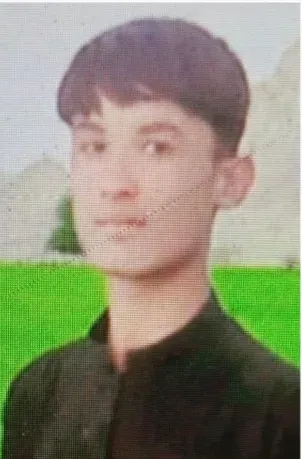
The mutilated body of 17-year-old student Sameer Nasir Baloch, son of Nasir Baloch, was reportedly recovered near the water supply in the Dazan area of Balochistan on Sunday, days after his alleged enforced disappearance. According to Paank, Pakistan's Frontier Corps (FC) personnel forcibly took Sameer during a military raid on Gubord village on 24 October 2026.
The rights body alleged that during the same raid, security personnel harassed and threatened women and children, searched multiple homes, and looted cash, gold, and other belongings. Sameer was reportedly abducted alongside three others: 17-year-old student Waseem Baloch, and two brothers — 30-year-old farmer Sagheer Baloch and 27-year-old driver Zaheer Baloch — whose whereabouts remain unknown.
'The recovery of Sameer's body raises grave concerns about extrajudicial killing, enforced disappearance, and the safety of those still missing. Enforced disappearance and extrajudicial execution constitute serious violations of international human rights law and must never be tolerated,' Paank stated.
Woman Disappeared From Gwadar in Overnight Raid
In a separate incident on Sunday night, Paank condemned the alleged enforced disappearance of 21-year-old Shaista Noor Kalmati by the Pakistani Army following a raid at her residence in Panwan village, Gwadar district. According to the rights body, Shaista is the elder sister of Ali Asghar Kalmati, a minor who was reportedly forcibly disappeared by Pakistani forces on 16 April 2026.
Paank described the family as a target of 'collective punishment', alleging that the Pakistan Army had also demolished their home. 'After repeated house demolitions, abduction-style arrests and enforced disappearances, large numbers of people have left Panwan and moved to Western Balochistan,' the organisation said.
Pattern of Alleged Collective Punishment in Panwan
Paank painted a broader picture of an embattled community in Panwan, alleging that the Pakistan Army — alongside what the rights body described as 'local death squads' — has placed the area under economic and social siege. 'The local population lives under severe psychological pressure and constant fear, and many families have become internally displaced in their own homeland,' Paank stated.
The organisation noted that dozens of families in the village have already faced similar targeting, with mass displacement now a documented consequence of the ongoing operations.
Calls for Independent Investigation and UN Intervention
Paank called on Pakistani authorities to immediately launch an independent, impartial, and transparent investigation into Sameer's death, and to hold all responsible parties accountable under international standards. It further demanded the immediate disclosure of the whereabouts of Waseem, Sagheer, and Zaheer, and urged authorities to ensure their safe recovery.
The rights body also appealed to international human rights organisations, the United Nations, and the international community to take urgent notice of the continued enforced disappearances of Baloch women, minors, students, and civilians, and to press Pakistan to end the practice.
With no response yet from Pakistani authorities and multiple individuals still unaccounted for, Balochistan's human rights crisis shows no sign of abating — and international pressure on Islamabad is likely to intensify.
Point of View
Disappear young men, return days or weeks later to claim a body, then target a sister or mother. What is striking about this latest round is the targeting of a sibling whose brother had already been disappeared months earlier, suggesting that familial connection to perceived dissidents is enough to trigger state action. International condemnations of Pakistan's conduct in Balochistan have been consistent but largely consequence-free; until the UN and bilateral partners attach concrete costs to these alleged violations, Paank's documentation risks becoming a meticulous archive of impunity rather than a catalyst for accountability.
NationPress
9 Nov 2026
Frequently Asked Questions
Who was Sameer Nasir Baloch and how did he die?
Sameer Nasir Baloch was a 17-year-old student from Balochistan who was allegedly abducted by Pakistan's Frontier Corps during a raid on Gubord village on 24 October 2026. His mutilated body was recovered near the water supply in the Dazan area on 8 November 2026, according to human rights body Paank.
Who is Shaista Noor Kalmati and why was she allegedly disappeared?
Shaista Noor Kalmati is a 21-year-old woman from Panwan village in Gwadar district, Balochistan, who was reportedly taken by the Pakistani Army in an overnight raid on 8 November 2026. Paank alleges the disappearance is part of collective punishment targeting her family — her minor brother Ali Asghar Kalmati had already been disappeared on 16 April 2026.
What is Paank and what has it demanded?
Paank is the Human Rights Department of the Baloch National Movement (BNM), which documents alleged rights violations in Balochistan. It has demanded an independent investigation into Sameer's killing, immediate disclosure of the whereabouts of three other missing individuals, and UN intervention to press Pakistan to end enforced disappearances.
What is happening in Panwan village in Gwadar?
According to Paank, Panwan village in Gwadar district has seen repeated house demolitions, enforced disappearances, and alleged harassment by Pakistani security forces and what the organisation describes as 'local death squads.' Large numbers of residents have reportedly fled to Western Balochistan as a result of the ongoing operations.
How many individuals are still missing following the Gubord village raid?
Three individuals abducted alongside Sameer Nasir Baloch in the 24 October 2026 raid remain missing: 17-year-old student Waseem Baloch, and brothers Sagheer Baloch (30) and Zaheer Baloch (27). Paank has urged Pakistani authorities to immediately disclose their whereabouts and ensure their safe return.