Pakistan Gurdwaras crumble amid neglect as Islamabad courts Sikh diaspora abroad
Synopsis
While Pakistani officials toured US Gurdwaras seeking diaspora donations and invoking a USD 700 million heritage corridor, a 125-year-old Gurdwara in Farooqabad was quietly reduced to rubble without a court order — and authorities only responded after the community protested. The gap between Islamabad's international pitch and its domestic record is, according to a Khalsa Vox report, hard to ignore.
Key Takeaways
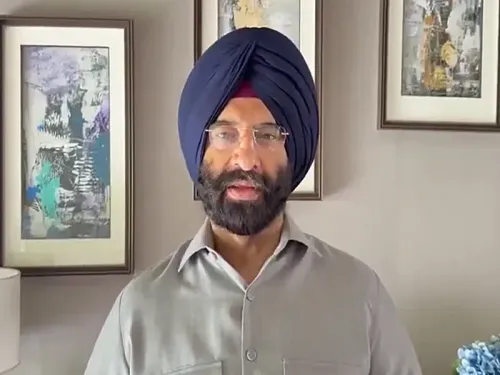
Pakistani officials, including Ramesh Singh Arora , reportedly visited US Gurdwaras to promote the 'Adopt a Gurdwara' initiative and collect funds from diaspora communities.
Anjum Javaid , reportedly linked to Punjab's Directorate General of Archaeology, claimed USD 700 million — including USD 94 million from the World Bank — had been secured for Sikh heritage development in Pakistan.
The 125-year-old Gurdwara Sri Guru Singh Sabha Sahib in Farooqabad was allegedly demolished by a local businessman in July without legal clearance or a court order.
Pakistani authorities acknowledged the demolition only after Sikh residents of Farooqabad staged protests on 24 June .
Several Gurdwaras across Pakistan reportedly continue to face severe disrepair, encroachment, and repurposing, according to a Khalsa Vox report.
Pakistan's diplomatic outreach to the Sikh diaspora in the United States has thrown into sharp relief a stark contradiction: while Pakistani officials abroad promote heritage restoration and religious tourism, several Gurdwaras inside Pakistan reportedly continue to face neglect, encroachment, and demolition. A detailed report by Khalsa Vox has documented the gap between Islamabad's international claims and ground realities for the Sikh minority community.
Pakistani Officials' US Outreach Under Scrutiny
According to the report, Ramesh Singh Arora, Punjab's Minister for Minority Affairs and President of the Pakistan Sikh Gurdwara Parbandhak Committee, recently visited Gurdwaras across the US. He reportedly sought diaspora participation in heritage restoration under the 'Adopt a Gurdwara' initiative and extended invitations for Gurpurab celebrations in November, citing promises of simplified visa procedures.
Social media posts also alleged that cash and cashier's cheques were collected from American Gurdwara committees during these visits, according to the Khalsa Vox report. These claims have not been independently verified.
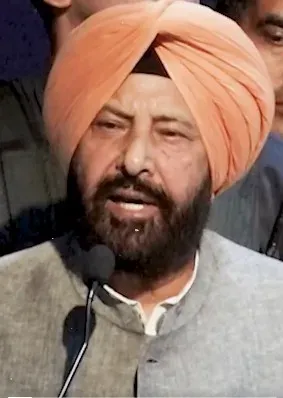
Separately, Anjum Javaid, reportedly linked to Punjab's Directorate General of Archaeology, addressed an event titled 'The Sikh Kingdom' in Lathrop, California. He allegedly proposed an economic corridor linking Nankana Sahib and the Khyber Pass — encompassing the redevelopment of Jamrud Fort and Baba Phoola Singh Chhauni — and claimed that approximately USD 700 million had been secured, including USD 94 million from the World Bank, to support heritage development and attract Sikh tourists annually.
Ground Reality: Gurdwaras in Disrepair and Under Threat
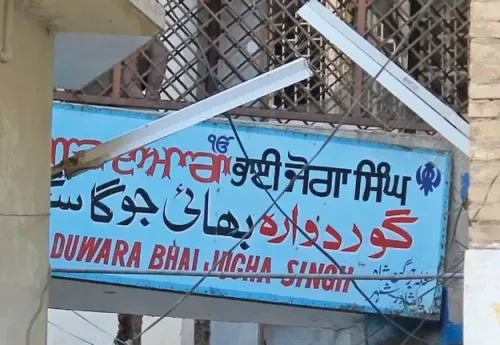
These pronouncements, critics argue, stand in direct contradiction to Pakistan's documented record on protecting Sikh heritage. Several Gurdwaras across the country have reportedly fallen into severe disrepair, faced encroachment, or been repurposed for alternate uses. Attacks on Sikh community members, religious discrimination, and persistent security concerns have further exposed the vulnerability of Pakistan's minority communities, according to Khalsa Vox.
This is not an isolated pattern. Minority heritage sites in Pakistan have faced repeated incidents of vandalism, illegal occupation, and governmental inaction over the years, making the latest outreach campaign appear, to critics, more performative than substantive.
Farooqabad Demolition: A Community's Heritage in Rubble
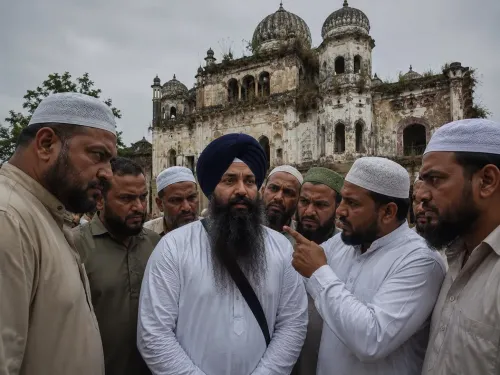
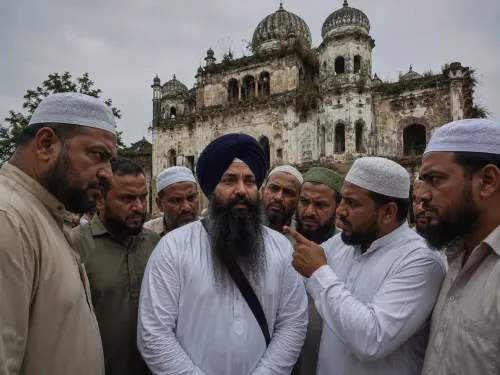
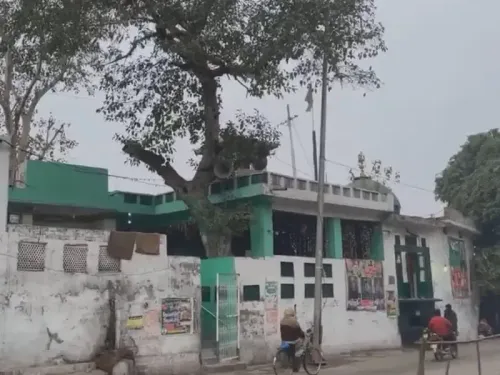
The most documented recent incident involves the demolition of the 125-year-old Gurdwara Sri Guru Singh Sabha Sahib in Farooqabad, Pakistan. In July, portions of the historic shrine were reduced to rubble after a local businessman allegedly carried out the work without any legal clearance or court order.
The Khalsa Vox report described the events of the night of 24 June in stark terms: 'For the Sikh community of Farooqabad, the night of June 24 was not an abstraction. It was the sound of machinery tearing into a building their grandparents' grandparents had prayed in — a gurdwara built over a century ago, when the Singh Sabha movement was still reshaping what it meant to be Sikh in a modernising Punjab. By morning, portions of the Gurdwara Sri Guru Singh Sabha Sahib lay in rubble, demolished by a local businessman who never bothered to seek the legal clearance required to touch it. No court order. No warning to the community that has treated this ground as sacred for generations.'
Authorities acknowledged the demolition only after Sikh residents of Farooqabad took to the streets in protest. An official reportedly admitted that the relevant department had failed to take notice until the community was forced to act.
Institutional Neglect and Minority Vulnerability
The Khalsa Vox report framed the Farooqabad incident not as a bureaucratic lapse but as symptomatic of deeper structural neglect. 'That is the real story here — not a bureaucratic lapse, but a community once again forced to fight for the right to simply exist and be remembered. The Sikhs of Farooqabad did not have the luxury of trusting their government to protect what mattered to them. They had to protest to be seen at all,' the report noted.
This comes amid growing international scrutiny of Pakistan's treatment of its minority communities, with human rights organisations and diaspora groups increasingly documenting specific incidents to challenge Islamabad's official narrative. Whether the ongoing outreach to Sikh diaspora communities abroad translates into tangible protections inside Pakistan remains, for now, an open question.
Point of View
Particularly to court the influential diaspora in the US, UK, and Canada, without putting in place enforceable protections at home. Until minority heritage sites are covered by a credible, independently monitored legal framework with real consequences for violators, these overseas roadshows risk becoming fundraising exercises that subsidise a narrative the facts on the ground do not support.
NationPress
1 Nov 2026
Frequently Asked Questions
What is Pakistan's 'Adopt a Gurdwara' initiative?
'Adopt a Gurdwara' is a Pakistani government initiative that reportedly seeks financial and participatory support from the Sikh diaspora abroad for the restoration of Gurdwaras in Pakistan. Pakistani officials have been promoting it during visits to Sikh communities in the United States, according to a Khalsa Vox report.
What happened to the Gurdwara Sri Guru Singh Sabha Sahib in Farooqabad?
The 125-year-old Gurdwara Sri Guru Singh Sabha Sahib in Farooqabad, Pakistan, was reportedly demolished by a local businessman in July without legal clearance or a court order. Authorities acknowledged the demolition only after local Sikh residents staged protests, according to reports.
How much money has Pakistan claimed to have secured for Sikh heritage development?
Anjum Javaid, reportedly linked to Punjab's Directorate General of Archaeology, claimed at an event in Lathrop, California, that approximately USD 700 million had been secured — including USD 94 million from the World Bank — to support Sikh heritage development and attract tourists to sites such as Nankana Sahib. These claims have not been independently verified.
Why does the condition of Gurdwaras in Pakistan matter to the Sikh diaspora?
Many historic Gurdwaras in Pakistan are deeply significant to the global Sikh community as they are located in the birthplace of Sikhism and predate the 1947 Partition. Ongoing neglect, encroachment, and demolitions are seen by diaspora groups as violations of religious and cultural heritage that Pakistan has an obligation — and has claimed willingness — to protect.
What has been the international response to Pakistan's treatment of Sikh heritage sites?
Diaspora groups and human rights organisations have increasingly documented specific incidents — including demolitions and encroachments — to challenge Pakistan's official narrative of heritage restoration. The Khalsa Vox report is one of several recent efforts to compile on-ground evidence that contradicts Islamabad's diplomatic messaging.