Pakistan re-arrests human rights lawyers hours after Supreme Court bail
Synopsis
Pakistan's Supreme Court granted bail to human rights lawyers Imaan Zainab Mazari-Hazir and Hadi Ali Chattha — only for an Islamabad anti-terrorism court to re-arrest them hours later. The case, which features a 17-year sentence, a defiant IHC, and alarming health reports from Adiala Jail, is fast becoming a defining test of whether Pakistan's higher courts can enforce their own orders.
Key Takeaways
Imaan Zainab Mazari-Hazir and Hadi Ali Chattha were re-arrested and sent to judicial custody on 18 September , hours after Pakistan's Supreme Court granted them bail.
Both were sentenced to 17 years in prison and fined PKR 36 million each on 24 January over social media posts.
The Supreme Court on 12 May had directed the Islamabad High Court to decide their suspension applications — the IHC had not acted even four months later.
The Supreme Court bench questioned the IHC's conduct, calling it 'strange' that the court cited the apex court's order but did not follow it.
The Human Rights Council of Pakistan raised alarm on 25 August over Mazari-Hazir's deteriorating health at Adiala Jail , including an unaddressed chest infection and absence of isolation for infectious inmates.
Rights groups are demanding an immediate medical assessment, hospital transfer if needed, and fair and timely judicial proceedings for the couple.
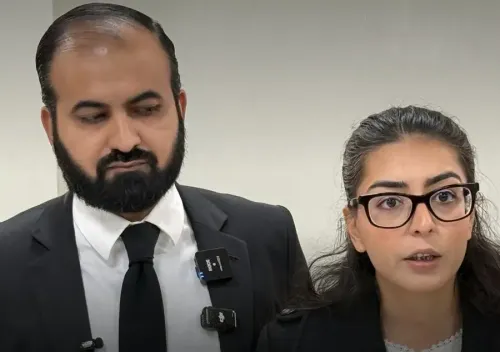
Pakistani human rights lawyers Imaan Zainab Mazari-Hazir and her husband Hadi Ali Chattha were re-arrested and remanded to judicial custody by an Islamabad anti-terrorism court on Friday, 18 September, just hours after Pakistan's Supreme Court granted them bail in a contentious social media posts case. The swift re-arrest, reported by local media, has drawn sharp criticism from legal observers and rights groups who see it as a deliberate circumvention of the apex court's order.
Timeline of Arrests and Judicial Orders
The couple were first taken into custody on 23 January, after which an anti-terrorism court (ATC) sent them to 14 days' judicial remand. The very next day — 24 January — a District and Sessions Court sentenced each of them to 17 years in prison and imposed a fine of PKR 36 million each on multiple charges linked to social media posts.
Both lawyers subsequently challenged their conviction before the Islamabad High Court (IHC) and filed a plea seeking suspension of their sentences. When the matter remained unresolved before the IHC for months, the couple approached the Supreme Court directly. On 12 May, the apex court ordered the IHC to decide their suspension applications — but according to reports, the IHC had still not ruled on them even four months later.
Supreme Court Raises Questions Over IHC Conduct
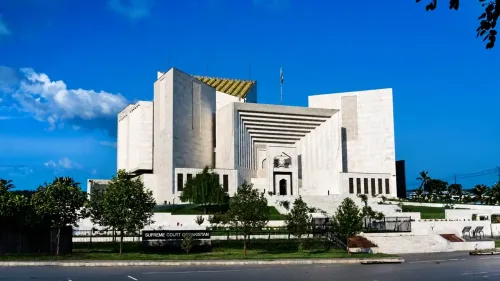
A division bench of the Supreme Court on Thursday suspended the lawyers' sentences and granted bail, while also questioning the conduct of the Islamabad High Court. The bench reportedly noted it was 'strange' that the IHC had referred to the Supreme Court's 12 May order but chose not to follow it, according to The Express Tribune. The re-arrest of the couple within hours of that bail order has intensified scrutiny over whether lower courts are wilfully disregarding apex court directives.
Alarming Health Concerns Inside Adiala Jail
The case has taken an additional dimension following serious concerns about Mazari-Hazir's health in custody. On 25 August, the Human Rights Council of Pakistan (HRC-Pakistan) expressed grave concern over her deteriorating condition, describing the state of medical facilities at Adiala Jail as 'alarming.'
Her family reported that she had been battling a chest infection for over a week, with blood tests reportedly indicating a high white blood cell count consistent with infection. Despite the clinical need for a chest X-ray — including to rule out tuberculosis — jail authorities had reportedly not conducted the test at the time of the family's statement.
'Our concern is compounded by the alarming fact that inmates in the women's section of Adiala jail who have been diagnosed with infectious diseases are not isolated and mix with other inmates as well as children. The women's medical facilities and availability of doctors leave a lot to be desired,' the family's statement read.
Rights Body Demands Medical Access and Fair Trial
The HRC-Pakistan called on Pakistani authorities to provide 'immediate and quality treatment' to Imaan and all women prisoners, stressing that 'imprisonment does not strip a person of their right to health.' The body demanded an immediate chest X-ray, a comprehensive medical assessment, and a hospital transfer if clinically required.
'The protection of the life, health, and dignity of every person in custody is the direct responsibility of the state and the jail administration. Regardless of the political, legal, or any other nature of cases, no prisoner can be deprived of essential medical facilities,' the HRC said in its statement.
The rights body also called for all women prisoners to be given prompt access to specialist medical care, dental services, essential medicines, and diagnostic facilities — and demanded that the couple's pending legal petitions be resolved through fair and timely judicial proceedings.
Broader Implications for Rule of Law in Pakistan
The case is being closely watched by civil society as a test of judicial independence in Pakistan. Critics argue that the pattern — a rapid conviction, prolonged inaction by the IHC, and a re-arrest immediately following Supreme Court relief — points to a systemic effort to keep the lawyers incarcerated regardless of higher court rulings. This is not an isolated incident; human rights advocates note a broader chilling effect on lawyers and activists who challenge state narratives on social media.
With the couple back in judicial custody despite Supreme Court bail, the next hearing before the apex court will be closely tracked by rights organisations and the legal fraternity.
Point of View
Followed by an almost instant re-arrest after bail, suggests a coordinated effort to neutralise judicial relief. What makes this case more troubling is the health dimension: if a high-profile lawyer with active Supreme Court proceedings cannot secure basic medical care in custody, the situation for less prominent detainees is likely far worse. The international human rights community is watching, and Pakistan's credibility on rule-of-law commitments is squarely on the line.
NationPress
18 Sept 2026
Frequently Asked Questions
Why were Imaan Zainab Mazari-Hazir and Hadi Ali Chattha re-arrested?
The couple were re-arrested by an Islamabad anti-terrorism court on 18 September, hours after Pakistan's Supreme Court suspended their sentences and granted them bail in a case linked to social media posts. The precise legal basis cited by the ATC for the re-arrest has not been fully detailed in available reports.
What were they originally sentenced for?
On 24 January, a District and Sessions Court in Islamabad sentenced both Mazari-Hazir and Chattha to 17 years in prison each and fined them PKR 36 million each on multiple charges connected to social media posts. They were first arrested on 23 January.
What did the Supreme Court say about the Islamabad High Court's conduct?
A Supreme Court division bench noted it was 'strange' that the Islamabad High Court had referred to the apex court's 12 May order directing it to decide the lawyers' suspension applications, yet had not acted on that order for over four months. The bench's remarks amount to a rare public rebuke of a lower court's inaction.
What are the concerns about Imaan Mazari-Hazir's health in custody?
On 25 August, the Human Rights Council of Pakistan flagged her deteriorating health at Adiala Jail, citing a week-long chest infection, elevated white blood cell counts, and jail authorities' failure to conduct a chest X-ray to rule out tuberculosis. The family also raised concerns that women inmates with infectious diseases were not being isolated.
What is the Human Rights Council of Pakistan demanding?
The HRC-Pakistan has called for an immediate chest X-ray and comprehensive medical assessment for Mazari-Hazir, her transfer to a hospital if required, and access to specialist medical care, dental services, and diagnostic facilities for all women prisoners. It has also demanded fair and timely judicial proceedings for the couple's pending legal petitions.