Pakistan police defy Supreme Court order on Jaranwala Christian attacks: Church leader
Synopsis
More than a year after mobs torched churches and Christian homes in Jaranwala, Pakistan's Punjab, only one of 336 charge-sheeted suspects remains behind bars — and a church leader says police have openly defied a Supreme Court order to arrest the rest. It is a case study in how impunity operates when blasphemy accusations, weak investigations, and witness intimidation intersect.
Key Takeaways
Pakistani police have reportedly failed to comply with a Supreme Court order dated 31 March directing the arrest of all absconding suspects in the 2023 Jaranwala attacks .
Of 336 suspects against whom charge sheets were filed, only one remains in prison; the rest have been granted bail, acquitted, or discharged.
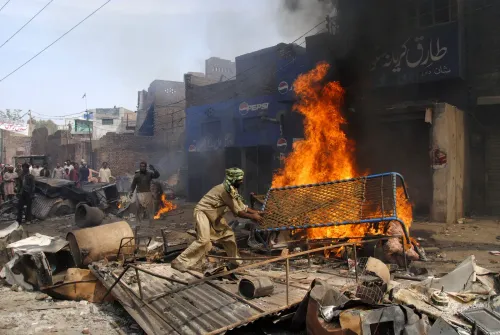
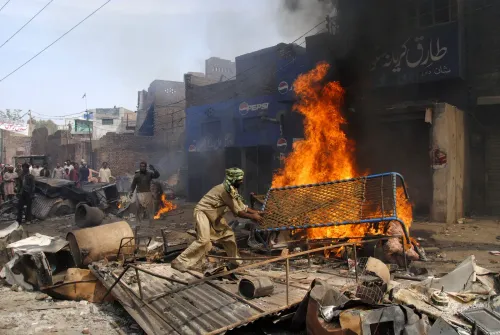
Police and intelligence reports estimated that more than 5,000 people participated in the attacks on churches and Christian homes in Jaranwala, Punjab .
The two Christians whose alleged Quran desecration triggered the violence were later acquitted by a trial court, which found they had been falsely implicated.
The IRF Roundtable Pakistan consultation this month flagged ongoing blasphemy law misuse, forced conversions, and targeting of minority women and children.
Pakistan's Parliament passed the National Commission for Minorities Rights Bill 2025 , but rights advocates say implementation on the ground remains absent.
Pakistani police have failed to arrest the majority of suspects behind the 2023 Jaranwala attacks, in which mobs targeted multiple churches and Christian homes in Punjab province, according to a church leader whose own parish house was among the properties destroyed. The accusation comes despite a Supreme Court order dated 31 March directing police to apprehend all absconding accused and instructing the Faisalabad anti-terrorism court to conclude trials within six months.
What the Church Leader Said
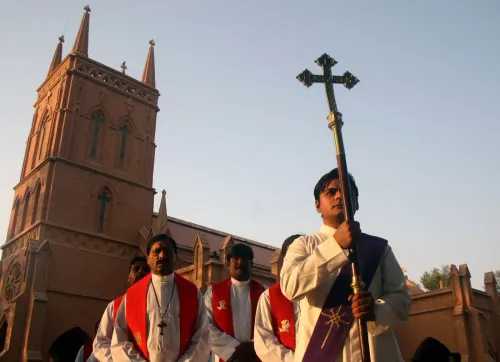
Reverend Khalid Mukhtar, now serving as priest of St Joseph's Church in Faisalabad, said authorities have made little meaningful progress despite repeated meetings with senior police officials. 'The Supreme Court directed the police to immediately arrest all absconding suspects and ordered the anti-terrorism court to conclude the trials within six months,' he said.
'Despite providing police with video and photographic evidence identifying many of those involved, there has been no meaningful progress in arrests. We have met senior police officials several times since the ruling, but their assurances have not translated into concrete action,' Mukhtar added.
Scale of the Violence and State of Trials
Police and intelligence reports estimated that more than 5,000 people participated in the Jaranwala attacks. Of the 336 suspects against whom police submitted charge sheets, only one remains in prison. The rest have either been granted bail, acquitted, or discharged — reportedly due to weak investigations, insufficient evidence, and, according to Mukhtar, intimidation of complainants by suspects.
Nearly 400 suspects were arrested in the immediate aftermath, but the majority were subsequently released. The violence had been triggered by accusations that two Christians desecrated the Quran — accusations that a trial court later found to be false, acquitting both men and ruling they had been falsely implicated following a personal dispute.
Broader Pattern of Religious Discrimination
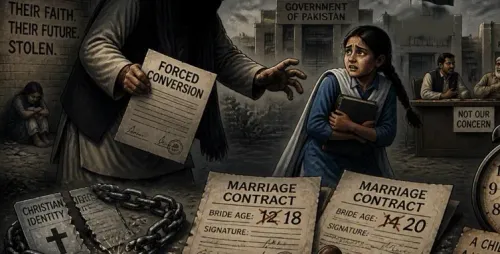
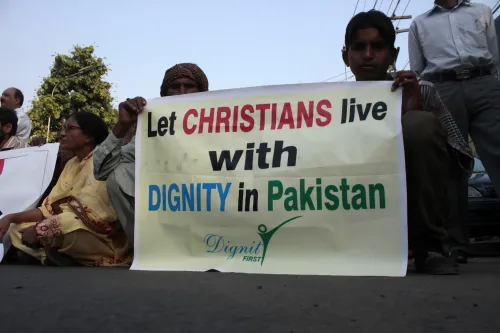
This month, the International Religious Freedom (IRF) Roundtable Pakistan held a consultation in which faith leaders, human rights advocates, journalists, and civil society representatives raised concerns over persistent patterns of religious discrimination, misuse of blasphemy laws, forced conversions, and forced marriages targeting minority women and children.
Kashif Mirza, a Karachi-based human rights activist and Pakistan Director of the IRF Roundtable, said: 'As faith leaders, human rights advocates, and citizens of Pakistan, we believe there must be no discrimination on the basis of religion.' He added: 'Children have become among the worst victims of religious discrimination. This must stop. Pakistan must protect every child, every woman, and every minority citizen equally under the law.'
IRF Roundtable Pakistan co-chair Anila Ali — a Pakistani-origin author and women's rights advocate — demanded urgent action to end forced conversions and forced marriages in the country.
Legislative Developments and Accountability Gaps
Participants at the consultation acknowledged recent legislative steps, including minority-rights and communal-property protection bills introduced in Punjab and the passage of the National Commission for Minorities Rights Bill 2025 by Pakistan's Parliament. However, they stressed that legislation must translate into ground-level implementation, and demanded accountability from authorities.
What Comes Next
The Faisalabad anti-terrorism court is under Supreme Court instruction to conclude the Jaranwala trials within six months of the 31 March order. With arrests stalled and complainants reportedly facing intimidation, rights groups warn that justice for the victims of one of Pakistan's most widely documented anti-Christian attacks remains uncertain.
Point of View
But the police and prosecution machinery — subject to local political pressures and communal dynamics — routinely fails to execute them in cases involving religious minorities. With 5,000 estimated participants and only one suspect in jail, the impunity gap is not a procedural lapse; it is a policy outcome. The passage of the National Commission for Minorities Rights Bill 2025 is a legislative step, but legislation without enforcement is optics. Until arrest and trial rates in blasphemy-linked mob violence cases match those of other crimes, international pressure on Pakistan's minority rights record will only intensify.
NationPress
24 Sept 2026
Frequently Asked Questions
What happened in the 2023 Jaranwala attacks on Christians?
In 2023, mobs attacked multiple churches and Christian homes in the Jaranwala area of Punjab province, Pakistan, after two Christians were accused of desecrating the Quran. A trial court later acquitted both men, ruling they had been falsely implicated in a personal dispute. Police and intelligence reports estimated that more than 5,000 people participated in the violence.
What did Pakistan's Supreme Court order regarding the Jaranwala case?
On 31 March, the Supreme Court directed police to immediately arrest all absconding suspects and ordered the Faisalabad anti-terrorism court to conclude the trials within six months. Church leaders say police have made little meaningful progress in complying with the order.
How many Jaranwala suspects are currently in jail?
Only one suspect remains in prison out of 336 against whom police submitted charge sheets. The rest have either been granted bail, acquitted, or discharged, reportedly due to weak investigations, insufficient evidence, and intimidation of complainants.
Who is Reverend Khalid Mukhtar and why is he speaking out?
Reverend Khalid Mukhtar is the priest of St Joseph's Church in Faisalabad, whose own parish house was destroyed during the Jaranwala attacks. He has been meeting senior police officials since the Supreme Court's March ruling and says their assurances have not resulted in concrete arrests.
What new laws has Pakistan passed to protect religious minorities?
Pakistan's Parliament passed the National Commission for Minorities Rights Bill 2025, and minority-rights and communal-property protection bills have been introduced in Punjab. However, participants at the IRF Roundtable Pakistan consultation stressed that legislation must be implemented on the ground, and demanded accountability from authorities.